Common Symptoms
Water Meter Movement
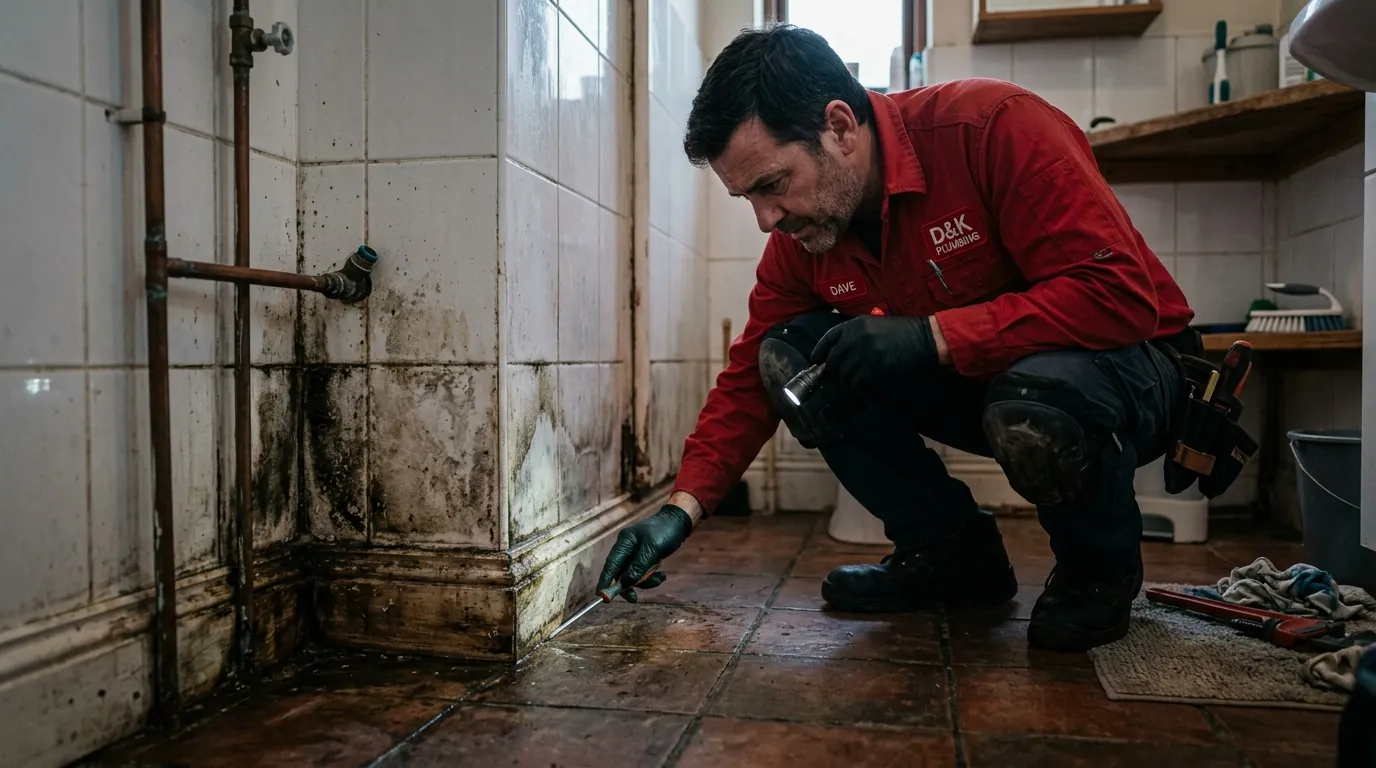
Damp Flooring or Baseboards
Sudden Pressure Drop
Running Water Sounds
Wet Spots Near Foundation
Unexplained Water Bill Spike
Why Cold-Water Slab Leaks Can Be Harder to Notice
Cold-water slab leaks usually do not create the warm-floor pattern associated with an active hot line. Water may remain below the slab, follow a trench, or appear at a distant finish, so the strongest early evidence is often controlled meter flow and repeatable cold-system pressure loss. If one branch has a documented history of failures, compare direct repair or rerouting with a clearly defined partial repiping scope.
Other Sources to Rule Out
A moving meter proves flow, not location. Before assuming an under-slab cold line has failed, control toilets, appliances, irrigation, pool autofill, hose connections, water treatment, and the meter-to-house service line. The same staged process applies in SaddleBrooke and throughout the Tucson service area.
The Cold-Water Detection Process
Stop normal water use
Check visible plumbing
Observe the meter
Isolate cold-water branches
Test pressure
Narrow down the suspected area
Cold-Water Slab Leak vs. Other Hidden Household Leaks
Repair Options
Direct-access repair
A controlled opening exposes one well-supported failure for compatible repair. Flooring, concrete, testing, closure, and restoration should be defined before work begins.
Cold-line rerouting
The failed run is disconnected and a new approved route supplies every affected fixture through walls, ceiling, garage, attic, or another practical path.
Partial branch replacement
A complete defined branch is replaced when repeated failures or shared access support more than one spot repair. The proposal should mark what remains in service.
Tucson Water vs. Homeowner Responsibility
Tucson Water explains that responsibility is divided at the meter: the utility maintains the service line from the water main to the meter, while the property owner is responsible for the line from the meter to the home and the plumbing within the property. Confirm the meter and valve layout because private systems and service arrangements can vary.
Report a suspected public-side main or meter problem to Tucson Water. When controlled testing points to the private side, a licensed plumbing provider can evaluate the service line and building branches. Meter movement alone does not show which side or pipe is involved; isolation establishes that boundary.
Why Cold-Water Slab Leaks Can Be Harder to Notice
A cold-water leak does not normally create the warm floor pattern associated with a leaking hot line. Water may remain below the slab, travel through a pipe trench, or emerge at a wall or foundation edge away from the failure. In dry Tucson conditions, surface moisture can also evaporate before it creates an obvious puddle.
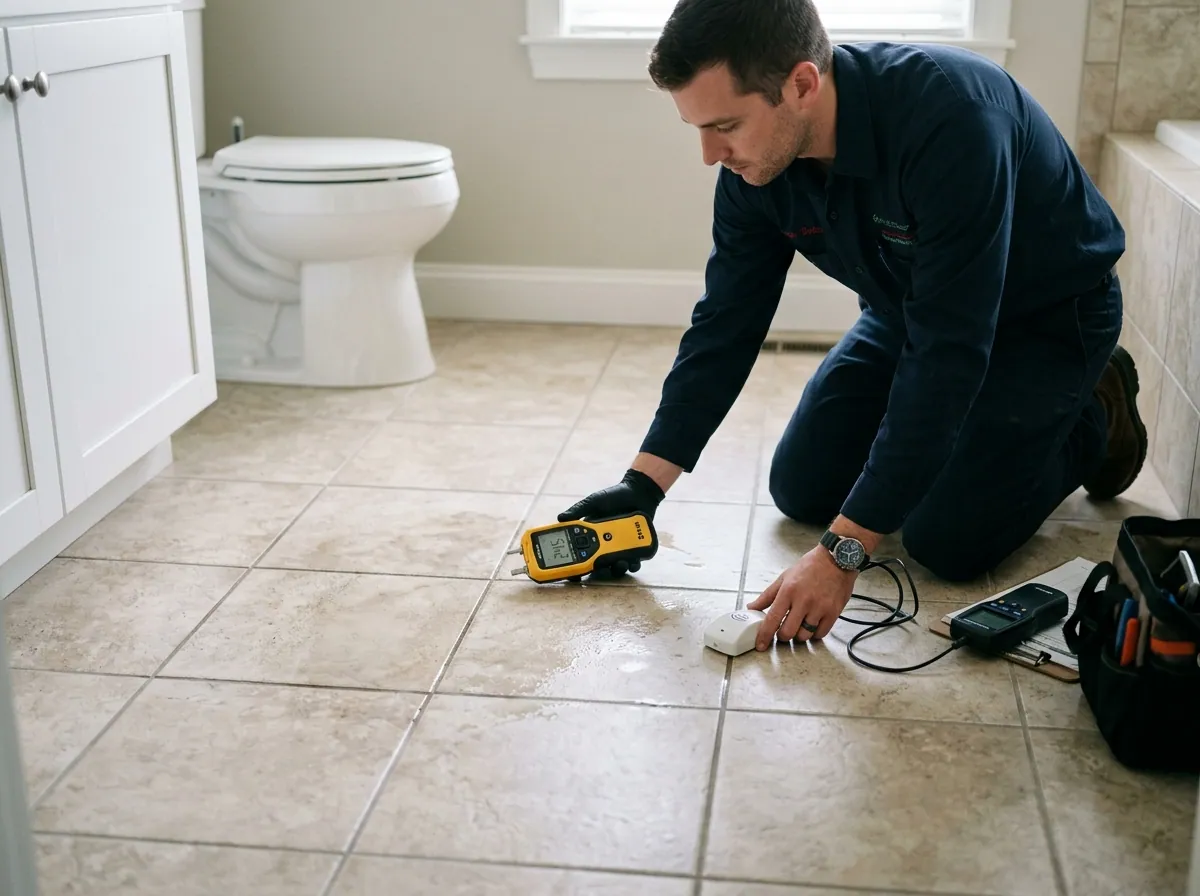
The first evidence may be a meter that advances during a controlled no-use period, a repeatable pressure drop, an unexplained change in consumption, or a sound that continues after fixtures stop. Each clue has alternatives: toilets can cycle silently, irrigation valves can seep, pool autofill can operate unnoticed, and a service-line leak may stay outdoors.
That is why electronic leak detection follows isolation and pressure testing. Listening equipment is more useful after the affected water system and likely pipe route have been established.
How Technicians Separate Indoor Plumbing from Outdoor Water Use
The water meter records flow through the metered service, not the location of a leak. A technician first controls expected uses and notes whether the meter continues to advance. The home's main shutoff, when present and functioning, can then help distinguish the private service line from plumbing downstream of that valve.
Irrigation branches, hose connections, water treatment equipment, evaporative coolers, pools, and detached structures must be considered according to how the property is piped. Some branches split before the building shutoff, so closing one valve does not always remove every outdoor source from the test. The actual plumbing layout controls what each isolation step proves.
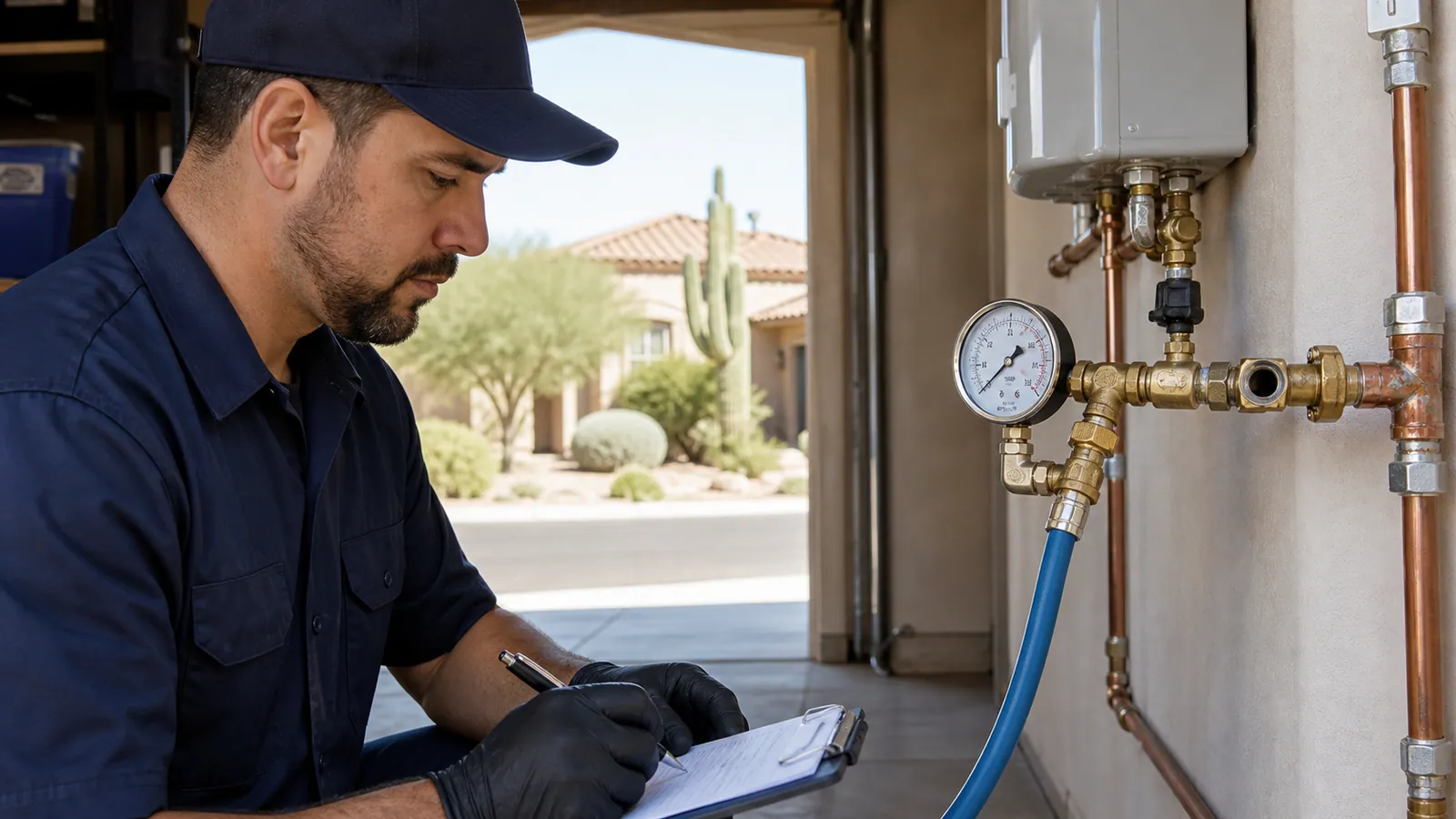
Once outdoor and service-line losses are reasonably excluded, pressure testing the cold-water system can document whether that defined section loses pressure. Pipe tracing and acoustic comparison can then narrow the search without treating the meter alone as a slab leak locator.
Frequently Asked Questions
Find the Source of Unexplained Cold-Water Flow
Provide your ZIP code, meter observations, outdoor-system status, and any moisture or pressure changes. The next step is to identify the affected system before choosing a repair.
Request Service
Submit your details for a prompt response.
Check Service Availability
Select the property ZIP and main symptom to see the appropriate next step.