Quick Symptom Checker
Warm floor
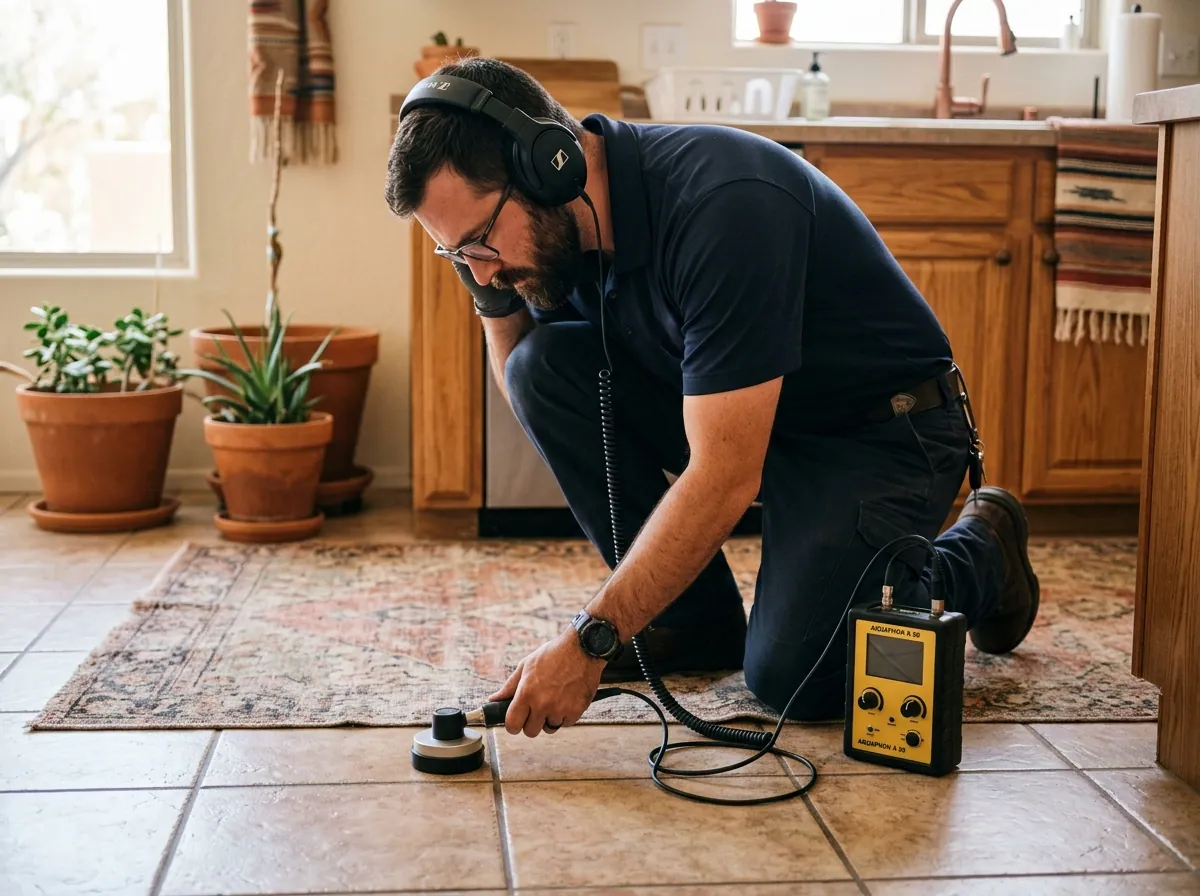
A repeatable warm path may support a hot-water line investigation, especially when the heater cycles without use. Sunlight, ducts, and appliances must also be excluded.
Damp flooring
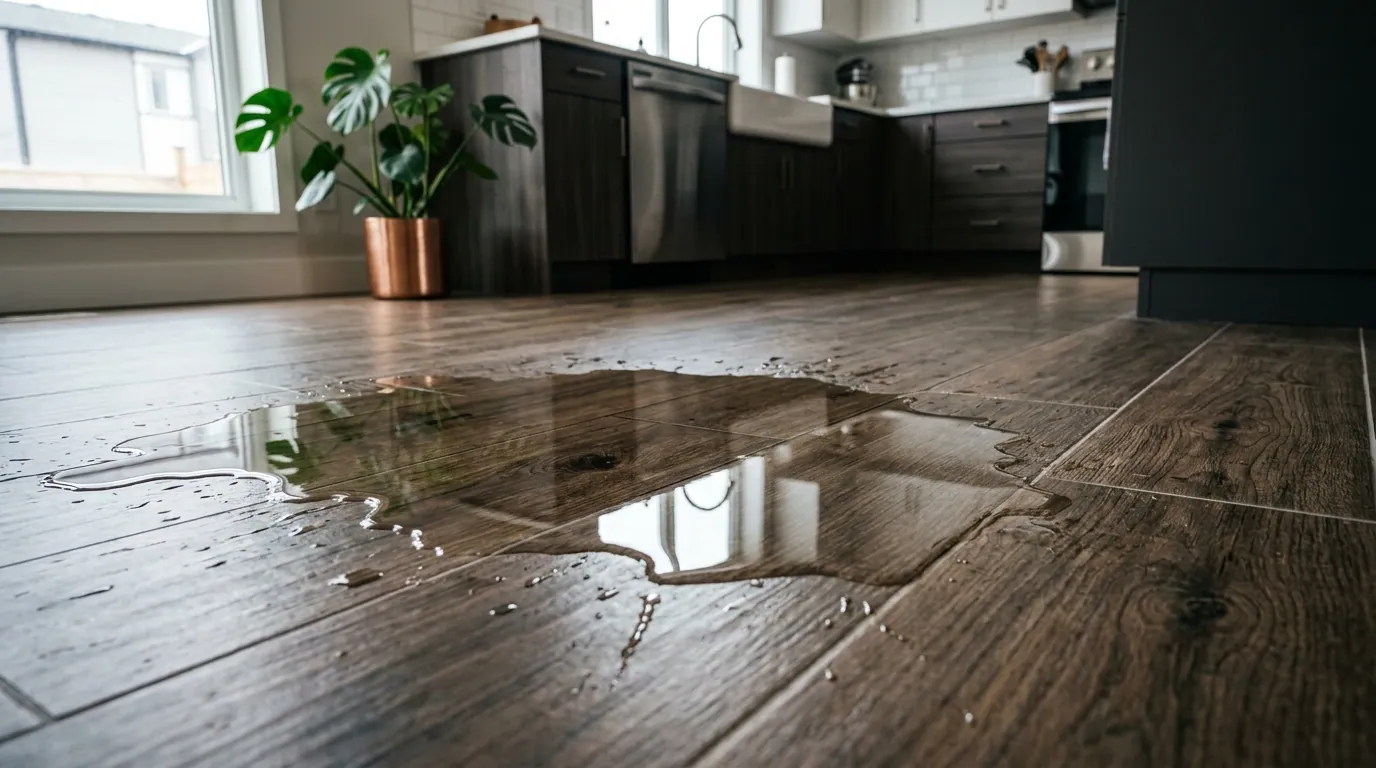
Damp carpet, swollen baseboards, loose flooring, or a musty area can justify moisture mapping. Supply, drain, wall, roof, HVAC, and exterior sources remain possible.
Moving water meter
A changing meter during a controlled no-use period confirms water flow. It does not identify whether the source is a fixture, outdoor system, service line, or under-slab branch.
Running-water sound
A steady hiss or running-water sound with fixtures idle deserves investigation. Record its timing and compare it with the meter before assuming where the sound originates.
Pressure loss
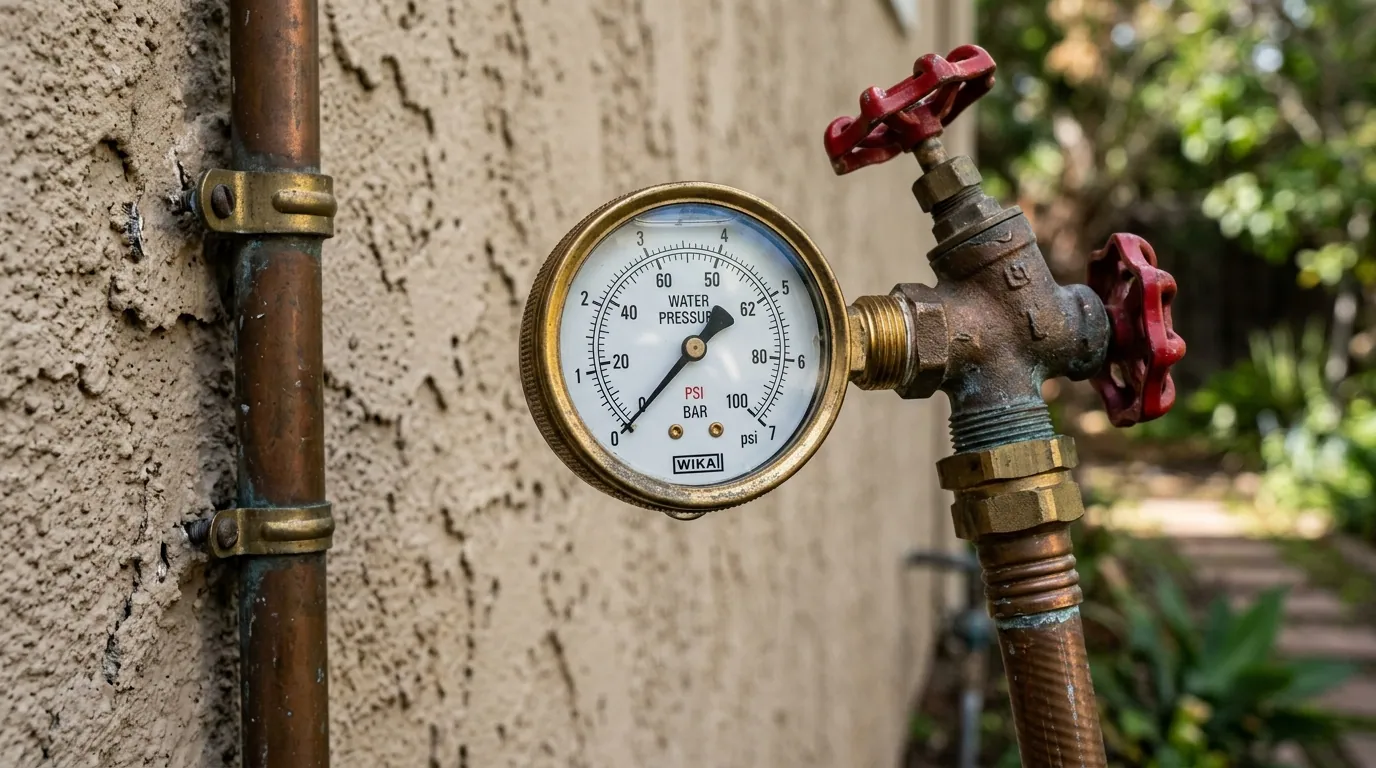
A significant supply-line loss can affect fixture performance, but regulators, valves, utility work, and clogged fixtures can also reduce pressure. Test rather than diagnose from pressure alone.
Increased water usage
Compare actual consumption, billing days, and seasonal use. Irrigation, pools, toilets, appliances, guests, rate changes, and hidden plumbing can all affect the bill.
Common Signs That May Point to a Slab Leak
Warm or unusually hot flooring
Escaping hot water can transfer heat through soil, concrete, mortar, and flooring. A narrow or repeatable warm pattern can support a hot-water slab leak investigation when meter, heater, and pressure-test evidence agree. It is not a diagnosis by itself.
Damp carpet, tile or baseboards
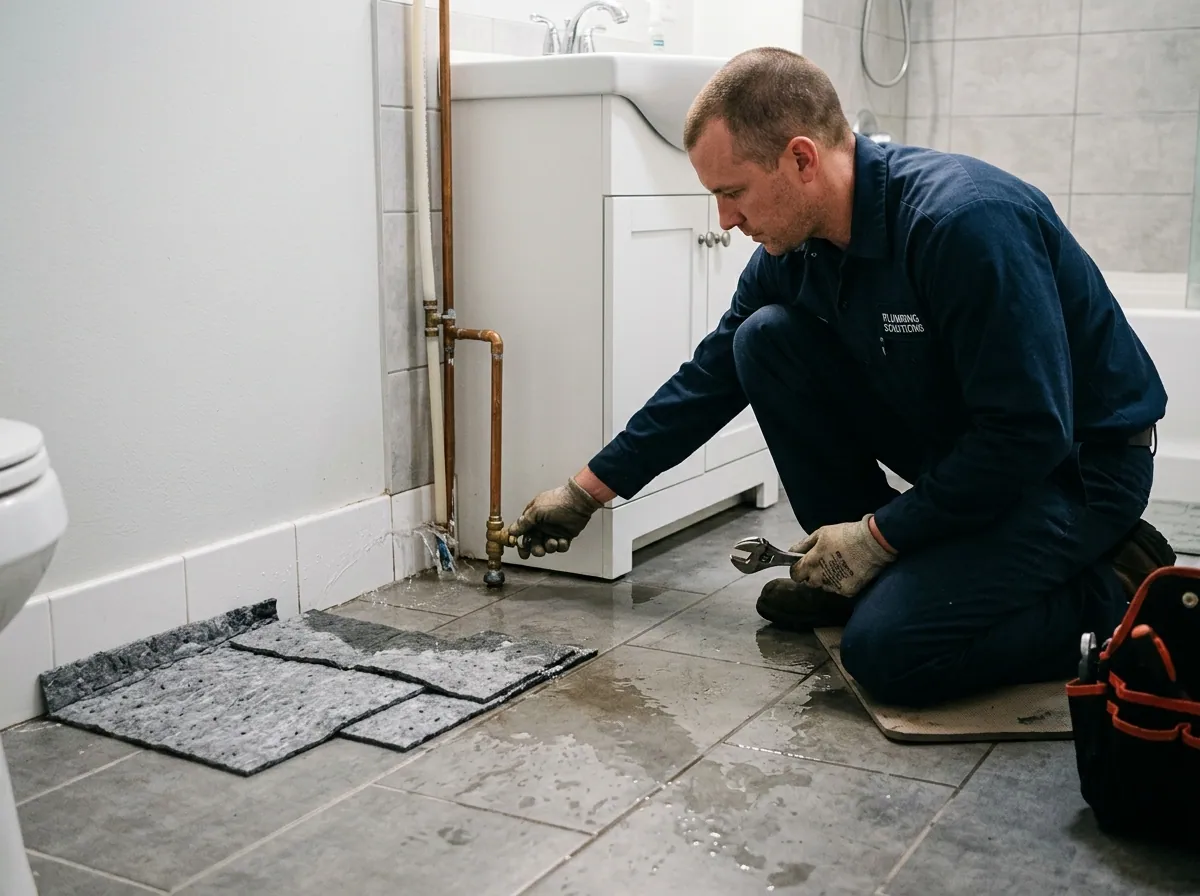
Water may follow a pipe trench, crack, slab edge, or finish layer before becoming visible. Unexplained damp carpet, loose flooring, or swollen baseboards should be mapped, while wall, drain, roof, irrigation, and HVAC sources are checked separately.
Water sounds when fixtures are off
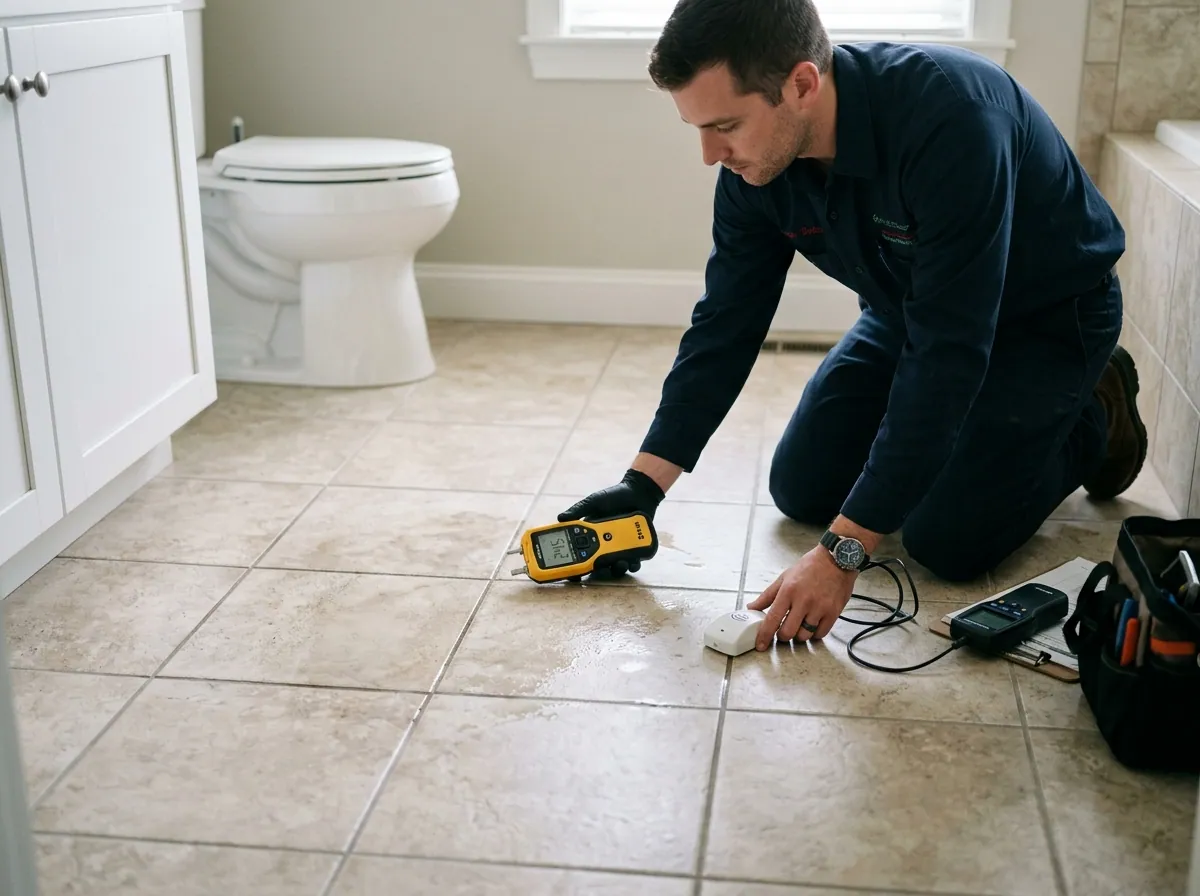
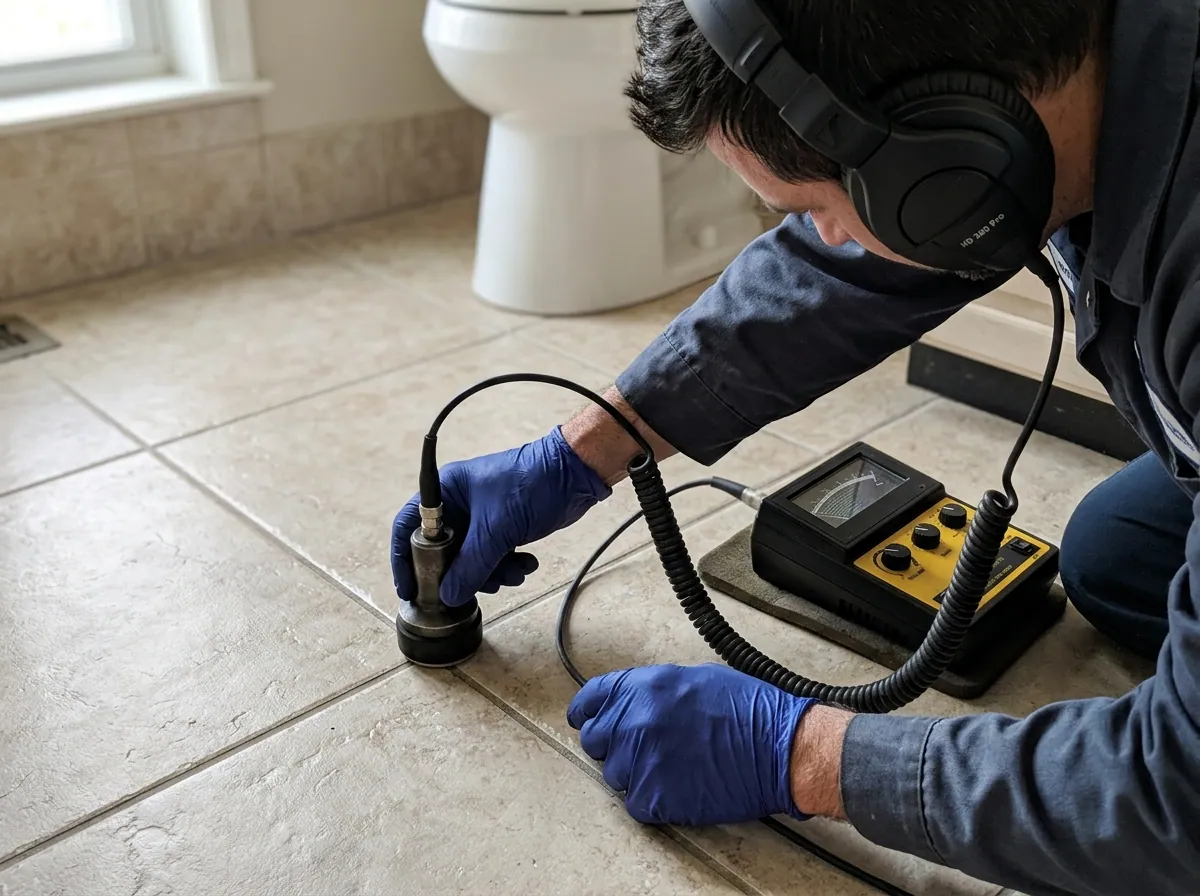
A steady hiss or running-water sound may come from a pressurized pipe, but sound travels along piping and concrete. Note whether it continues with fixtures and automatic systems off and whether the meter records flow at the same time.
Unexplained household water use
A bill increase is useful only after comparing consumption units, billing-cycle length, irrigation, pool filling, guests, and appliance use. If those do not explain the change, a controlled meter check and staged isolation can narrow hidden water loss.
Lower water pressure
A large active leak can reduce available flow, yet a pressure regulator, partly closed valve, fixture restriction, or utility condition can create the same complaint. Compare several fixtures and record whether the meter also shows unexplained flow.
Water near the foundation edge
Water near a slab edge may come from an under-slab line, the meter-to-house service line, irrigation, pool equipment, drainage, or runoff. Meter and valve isolation should identify the system before any excavation.
A Simple Water-Meter Check for Hidden Water Use
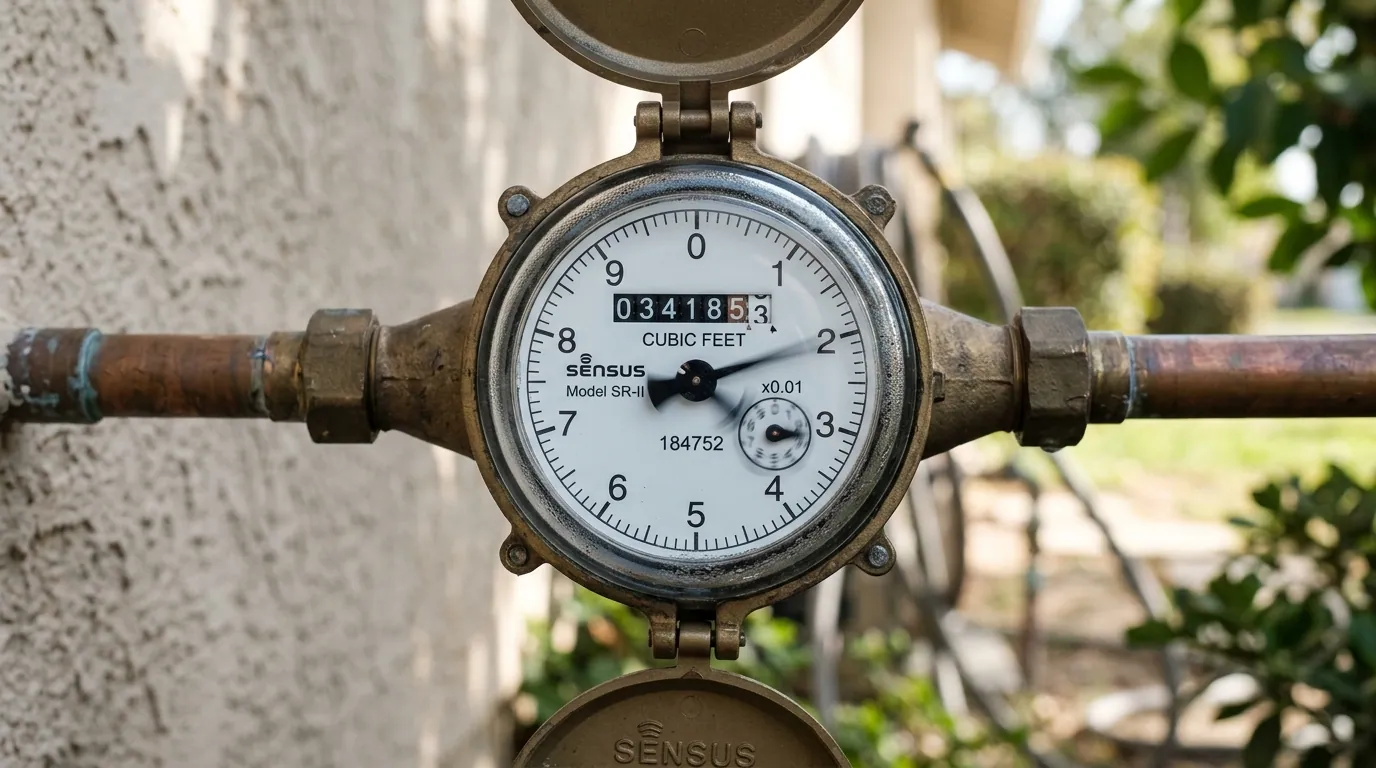
Choose a quiet period and place every known water user in a controlled condition. Check faucets, toilets, washing machines, dishwashers, ice makers, water treatment, irrigation, pool autofill, and evaporative cooling. Photograph the starting meter display instead of relying on memory.
Observe the meter long enough to detect small continuous flow and photograph the ending display. Meter types vary, so follow Tucson Water guidance for reading the installed model and do not open, alter, or attach equipment to the utility meter in a way that could damage it.
A changing reading confirms metered flow during the test. It does not prove a slab leak. Repeat an uncertain result, then isolate obvious fixtures, outdoor systems, the private service line, and interior hot or cold plumbing as the property layout permits.
Hot-Water vs. Cold-Water Symptoms
Other Leaks That Can Mimic a Slab Leak
Not every meter change, sound, or damp spot comes from under the slab. Use timing, valve isolation, moisture mapping, and pressure testing to compare these common alternatives before choosing an invasive repair:
When the Situation Is Urgent
Treat the condition as urgent when there is active spreading water, water near electrical equipment, rapid unexplained meter flow, sudden major pressure loss, or finishes changing quickly. If safe, close the private main shutoff, protect people and belongings, and arrange prompt plumbing help. Do not force an old or damaged valve.
CALL ABOUT AN ACTIVE LEAKHow Detection Confirms the Problem
A technician first reviews visible fixtures, automatic equipment, outdoor systems, the meter, and accessible plumbing. The goal is to confirm repeatable unexplained water loss before interpreting floor temperature, sound, or moisture.
The service line, hot distribution, cold distribution, and accessible branches may then be isolated. Pressure testing shows which defined section holds and which repeatedly loses pressure under the test conditions.
Pipe tracing, acoustic comparison, thermal imaging, and moisture mapping can narrow the suspected route or area. No instrument sees the break through concrete, so the written result should state the evidence, limitations, and confidence before repair options are compared.
Tucson Plumbing Context
Tucson Water classifies local water as hard to very hard and provides current water-quality information by area. Hardness commonly creates scale in fixtures and water-heating equipment, but it does not diagnose an under-slab failure. Pipe material, installation, pressure, movement, abrasion, temperature cycling, repair history, and site conditions must be evaluated together.
How to Document Slab Leak Symptoms Before Testing
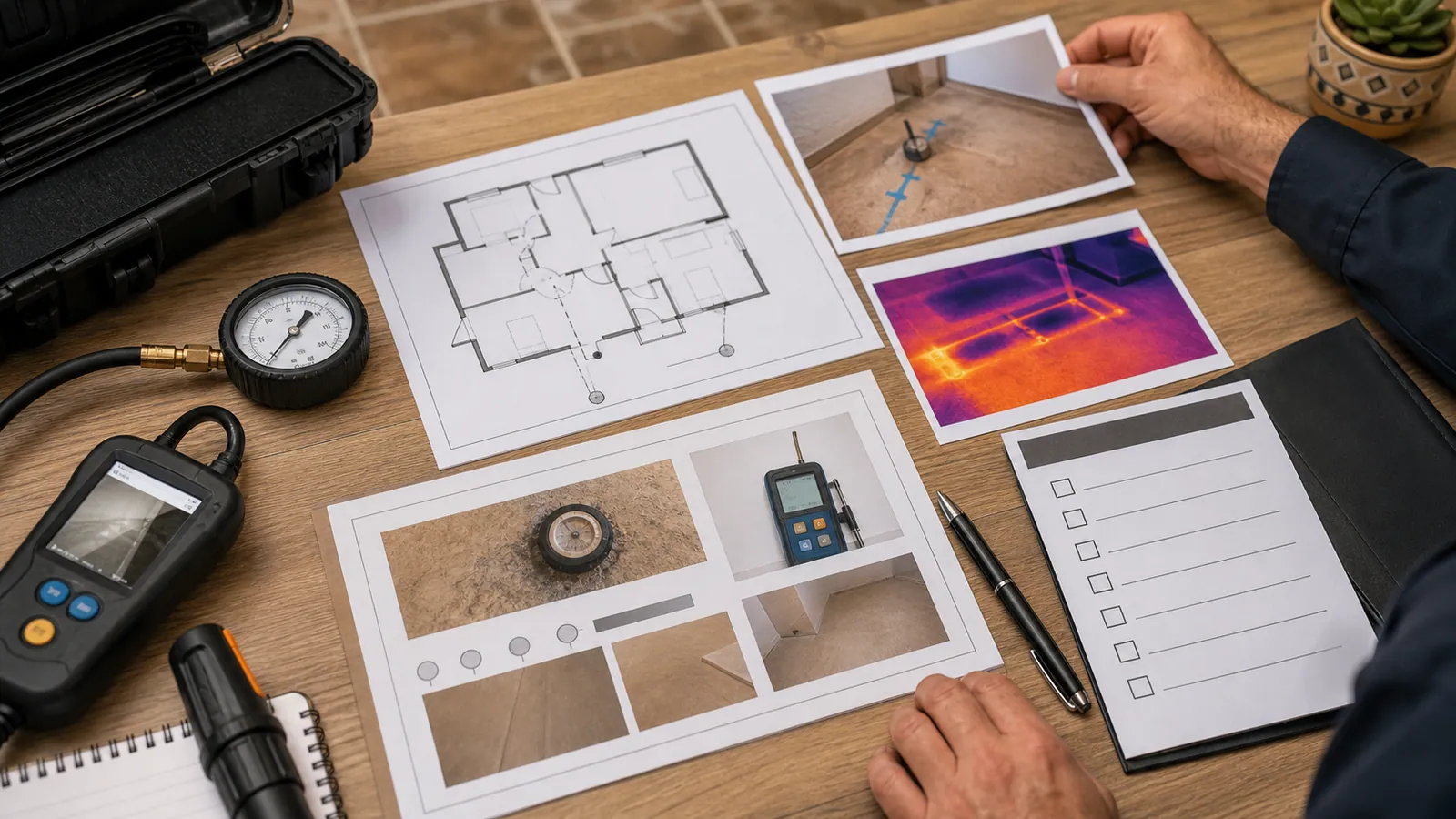
A short, accurate record helps a technician separate a plumbing loss from normal household water use. Note when each symptom started, whether it is constant or intermittent, and whether it changes after showers, laundry, irrigation, or pool equipment runs. Photograph damp flooring, discolored baseboards, and the water-meter reading so changes can be compared instead of relying on memory.
For a controlled meter observation, stop known water uses and confirm that toilets, ice makers, water treatment equipment, irrigation, and pool autofill are not operating. Record the starting display, wait without using water, and photograph the ending display. Movement confirms metered flow during that period, but it does not identify whether the source is beneath the slab.
Mark warm, damp, or noisy areas on a simple floor plan and include nearby fixtures. This gives the plumber a useful starting point for water-line pressure testing while preventing one visible symptom from being mistaken for the pipe failure location.
How Multiple Clues Point to the Affected Water Line
Slab leak symptoms are most useful when several independent observations agree. A warm floor combined with unexplained meter flow and repeated water-heater cycling supports testing the hot-water system. Meter movement without a warm area may justify checking toilets, appliances, the service line, irrigation, and the cold-water plumbing.
Isolation changes a broad suspicion into a defined test boundary. When the hot-water supply is isolated, the technician can compare meter behavior and pressure loss before moving to thermal or acoustic tools. Outdoor branches and pool systems may need separate isolation because a buried yard leak can produce the same meter evidence as an under-slab pipe.
No single clue proves the route or break point. The goal is to establish which system is losing water, trace the likely pipe path, and then compare sound, temperature, moisture, and pressure evidence. That sequence produces a more defensible repair plan than opening concrete at the first warm or damp spot.
Frequently Asked Questions
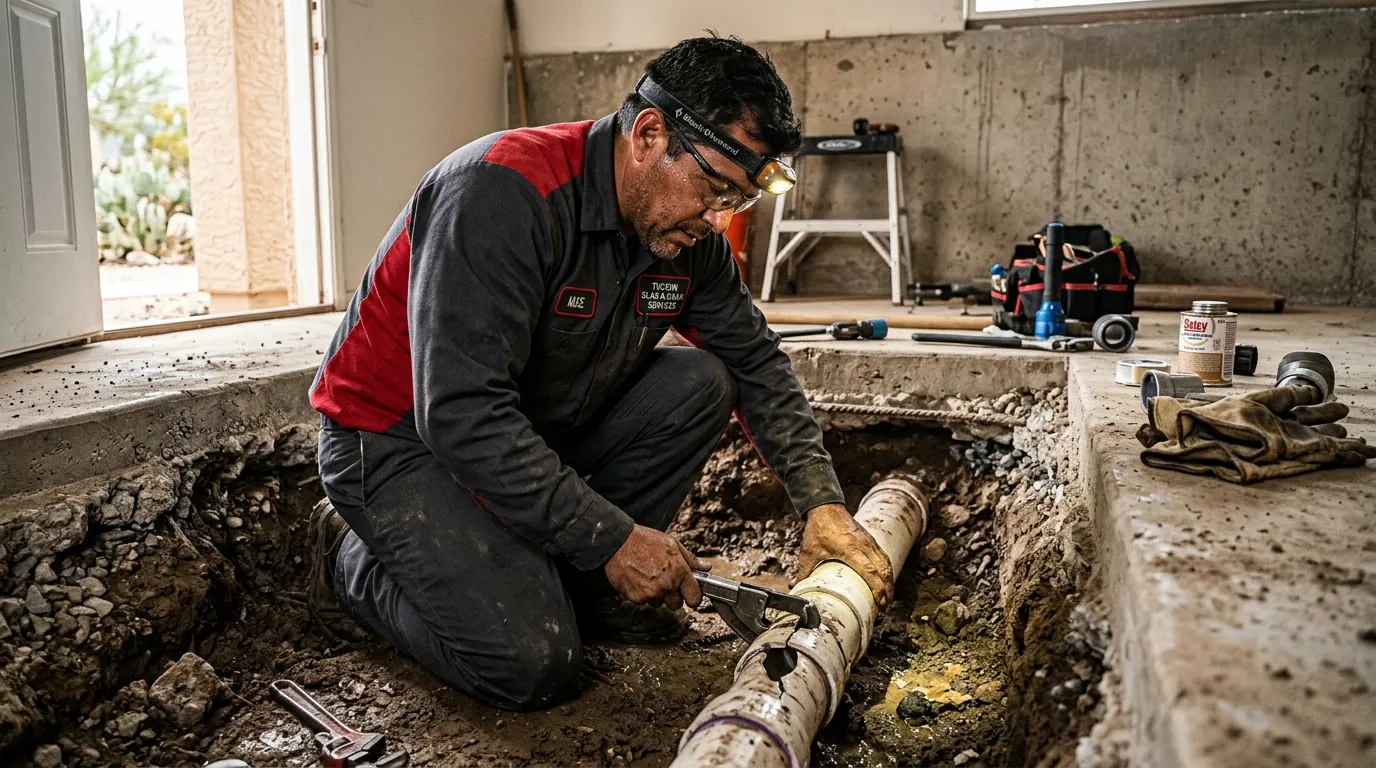
Noticed One or More Slab Leak Signs?
Ask for a professional evaluation. Provide your ZIP code, describe your symptoms, and let us know if water is actively spreading.
Request Service
Submit your details for a prompt response.
Check Service Availability
Select the property ZIP and main symptom to see the appropriate next step.