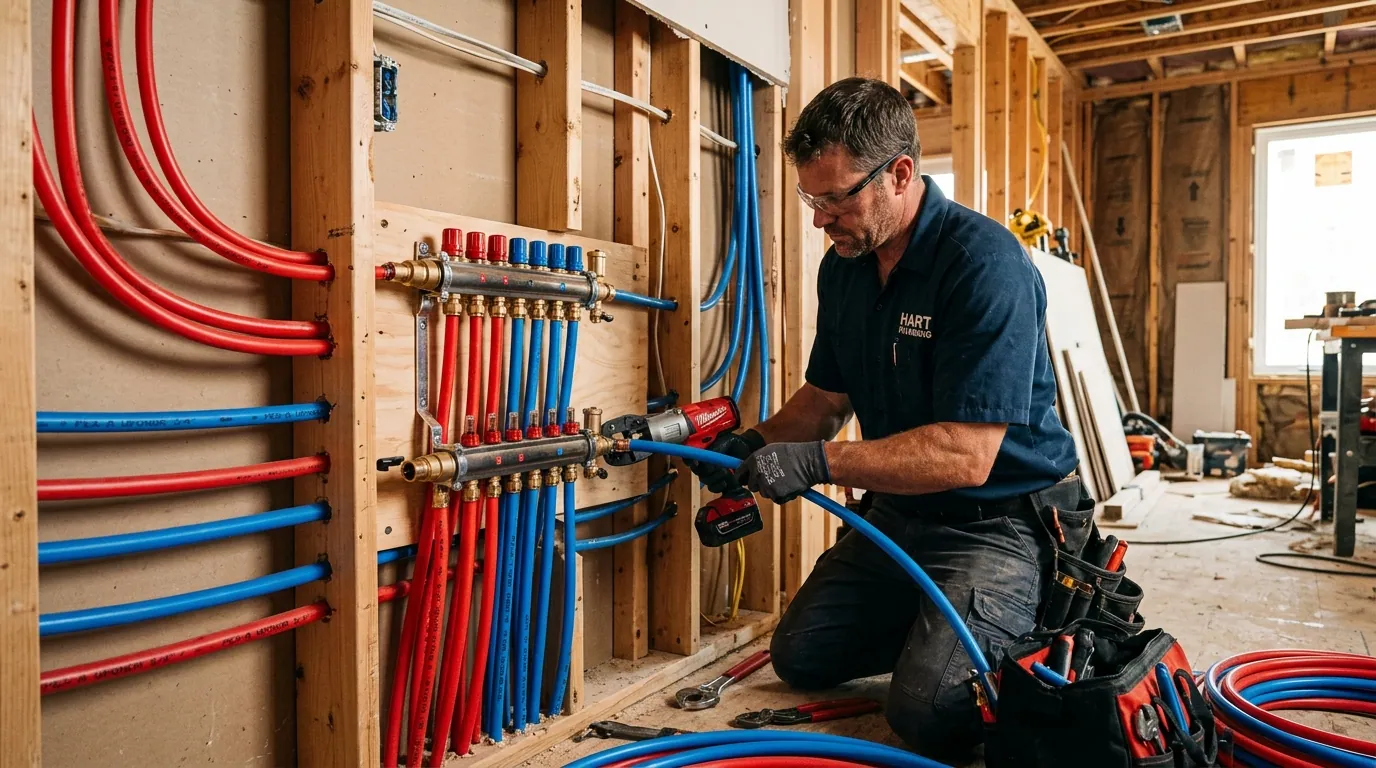
Detection Cost vs. Repair Cost
Detection
- ✓ Confirms water loss
- ✓ Narrows affected area
- ✓ May use several tests (pressure, acoustic)
- ✓ Usually precedes the final repair estimate
Repair
- ✓ Corrects the damaged line
- ✓ Repairs or bypasses the pipe
- ✓ May require surface access (jackhammering)
- ✓ Depends completely on the final chosen method
Main Cost Factors
Leak Location & Depth
Pipe Material & Condition
Flooring Type & Access
Detection Method Used
Repair Method Required
Permits & Code Compliance
Emergency vs. Scheduled
Concrete & Surface Restoration
Repair Method Comparison
What an Estimate Should Clarify
A useful slab leak estimate should connect the proposed method to documented findings and separate every cost category. Check the following:
- • Detection charge
- • Plumbing work and labor
- • Material costs (copper, PEX, fittings)
- • Access methods (jackhammering, drywall cutting)
- • Post-repair testing
- • Concrete closure (rough patching)
- • Tile, flooring, drywall, and paint restoration
- • Warranty provided
- • Permit and inspection costs (when applicable)
Avoiding Misleading Low Quotes
A phone price given before the system, route, access, and finishes are known may be only a partial allowance. In East Tucson and elsewhere in the service area, ask for the assumptions and exclusions behind any initial figure.
- Detection excluded: The figure assumes another provider has already identified the affected system and area.
- Restoration excluded: Concrete, tile, flooring, drywall, paint, drying, or cleanup belongs to another scope.
- Verification unclear: The estimate does not state how the repair or reroute will be pressure-tested and inspected.
- Rate conditions unclear: After-hours, equipment, permit, disposal, and concealed-condition charges are not defined.
Insurance and Slab Leaks
Coverage depends on the policy, endorsements, cause, timing, and facts of the loss. Arizona DIFI advises consumers to review the policy and consult the insurer about water damage. Separate the failed pipe, access, resulting damage, drying, mold, matching, personal property, and code work; obtain written plumbing findings and ask how each category is handled.
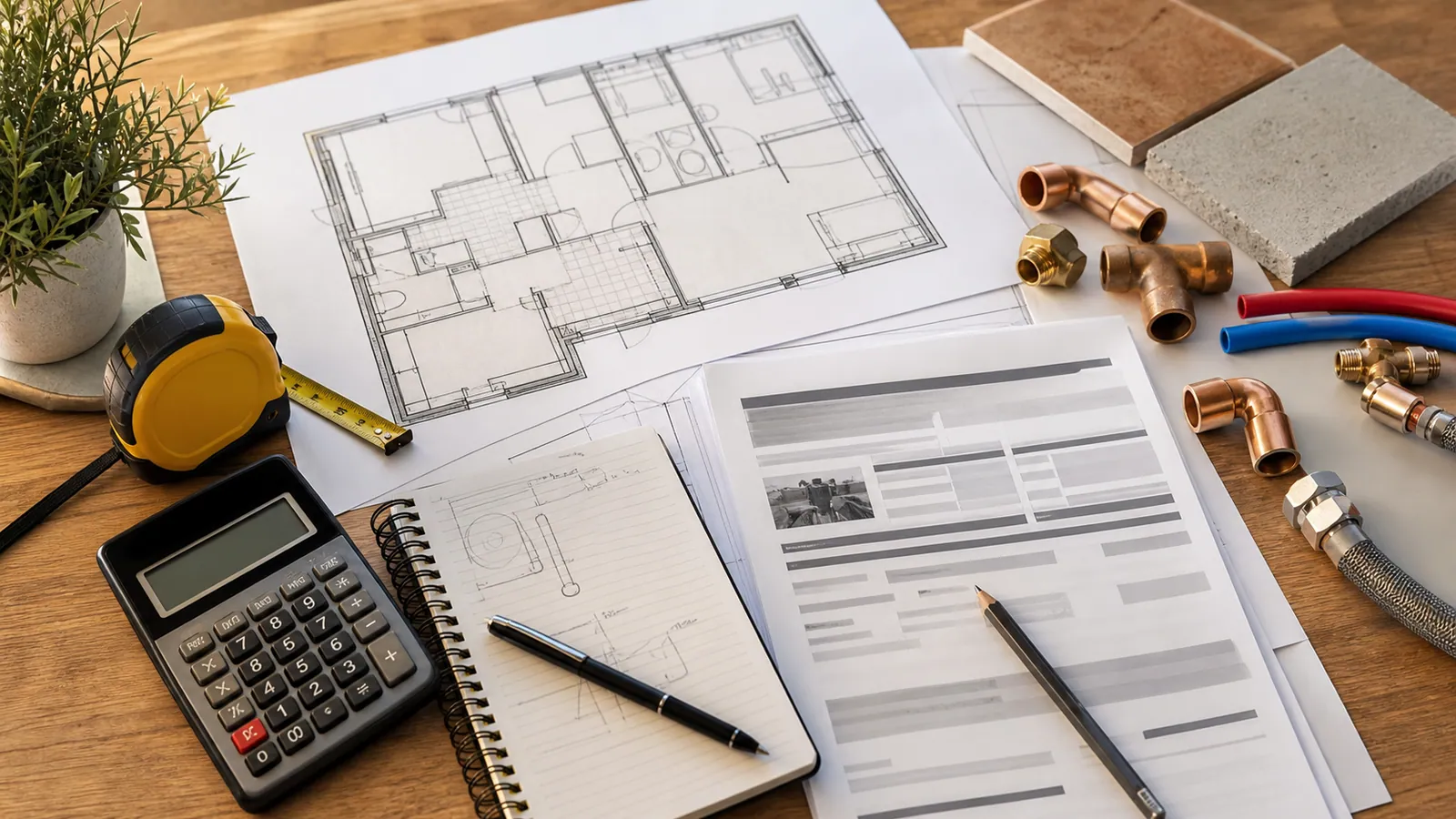
How to Compare Slab Leak Repair Estimates Line by Line
Two estimates can show different totals because they include different work. Start by confirming whether each proposal covers diagnosis, pipe tracing, access, the plumbing repair or reroute, pressure testing after completion, debris removal, concrete closure, and finish restoration. An estimate that stops at the pipe repair should not be compared directly with one that includes flooring or drywall work.
Check allowances and exclusions closely. Tile matching, cabinet removal, hazardous-material testing, permit requirements, after-hours work, and concealed conditions may be outside the quoted price. Ask who coordinates each trade and which changes require written approval. This reduces the chance that a low initial figure becomes a series of unplanned additions.
Finally, compare warranty coverage and the exact pipe section included. A proposal for one spot repair is a different scope from a partial repipe serving several fixtures. A clear written scope is more useful than choosing from headline prices alone.
Why the Smallest Opening Is Not Always the Lowest-Cost Option
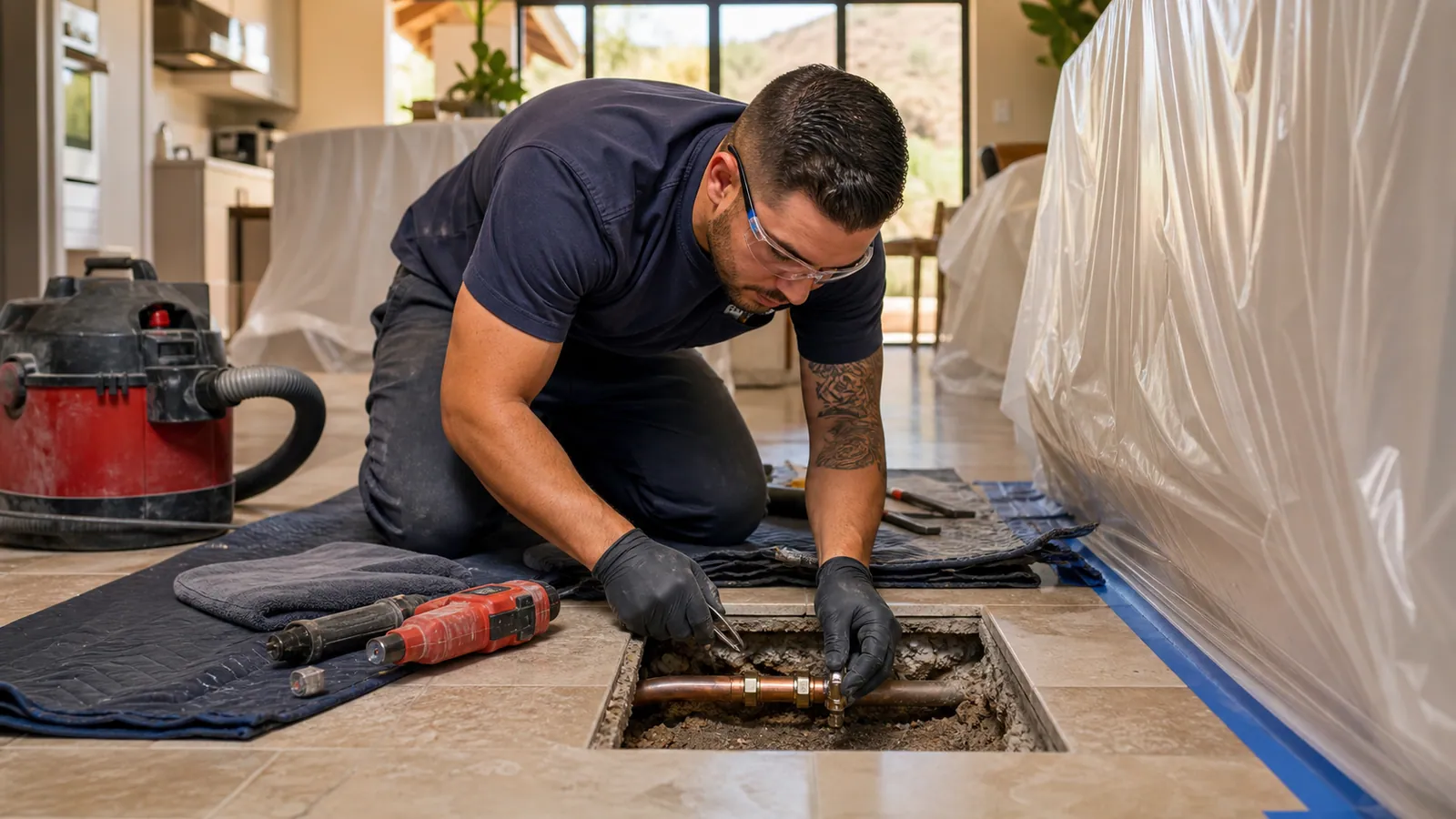
A direct opening can be economical when the leak is beneath accessible flooring and the surrounding finishes are easy to replace. The same opening may be costly below custom cabinets, stone flooring, a shower assembly, or a room where matching material is unavailable. Detection should therefore inform both the pipe repair and the restoration plan.
Rerouting can avoid concrete demolition, but it introduces a different scope: finding a practical path, opening walls or ceilings, protecting pipe in hot or exposed spaces, reconnecting fixtures, and restoring access points. Review the full water-line rerouting plan before assuming it costs less.
Repair history matters as well. One isolated failure in otherwise serviceable pipe may support a targeted repair, while repeated leaks on the same aging branch may justify comparing a broader replacement. The appropriate decision balances confirmed location, access, finishes, pipe condition, disruption, and the work included—not merely the size of the first access hole.
Frequently Asked Questions

Request a Scope-Based Repair Estimate
Start with documented testing, then compare access, pipe work, restoration, permits, verification, exclusions, and warranty in writing.
Request Service
Check Service Availability
Select the property ZIP and main symptom to see the appropriate next step.