When Replacing a Branch Is Worth Comparing
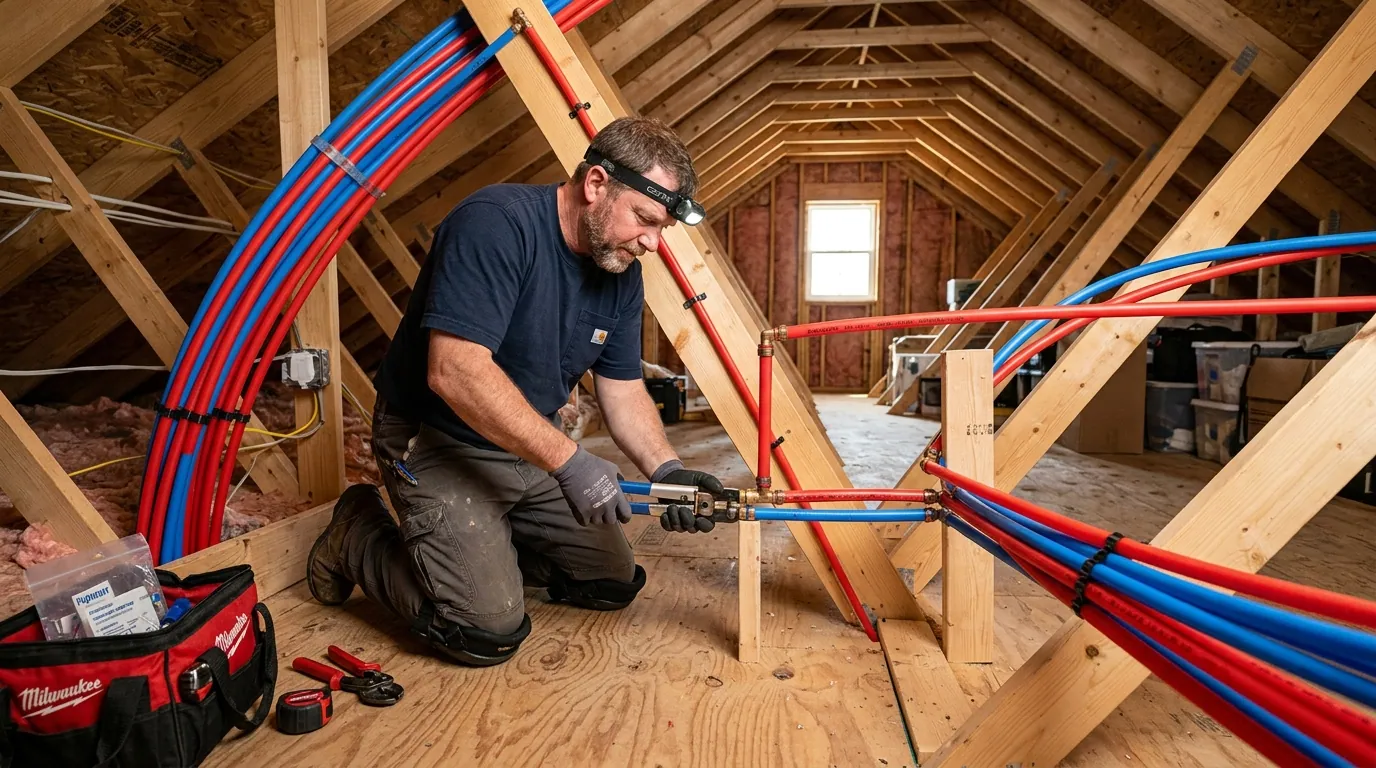
A partial repipe may make financial sense when a confirmed branch has failed repeatedly, direct access would damage difficult finishes, or several fixtures share an aging route. One past leak alone does not prove that the whole branch must be replaced.
Compare the remaining pipe condition, number of connections, attic or wall path, access openings, restoration, testing, warranty, and total cost. A clear proposal should show which fixtures the new branch will serve and which buried section will be abandoned.
Comparing Your Options
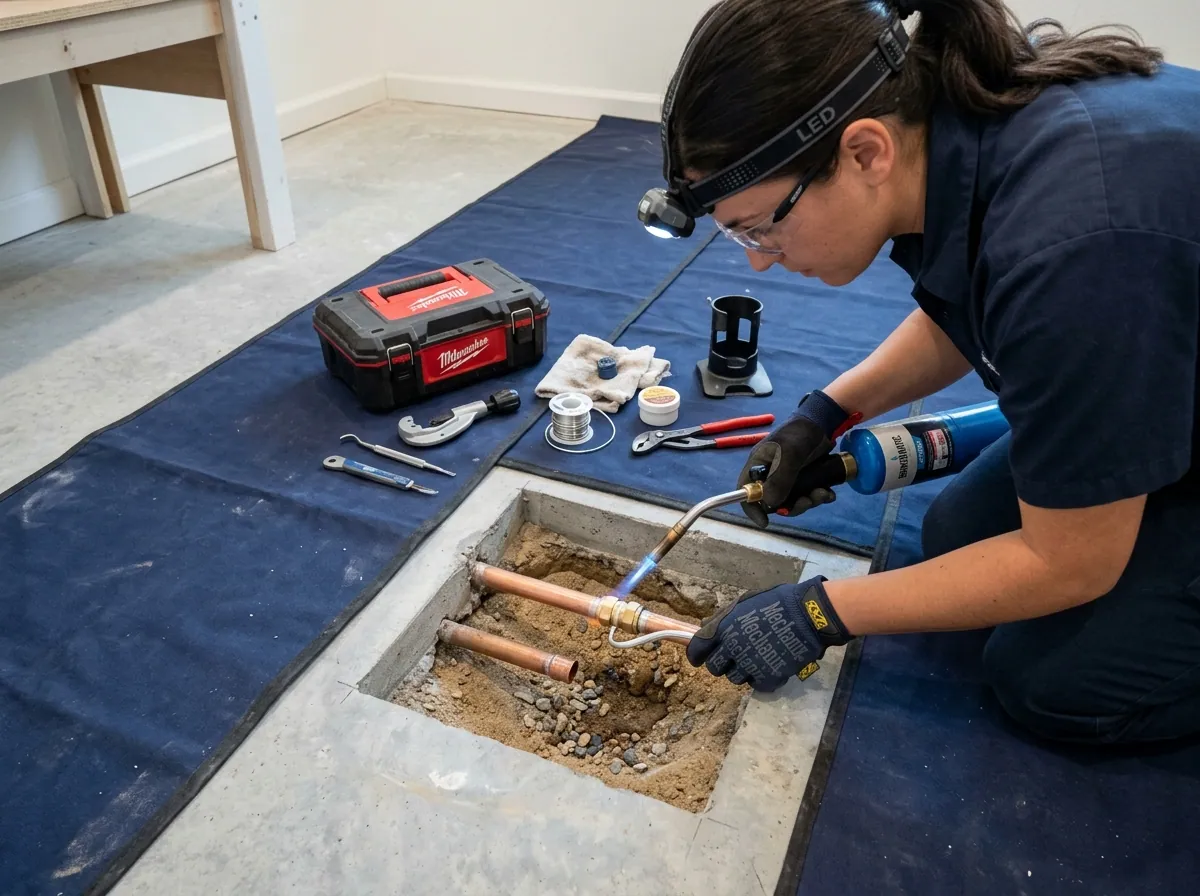
- • Partial repiping vs whole-house repiping: Whole-house covers everything. Partial targets only the repeated leak section that is failing.
- • Repiping vs slab leak spot repair: Repiping is preventative. Spot repairs are temporary bandages if the line is bad.
- • Partial repiping vs water-line rerouting: They are similar, but a partial repipe often involves a longer water-line branch rerouting covering multiple fixtures.
Define Exactly What the Partial Repipe Includes
“Partial repipe” can mean one fixture branch, one hot- or cold-water group, or several related lines. The estimate should name every fixture and connection included, the pipe size and material, the route, access points, and test procedure.
A failed or unclear pressure test is not enough by itself to define the scope. Ask how the affected branches were identified and whether a spot repair, single-line reroute, broader partial repipe, or whole-home evaluation is being recommended—and why.
Materials, Testing, and Warranty Questions
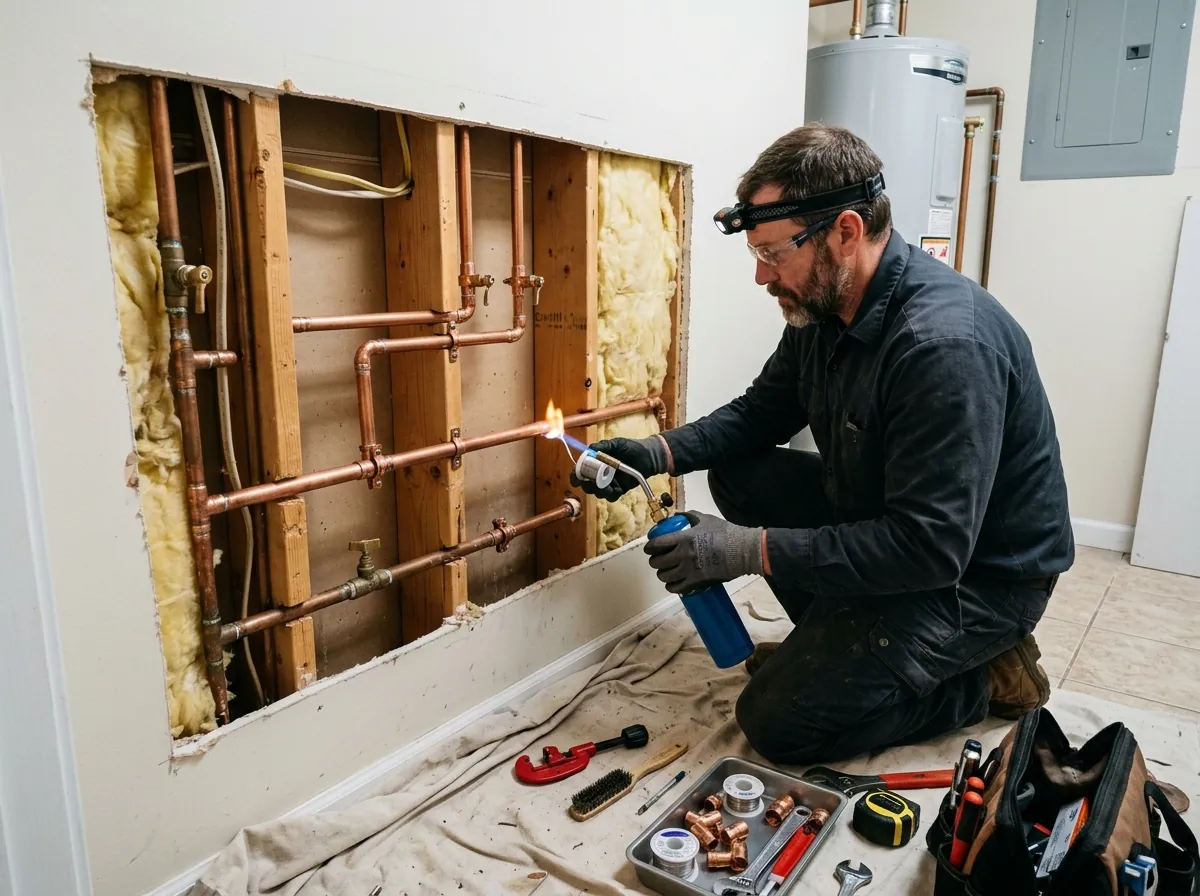
PEX and copper are both considered for partial repiping. PEX flexibility may reduce directional fittings on some routes, while copper may suit particular exposed or transition details. Material choice should match local requirements, water conditions, temperature and pressure ratings, and manufacturer instructions.
Ask for the product name, pipe size, joining system, supports, insulation, protection at framing, and documented test method. These installation details matter as much as the material label.
Labor and manufacturer warranties vary by provider and product. Request both in writing, including duration, exclusions, transferability, required registration, covered fittings, and who handles access and finish restoration if a warranty claim occurs.
When Partial Repiping Makes Sense
A partial repipe sits between a limited under-slab pipe repair and a whole-home repipe. It can target a known branch—for example, a hot-water line serving several fixtures—while leaving unrelated piping in service.
The comparison should include failure history, nearby pipe condition, access and restoration, route length, fixture downtime, and total project cost. Replacing the branch removes that buried section from active service, but it does not eliminate leaks from other pipes or connections.
Planning Wall and Ceiling Access
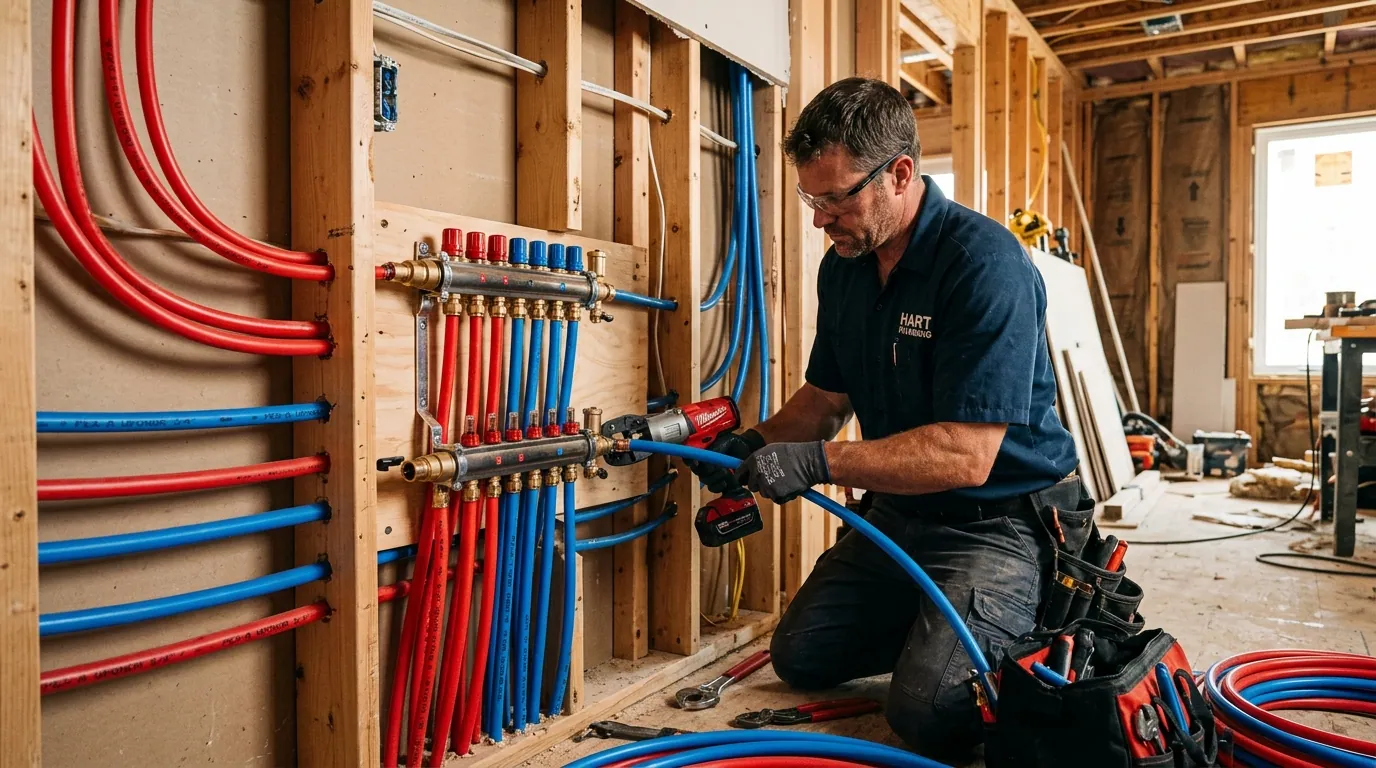
Replacing only selected lines usually requires fewer openings than a whole-home project, but access cannot be promised as minimal before the route is mapped. Framing, fire blocks, insulation, fixture valves, cabinets, and required supports can change the plan.
Ask the provider to mark expected wall and ceiling openings for the replacement route. The written scope should state who moves belongings and appliances, protects occupied rooms, replaces insulation, patches drywall, matches texture, and paints.
Document the New Branch for Future Work
A partial repipe can improve access to the lines it replaces, especially when shut-offs or a serviceable manifold are part of the approved design. These features are project choices, not automatic parts of every repipe.
Keep a route drawing, photos before wall closure, product information, connection locations, test results, permits when applicable, and warranty documents. Good records make future diagnosis and estimates clearer, helping a homeowner compare long-term options and slab leak repair costs without guessing where the new branch runs.