
Neighborhoods Served Around Central Tucson
We provide slab leak detection throughout Downtown, Midtown, Blenman-Elm, the University area, and nearby Central Tucson neighborhoods. One request is enough—we confirm availability from the property address and route the visit to the correct service area.
What We Know About Central Tucson Properties
Central Tucson includes early and mid-century homes, later infill, condominiums, duplexes, and small multifamily buildings. Original plumbing may include galvanized steel or copper, while remodeled sections may use newer copper, CPVC, or PEX. The material and route must be verified at the property rather than inferred from its age.
Access can range from a ground-floor slab with tile to a unit where plumbing passes through shared walls or ceilings. Common meters, irrigation, and shared building lines must be separated from private unit plumbing before slab leak repair is assigned to one owner.
Tucson Water states that it generally maintains the line from the main to the meter, while the owner maintains the line after the meter; another provider may apply at a particular address. That boundary matters in Downtown, Midtown, and University-area properties because exterior service-line loss is not the same as a pipe failure beneath the building slab.
When to Request Slab Leak Detection
- ■Warm or hot flooring: A leaking hot-water line may transfer heat through concrete or tile, creating a need for expert leak detection in Central Tucson.
- ■Water-meter movement: Continuous movement while fixtures are off suggests water loss somewhere on the metered system.
- ■Damp flooring or baseboards: Moisture without an obvious source may come from an under-slab line, wall pipe, exterior service line, or drainage problem.
- ■Running-water sound: A pressurized leak can create a hiss or flowing sound traveling through framing.
- ■Unexplained water use: A bill increase or high-use alert should lead to checks of toilets, irrigation, pools, appliances, and the private service line before final diagnosis.
How Hidden Water-Line Testing Works
We follow a structured process on every visit instead of jumping straight to opening your floor. Here is what our detection process looks like and what you can expect at each step.
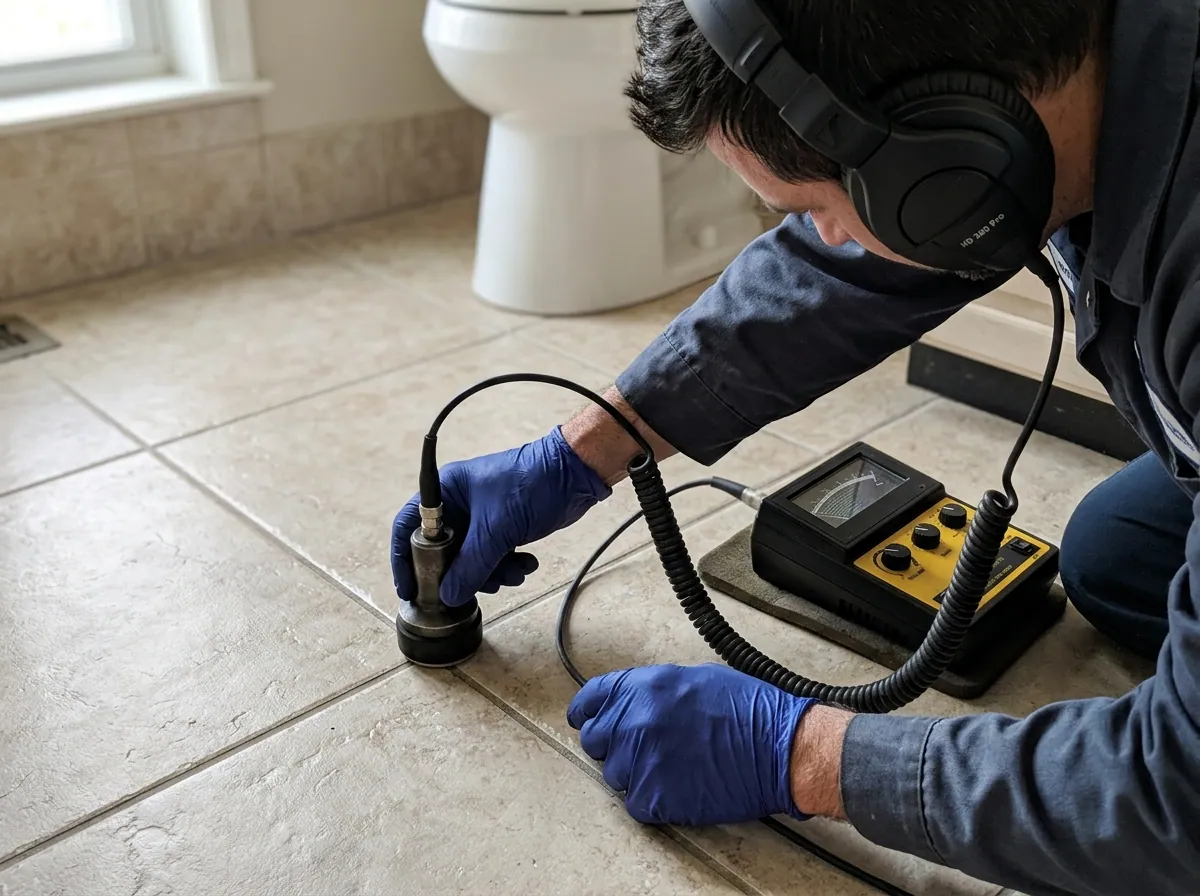
1. Review the symptoms
We establish whether one unit or several spaces show symptoms, which meter serves them, and whether a warm or damp area follows an original or remodeled pipe route.
2. Check visible sources
We rule out shared lines, evaporative-cooler feeds, irrigation, toilets, laundry connections, and meter-to-building plumbing before testing beneath a floor.
3. Confirm water loss
We check your water meter and perform pressure testing to determine whether a pressurized plumbing section is losing water.
4. Isolate the affected system
Available isolation valves are mapped first because older or altered systems may not separate cleanly; pressure results are interpreted against that actual layout.
5. Locate the suspected route
We trace the suspected route through additions, shared walls, tile, or exposed utility areas and use locating equipment only after the affected system is identified.
6. Compare repair options
Options are compared against shared-property approvals, historic finishes, ceiling or wall routes, pipe condition, and responsibility for drywall, concrete, or tile restoration.
Direct Pipe Repair, Rerouting, and Selected Repiping
Once we identify the affected line, we explain exactly why we recommend a specific repair method for your property. The lowest-disruption option is not always the cheapest, and we make sure you understand the trade-offs before any work begins.
Planning the work: In dense central neighborhoods, technicians may need clear access to the water meter, water heater, shutoff valves, and the rooms where symptoms appear. Condominiums and rental properties may also require coordination with an owner, manager, or association before under-slab pipe repair begins at a Central Tucson property. Detection should come before unnecessary demolition.
Spot Repair
When it fits: The failure appears limited to one accessible point and the surrounding pipe remains serviceable.
Limitations: Direct repair at homes in ZIP codes 85701, 85712, 85716, and 85719 normally requires controlled access through the finished floor and concrete near the damaged section.
Water-Line Rerouting
When it fits: The under-slab route is difficult to reach, finished surfaces are a concern, or bypassing the line is practical.
Limitations: Water-line rerouting for your Central Tucson home may avoid slab access but can require openings in walls, ceilings, attic space, garages, or exterior surfaces.
Partial Repiping
When it fits: An older or repeatedly repaired branch serves several fixtures and its condition makes isolated repair less dependable.
Limitations: Central Tucson additions, shared walls, and low-clearance roofs may require coordination and carefully placed ceiling or wall openings.
Slab Leak Services Offered Across Central Tucson
Slab Leak Detection
Confirm hidden water loss at a Downtown Tucson property and narrow the problem to the affected hot- or cold-water line.
Slab Leak Repair
We repair or bypass confirmed pipe failures beneath your concrete slab with minimal disruption to your flooring.
Pressure Testing
We test separable hot and cold branches and document pressure loss before assigning the problem to one unit or pipe route.
Water-Line Rerouting
Create a new route through accessible walls, ceilings, or utility space while accounting for additions and shared-property approvals.
Slab Leak Questions from Central Tucson Property Owners
Frequently Asked Questions
Related Areas: North Tucson and Casas Adobes | East Tucson
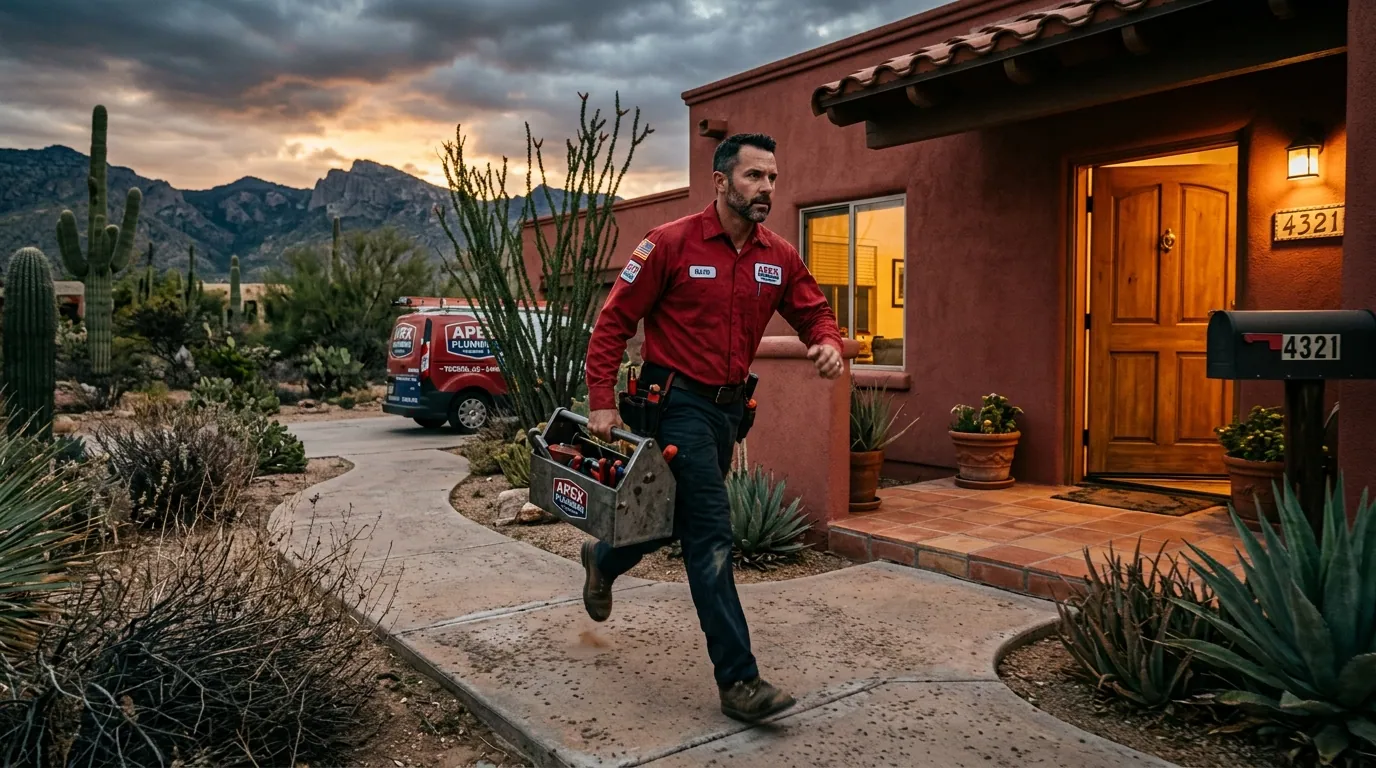
Request Slab Leak Service in Central Tucson
Provide the property address or ZIP code, the symptoms you have noticed, and whether water is actively spreading. Coverage, service availability, response time, and the appropriate next step will be confirmed before work is scheduled.
Check Central Availability Now
Check Service Availability
Select the property ZIP and main symptom to see the appropriate next step.