Why a Hot-Water Leak Can Warm the Floor
Hot water escaping beneath a slab can transfer heat through soil, concrete, mortar, and flooring. The surface pattern may follow the pipe route or spread away from it, and carpet or thick finishes can hide the change. A warm floor is therefore a clue—not confirmation. In Rita Ranch and other Tucson service areas, diagnosis should combine timing, meter flow, heater activity, hot-system isolation, and repeatable pressure loss.
Hot-Water Warning Signs
- Warm tile or concreteA repeatable path that does not track sunlight, HVAC cycles, or nearby appliances.
- Water heater cycling frequentlyThe heater recovers when no fixture has used hot water; normal demand and equipment faults still need to be excluded.
- Reduced hot-water availabilityAvailable hot water changes without a clear increase in household demand.
- Higher water and energy useMetered water and heater energy rise together after billing days and normal use are considered.
- Warm moistureA warm moisture pattern may support the investigation, but water can travel far from its source.
- Sound near the floorA sound that continues with fixtures idle and aligns with unexplained meter flow deserves testing.
What Else Can Cause Warm Flooring?
Before breaking concrete, we must rule out non-plumbing sources of heat. Common mimics include:
- Direct sunlight: Windows heating up a specific patch of floor during the day.
- HVAC ductwork: Uninsulated or poorly routed air ducts running near the foundation.
- Radiant floor heating: Older or malfunctioning electrical heating mats.
- Nearby hot-water appliance: Heat radiating from a dishwasher or under-sink boiler.
- Outdoor temperature effects: Heat transferring through the foundation edge during Tucson's hot summers.
Immediate Action: Isolate the Heater
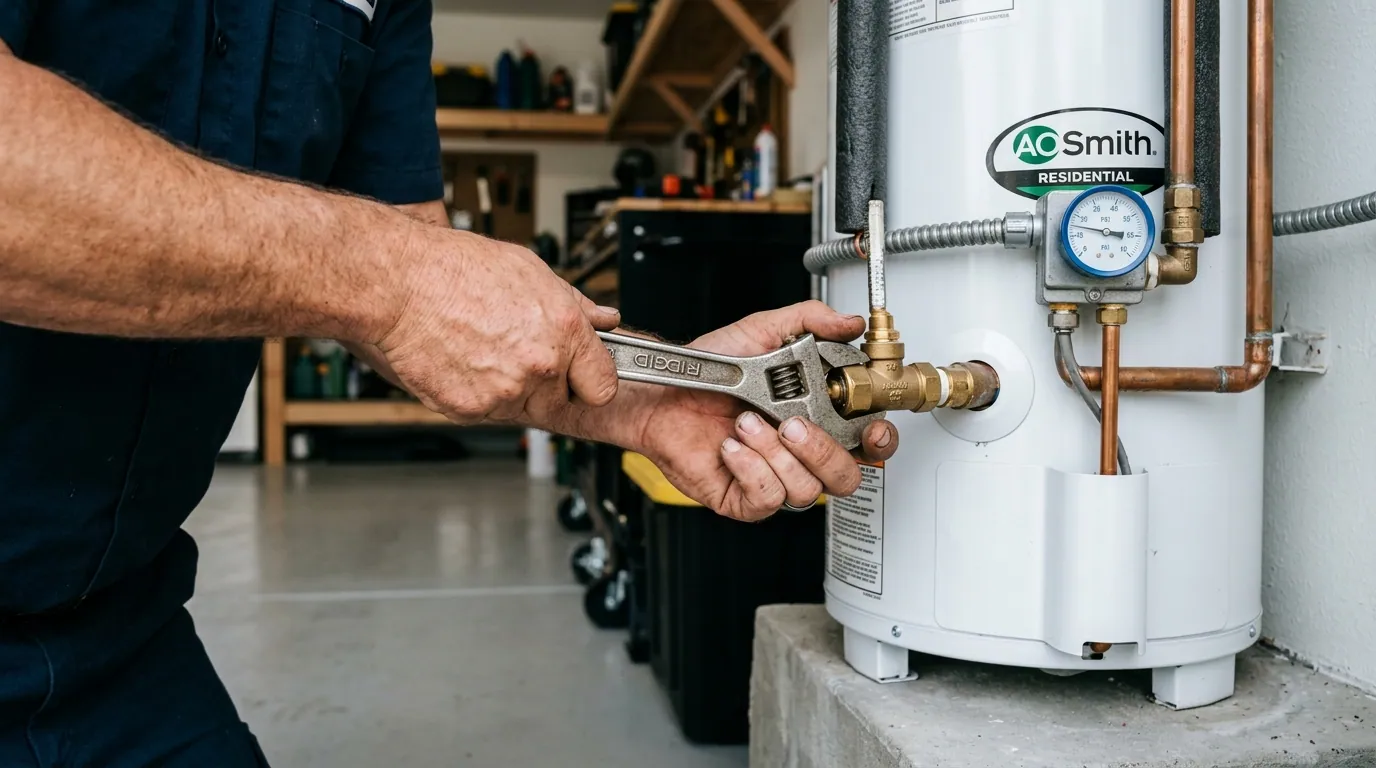
If water is actively spreading, use the private main or water-heater isolation valve only when it is clearly identified, accessible, and safe to operate. Do not force a corroded valve or guess at gas and electrical controls. Follow the manufacturer’s shutdown instructions or call a qualified plumber. A heater must not be operated in an unsafe, isolated, or partially drained condition.
The Hot-Water Detection Process
Isolate Hot-Water System
Static Pressure Testing
Trace the Pipe Route
Compare Thermal Evidence
Compare Acoustic Evidence
Document Findings and Options
Repair Options
Direct spot repair
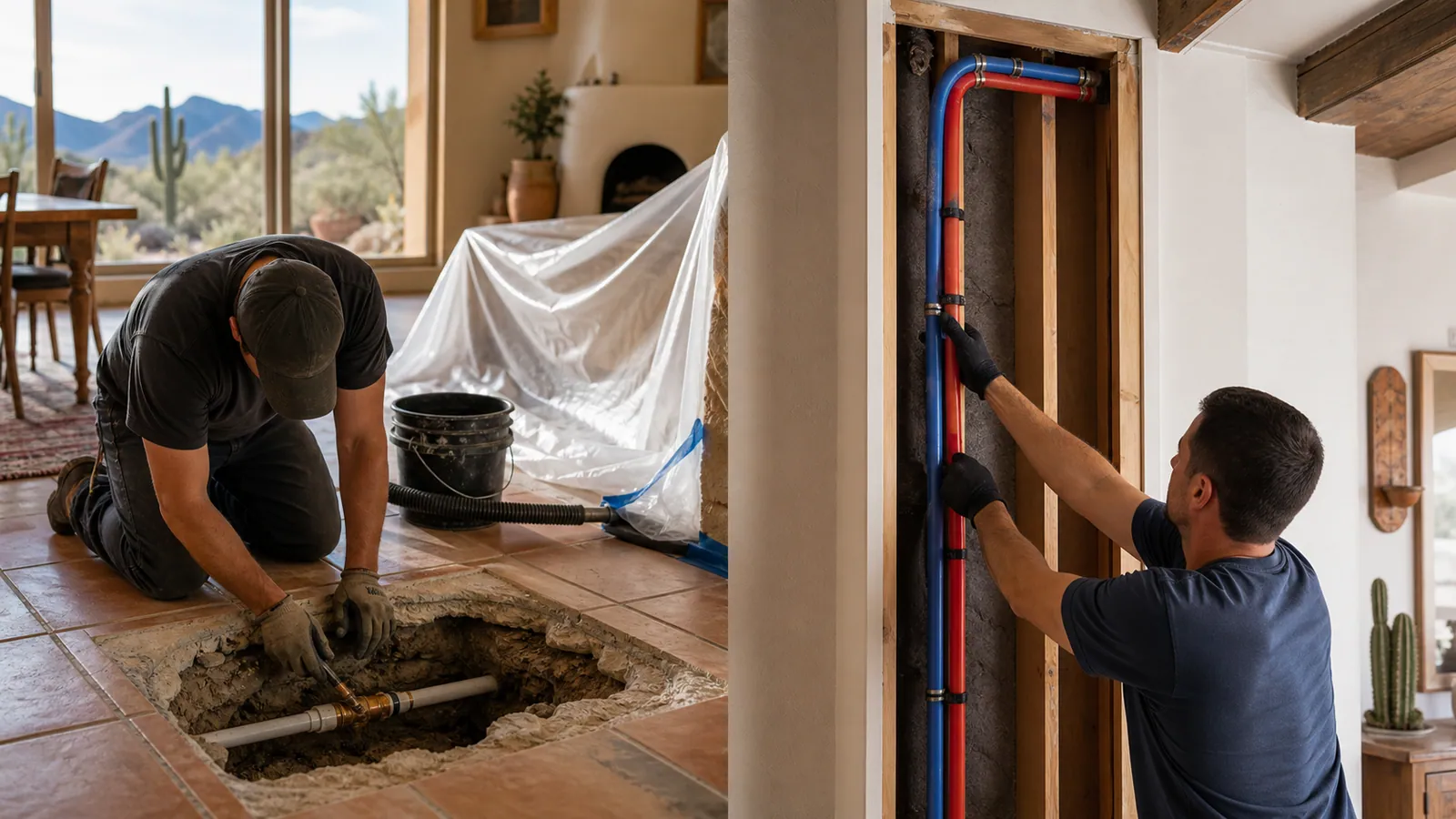
A controlled floor and concrete opening exposes the failed section for compatible repair. It may fit one well-supported location with practical access and no pattern of branch failures.
Hot-water line rerouting
The failed run is disconnected and replaced through an approved wall, ceiling, garage, attic, or other route. It may preserve flooring while requiring different finish openings.
Partial hot-water repiping
A defined group of unreliable hot-water branches is replaced when documented failure history supports more than one isolated repair. The boundary should be shown in writing.
Tucson Water and Hot-Line Conditions
Tucson Water describes local water as hard to very hard, which commonly contributes to scale in fixtures and water-heating equipment. Hardness alone does not identify why a concealed pipe failed. Pressure, pipe material, workmanship, abrasion, movement, temperature cycling, repairs, and the actual condition found after access should guide the explanation and repair scope.
How a Hot-Water Slab Leak Changes the Plumbing System
A hot-water line remains under pressure even when no faucet is open. If that line develops a leak below the slab, replacement water can continually enter the water heater and force it to recover more often. Homeowners may notice longer burner or heating-element cycles, less available hot water, or energy use that changes without a clear change in household routines.
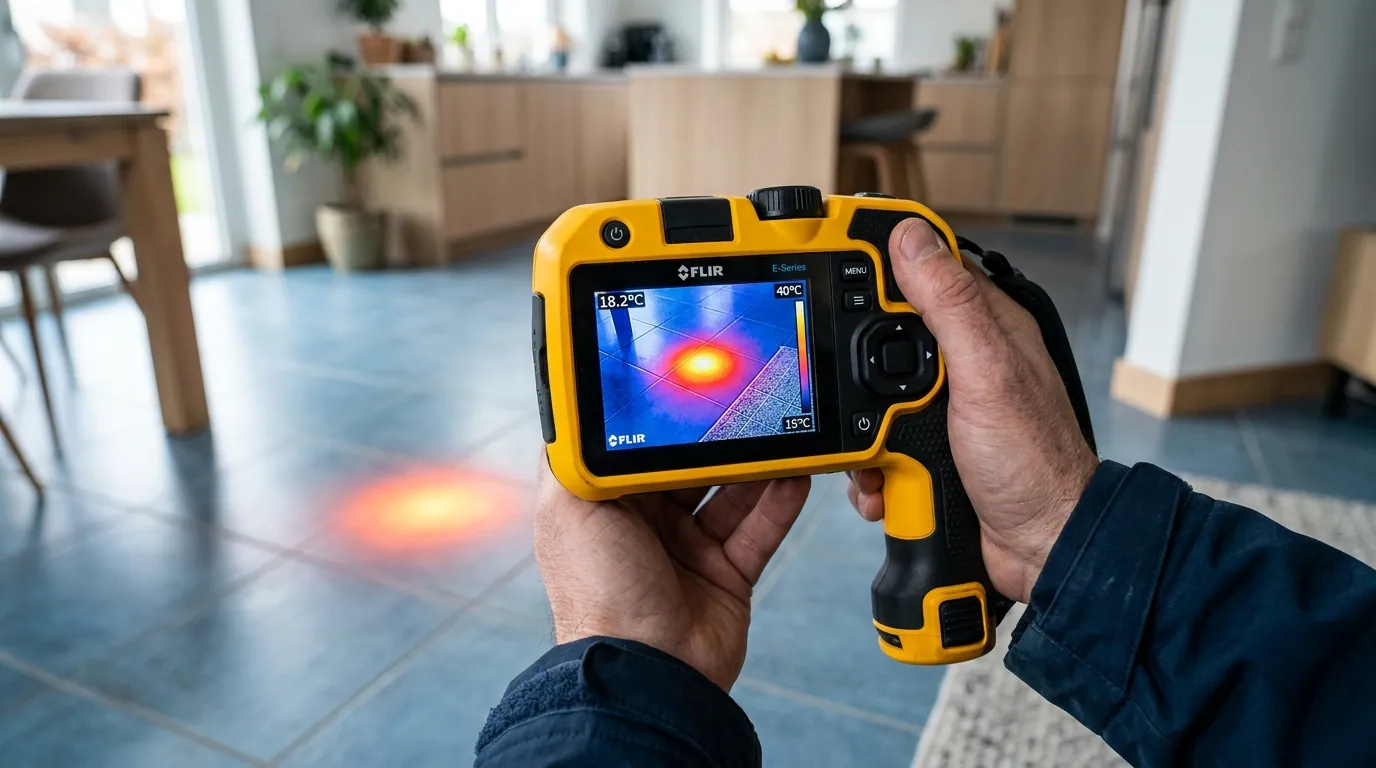
Escaping hot water can warm the soil and concrete, but the surface pattern may be wider or displaced from the failed pipe. Floor coverings, pipe depth, soil moisture, and nearby ducts affect where heat appears. A thermal scan therefore shows temperature differences; it does not see through concrete or independently prove the exact break location.
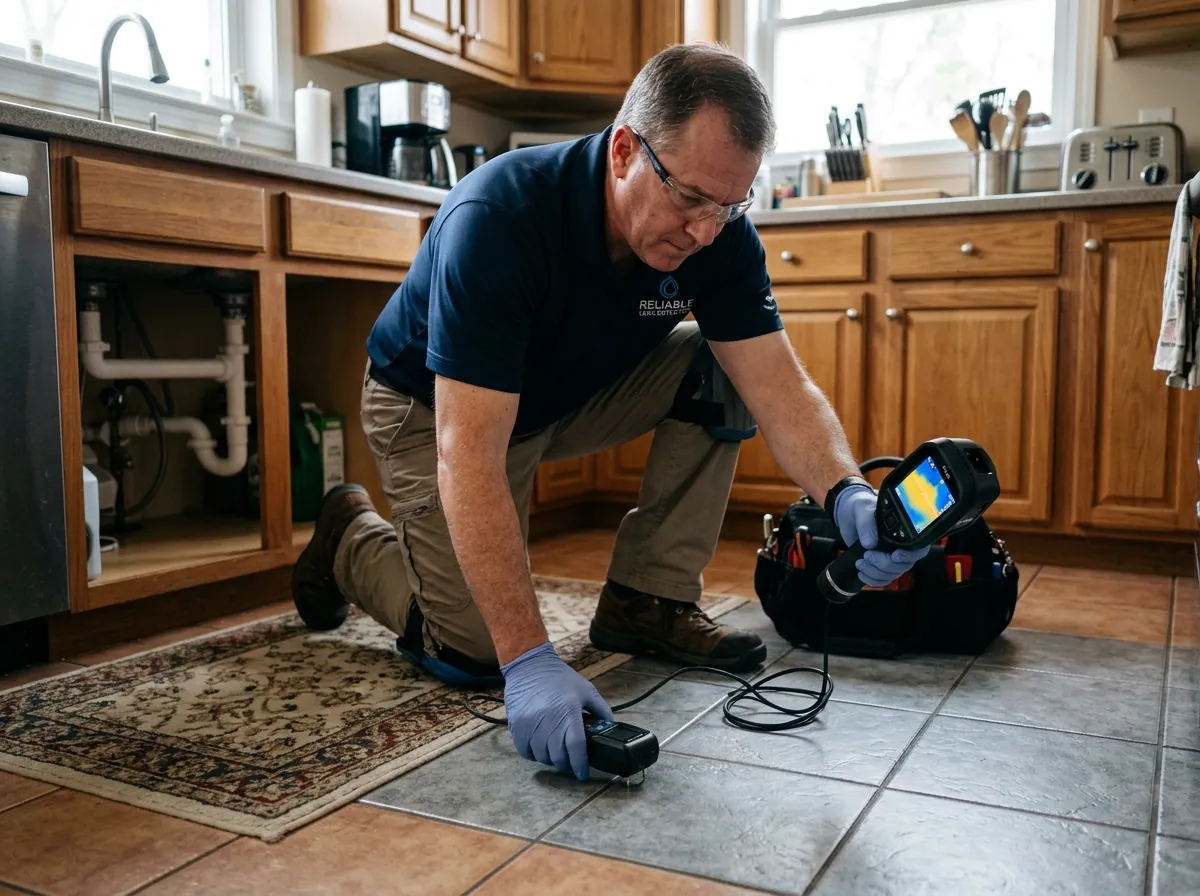
The strongest diagnosis combines controlled meter readings, hot-side isolation, pressure behavior, pipe tracing, and repeatable thermal or acoustic evidence. See how slab leak detection works before deciding where any access opening belongs.
What Determines Direct Repair or Hot-Line Rerouting
Direct access may be practical when the failed section is confidently located beneath an open area with replaceable flooring. The full scope should still address concrete cutting, excavation, pipe repair, testing, slab closure, and finish restoration. A small plumbing opening can become an expensive project when it sits below cabinets, stone, a shower, or finished living space.
A hot-water line reroute can avoid opening the slab by abandoning the leaking segment and installing an accessible route. The plumber must confirm which fixtures the line serves, where the new pipe can travel, how it will be insulated and protected, and whether walls or ceilings require access.
Pipe material, repair history, the number of affected branches, and restoration costs all influence the choice. Compare complete scopes rather than treating direct repair or rerouting as automatically superior. Written estimates should explain testing, access, restoration responsibility, warranty terms, and any conditions that could change the price.
Frequently Asked Questions
Schedule Hot-Water Leak Detection
Provide your ZIP code, describe when the floor feels warm, and note meter or water-heater changes. Testing should confirm the hot system before repair is selected.
Request Service
Submit your details for a prompt response.
Check Service Availability
Select the property ZIP and main symptom to see the appropriate next step.