
Neighborhoods Served Around Catalina & SaddleBrooke
We provide slab leak detection in Catalina, SaddleBrooke, and surrounding northern communities. Availability is based on the full property address, so homeowners can use one request even when a neighborhood sits near a service-area boundary.
What We Know About Catalina & SaddleBrooke Properties
Catalina and SaddleBrooke include established rural-area homes, later planned-community residences, and gated neighborhoods. Depending on construction era and remodeling, plumbing may combine copper, PEX, or repaired sections of different materials. Community access rules can affect parking, work hours, attic entry, and surface restoration during slab leak repair.
A resident may notice a warm area near a bathroom, hear water moving with fixtures closed, or receive a high-use notice without visible damage. A technician can compare the meter, isolate the hot and cold systems, test pressure, and use locating equipment to narrow the likely pipe route before discussing access.
Larger lots in 85739 can have long private service lines, while planned-community homes may offer attic or garage routes for a bypass. The serving utility must be verified from the address. A utility-side problem and an owner-maintained line after the meter require different contacts, so responsibility should never be assumed from the neighborhood name alone.
When to Request Slab Leak Detection
- ■Warm or hot flooring: A leaking hot-water line may transfer heat through concrete or tile, creating a need for warm floor leak detection north of Oro Valley.
- ■Water-meter movement: Continuous movement while fixtures are off suggests water loss somewhere on the metered system.
- ■Damp flooring or baseboards: Moisture without an obvious source may come from an under-slab line, wall pipe, exterior service line, or drainage problem.
- ■Running-water sound: A pressurized leak can create a hiss or flowing sound traveling through framing.
- ■Unexplained water use: A bill increase or high-use alert should lead to checks of toilets, irrigation, pools, appliances, and the private service line before final diagnosis.
How Hidden Water-Line Testing Works
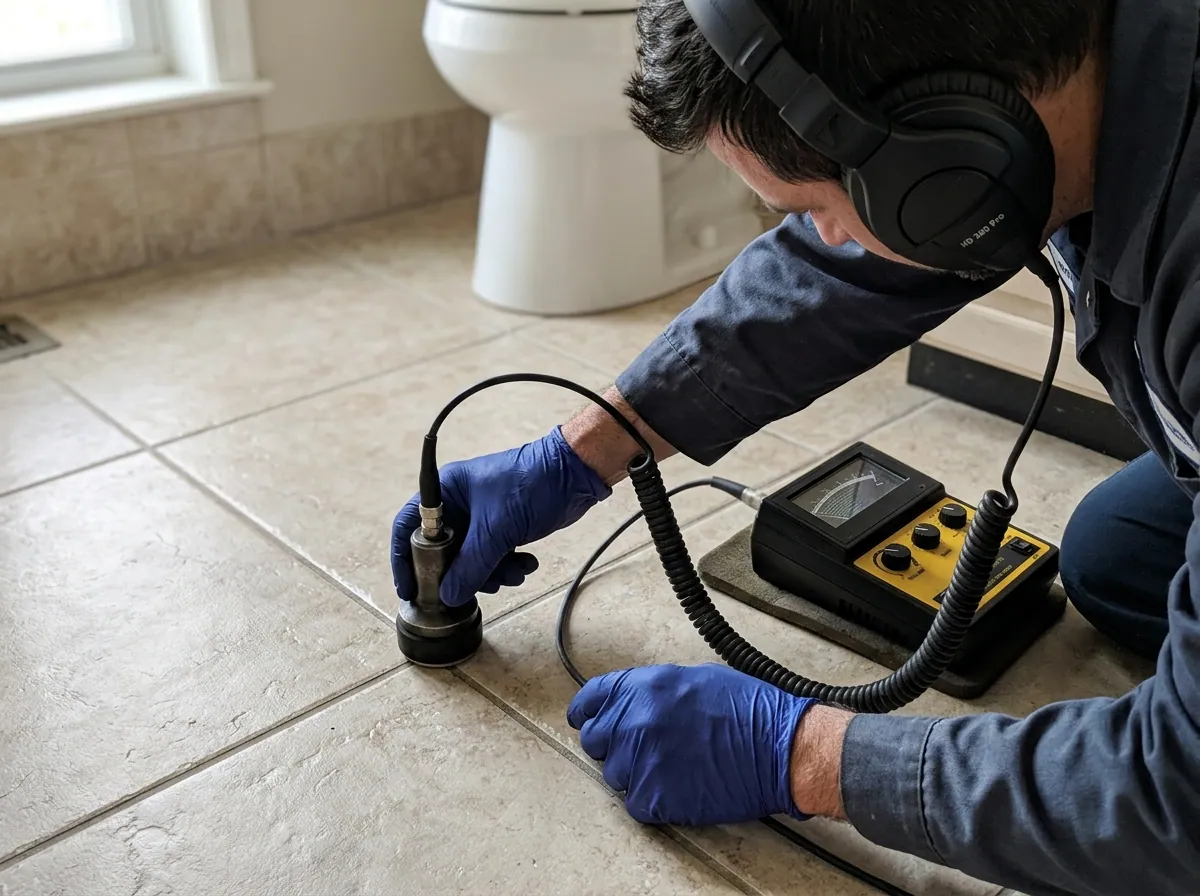
We follow a structured process on every visit instead of jumping straight to opening your floor. Here is what our detection process looks like and what you can expect at each step.
1. Review the symptoms
We record high-use notices, warm bathroom areas, water-heater cycling, and whether the symptom changes after irrigation or community landscape systems are off.
2. Check visible sources
We check the meter-to-home route, irrigation, softener connections, toilets, and accessible garage plumbing before testing lines beneath the living area.
3. Confirm water loss
We check your water meter and perform pressure testing to determine whether a pressurized plumbing section is losing water.
4. Isolate the affected system
We isolate hot and cold branches around available garage or utility-room valves and document the rate of loss rather than relying on a single gauge reading.
5. Locate the suspected route
The suspected branch is traced through bedrooms, bathrooms, garages, or courtyard walls, with acoustic and thermal tools selected for the actual floor assembly.
6. Compare repair options
The comparison accounts for HOA access rules, attic and garage routes, floor finishes, pipe history, and the fixtures served by the affected branch.
Direct Pipe Repair, Rerouting, and Selected Repiping
Once we identify the affected line, we explain exactly why we recommend a specific repair method for your property. The lowest-disruption option is not always the cheapest, and we make sure you understand the trade-offs before any work begins.
Planning the work: When a leak is confirmed, the repair choice depends on pipe condition and the route to affected fixtures. A focused floor opening may suit an isolated failure beneath a SaddleBrooke home. Rerouting may be preferable when finished surfaces or repeated pipe concerns make direct access less practical.
Spot Repair
When it fits: The evidence indicates one isolated failure and the nearby pipe remains suitable for repair.
Limitations: Direct access requires a planned opening through the floor and concrete near the damaged section, with restoration responsibilities defined in the estimate.
Water-Line Rerouting
When it fits: The under-slab route is difficult to reach, finished surfaces are a concern, or bypassing the line is practical.
Limitations: Water-line rerouting for a SaddleBrooke home may avoid slab access but can require openings in walls, ceilings, attic space, garages, or exterior surfaces.
Partial Repiping
When it fits: Repeated branch failures or an unreliable run justify replacing more than the visible damaged section.
Limitations: The route and work hours may require community approval, and reconnecting bathrooms or kitchens can involve several planned wall openings.
Slab Leak Services Offered Across Catalina and SaddleBrooke
Slab Leak Detection
Confirm water leak detection 85739 and narrow the affected hot or cold line.
Slab Leak Repair
We repair or bypass confirmed pipe failures beneath your concrete slab with minimal disruption to your flooring.
Pressure Testing
Separate hot- and cold-line pressure tests help identify the affected system before access or repair is recommended.
Water-Line Rerouting
Bypass an isolated SaddleBrooke or Catalina branch through an approved garage, wall, or attic route when slab access is less practical.
Slab Leak Questions from Catalina & SaddleBrooke Property Owners
Frequently Asked Questions
Related Areas: North Tucson and Casas Adobes | Catalina Foothills & Northeast Tucson
Request Slab Leak Service in Catalina and SaddleBrooke
Provide the property address or ZIP code, the symptoms you have noticed, and whether water is actively spreading. Coverage, service availability, response time, and the appropriate next step will be confirmed before work is scheduled.
Check Catalina Availability Now
Check Service Availability
Select the property ZIP and main symptom to see the appropriate next step.