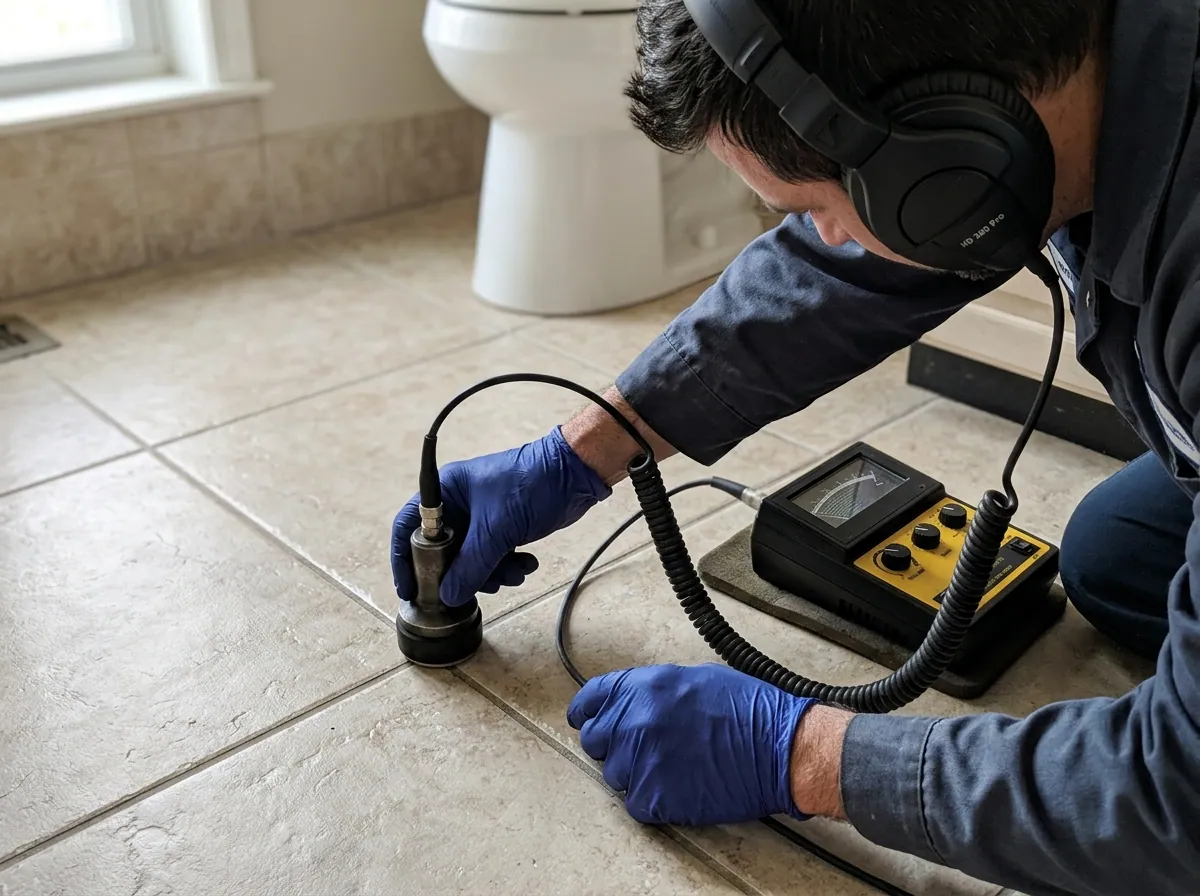
Isolating the Section Being Tested
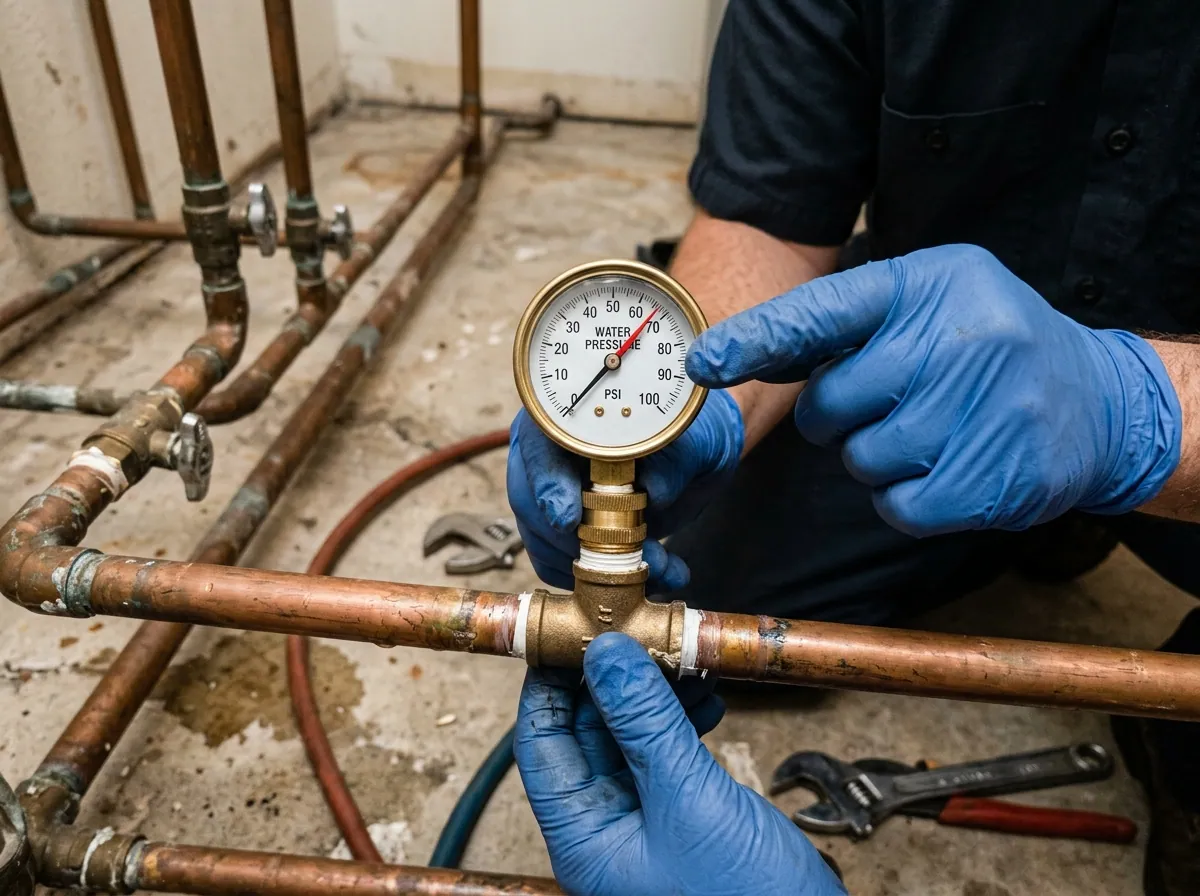
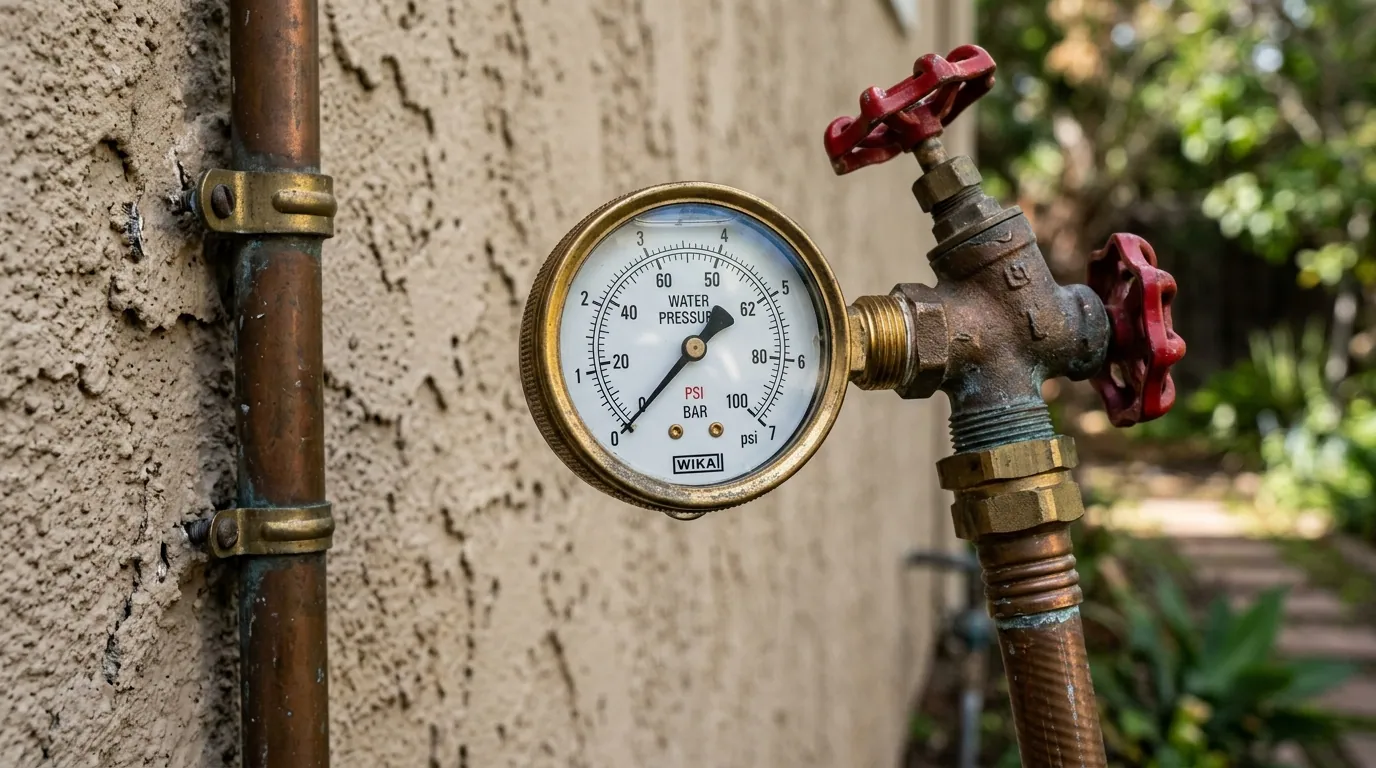
A pressure test for suspected slab leak Tucson begins with system isolation. The technician will perform shutoff valve testing and connect a plumbing pressure gauge to measure static water pressure.
Where valves and layout permit, hot and cold sections may be observed separately. A pressure change can support a leak diagnosis, but temperature, trapped air, valve leakage, fixtures, the regulator, and gauge accuracy must also be considered.
Confirm Hidden Water Loss
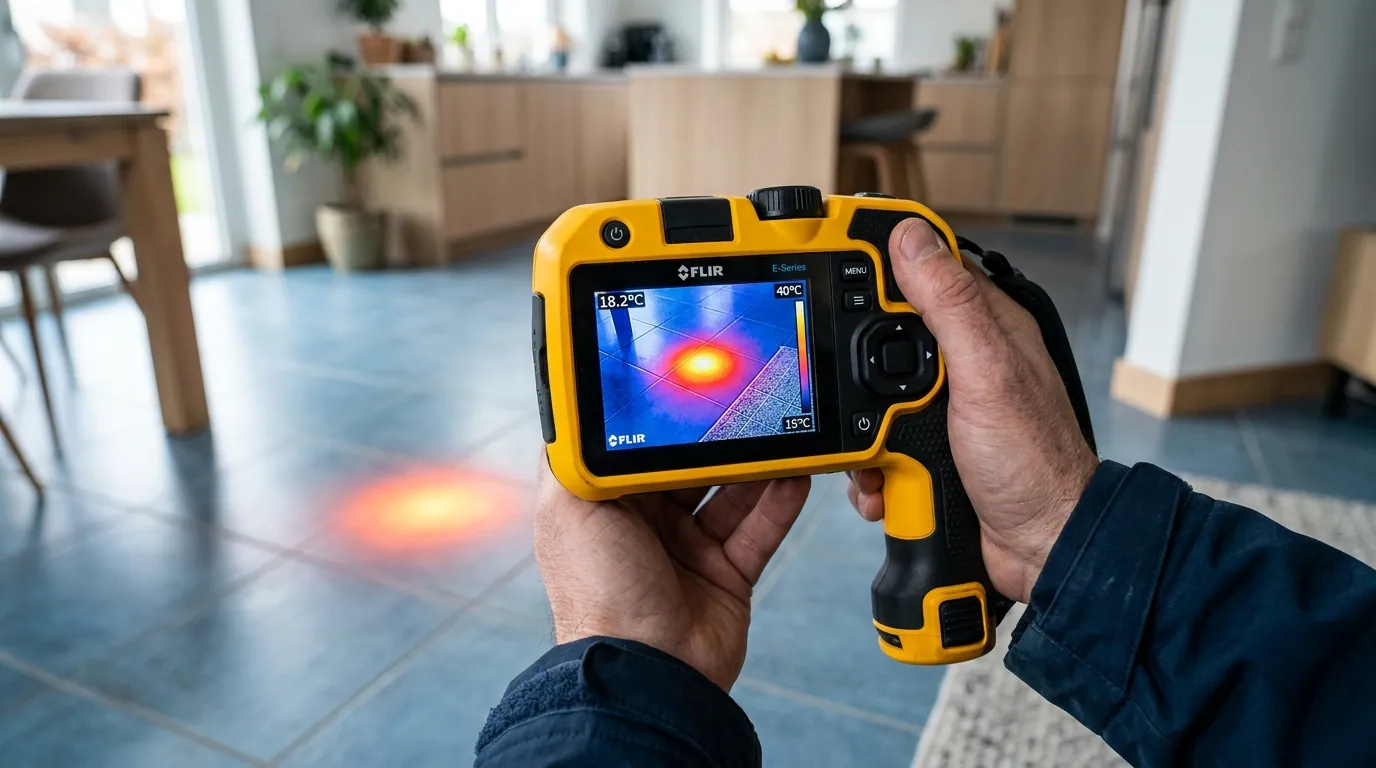
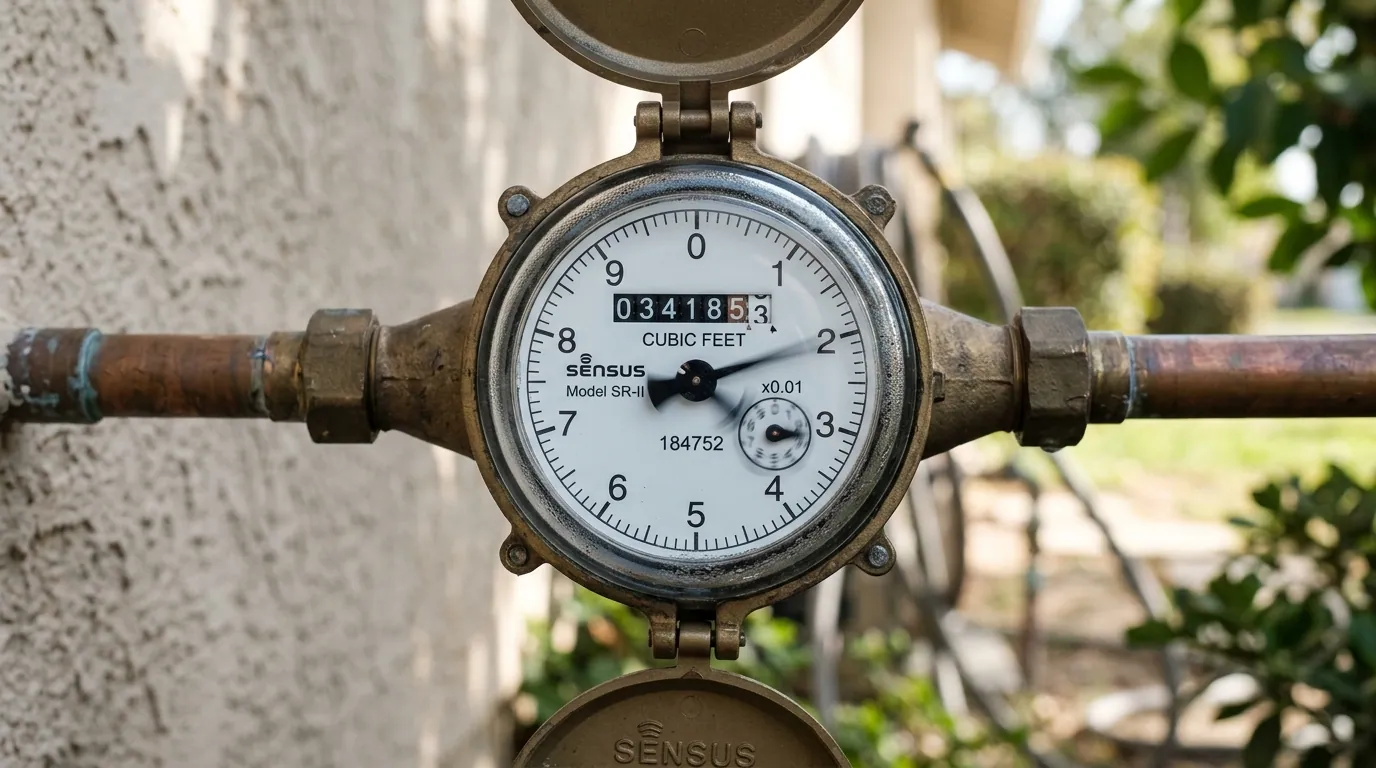
A pressure test can be useful before electronic leak detection, but it is not the only valid first step. Meter checks, fixture isolation, visible inspection, and the plumbing layout may provide the needed direction.
The provider should also consider the pressure regulator, shut-off valves, appliances, irrigation, and fixture leaks. These can change pressure behavior without proving an under-slab pipe failure.
Testing After Repairs
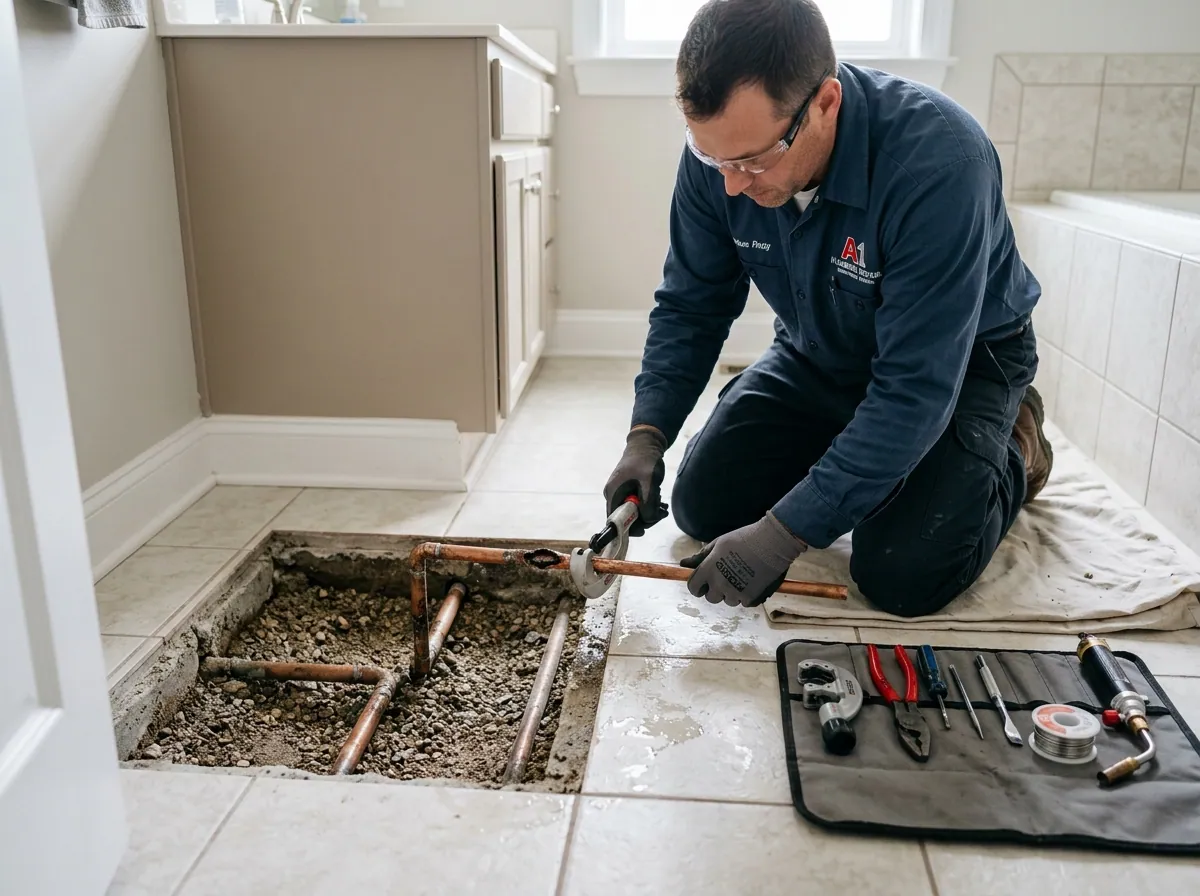
After a slab leak repair, the exposed connection and affected section should be checked before closure. Pressure testing, visual inspection, and fixture-flow checks answer different questions and should be documented separately.
How to Read a Pressure Test Report
A useful report records the isolated section, fixture and valve status, gauge range, starting pressure, ending pressure, duration, water or ambient temperature, and any pressure added by the test equipment. It should also note visible leakage and equipment limitations.
There is no universal pressure-drop number that grades every residential leak as small, large, or urgent. System volume, trapped air, thermal change, valve condition, gauge resolution, and test procedure affect the reading. Active water spreading or an electrical hazard is urgent regardless of a specific gauge threshold.
Ask for the provider's interpretation and the next test needed to confirm it. Written results can guide electronic leak detection, but insurance coverage and disclosure requirements depend on the policy and transaction.
Comparing Hot- and Cold-Water Sections
Separating sections can make a pressure test easier to interpret. The result depends on whether the valves truly isolate the section and whether recirculation lines, mixing valves, appliances, or cross-connections remain connected.
Closing a water-heater valve is not automatically a complete hot-side test procedure. Gas and electric equipment also require safe handling. A qualified provider should explain the isolation points, test medium, applied pressure, and why the setup is suitable for that home.
Check Fixtures and Connected Equipment First
A running toilet, irrigation valve, refrigerator, water treatment unit, evaporative cooler, hose bib, or dripping fixture can create water use that resembles a hidden supply leak. Visible and meter checks should identify these common alternatives first.
Fixture shut-offs can help isolate equipment, but old angle stops may not seal fully and some branches may lack individual valves. A remaining pressure change is evidence to investigate; it is not automatic proof that hard piping below the slab has failed.
When a Specialist Suggests Tracer Gas
A trained specialist may suggest tracer-gas testing when water-based and acoustic methods do not produce clear findings. It is a separate diagnostic method, not a routine step for every suspected slab leak.
The line must be prepared and tested with compatible equipment, a suitable tracer mixture, controlled pressure, ventilation, and manufacturer safety procedures. Gas can travel through soil and building gaps, so a surface reading still requires interpretation before any slab leak repair opening is selected.