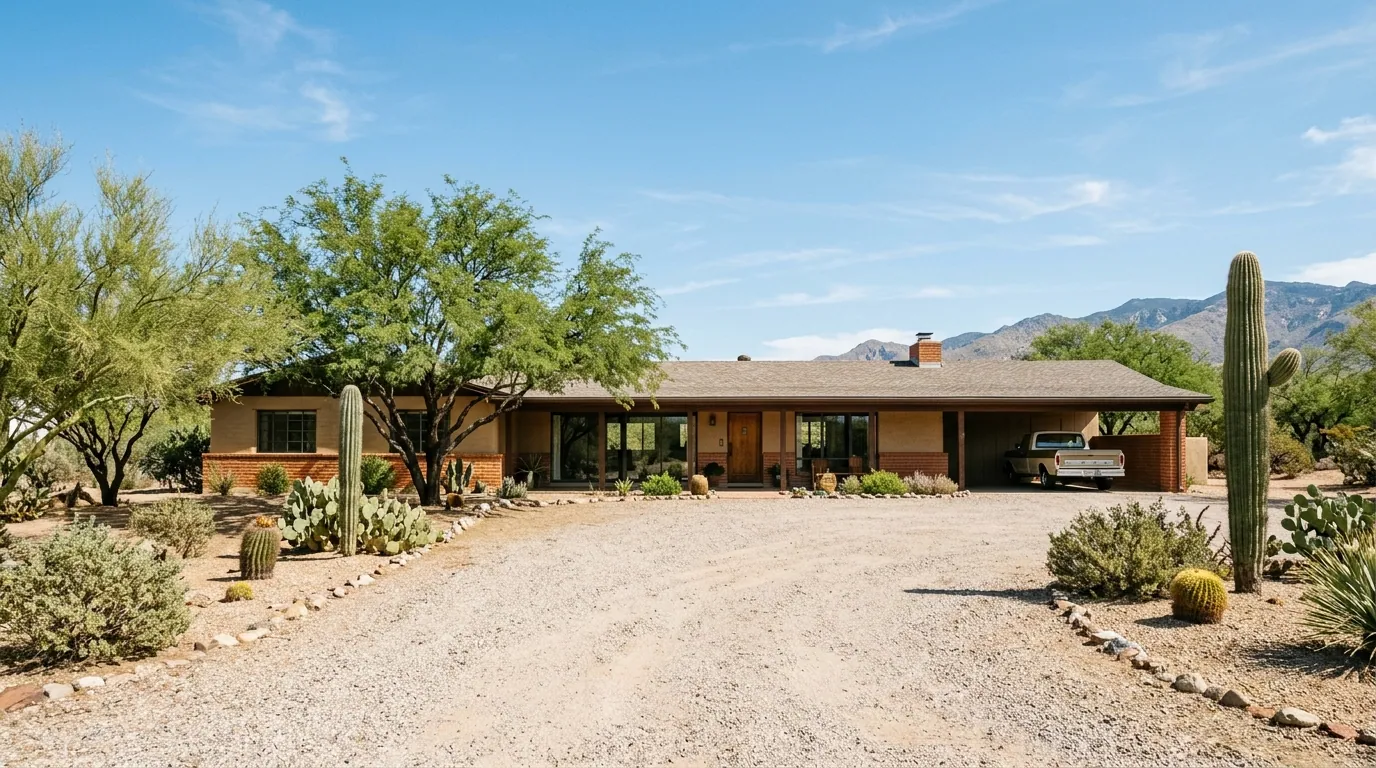
Neighborhoods Served Around East Tucson
We provide professional slab leak detection in East Tucson AZ and surrounding areas. Our service area covers the main communities naturally without creating a separate request for every neighborhood.
What We Know About East Tucson Properties
East Tucson combines postwar ranch neighborhoods, later subdivisions, townhomes, and newer development toward the far east side. Plumbing can include copper, CPVC, PEX, or mixed repairs, while pools and irrigation add separate sources of water use. A high bill near Udall Park or the Eastside should therefore lead to testing, not an automatic slab leak repair recommendation.
Access differs between low-slope ranch homes, attached housing, and newer plans with garage manifolds or attic routes. At an 85748 property, fixture checks, meter observation, line isolation, and water-line pressure testing help identify the system before direct access or rerouting is compared.
Tucson Water notes that its water can be hard and that pressure varies across the service area; neither condition alone proves a slab leak. It also generally assigns owner responsibility after the meter. The serving utility and meter boundary should be verified before work near Broadway, Pantano, or a far-east address is classified as private plumbing repair.
When to Request Slab Leak Detection
- ■Warm or hot flooring: A leaking hot-water line may transfer heat through concrete or tile, creating a need for warm floor leak detection in ZIP code 85710.
- ■Water-meter movement: Continuous movement while fixtures are off suggests water loss somewhere on the metered system.
- ■Damp flooring or baseboards: Moisture without an obvious source may come from an under-slab line, wall pipe, exterior service line, or drainage problem.
- ■Running-water sound: A pressurized leak can create a hiss or flowing sound traveling through framing.
- ■Unexplained water use: A bill increase or high-use alert should lead to checks of toilets, irrigation, pools, appliances, and the private service line before final diagnosis.
How Hidden Water-Line Testing Works
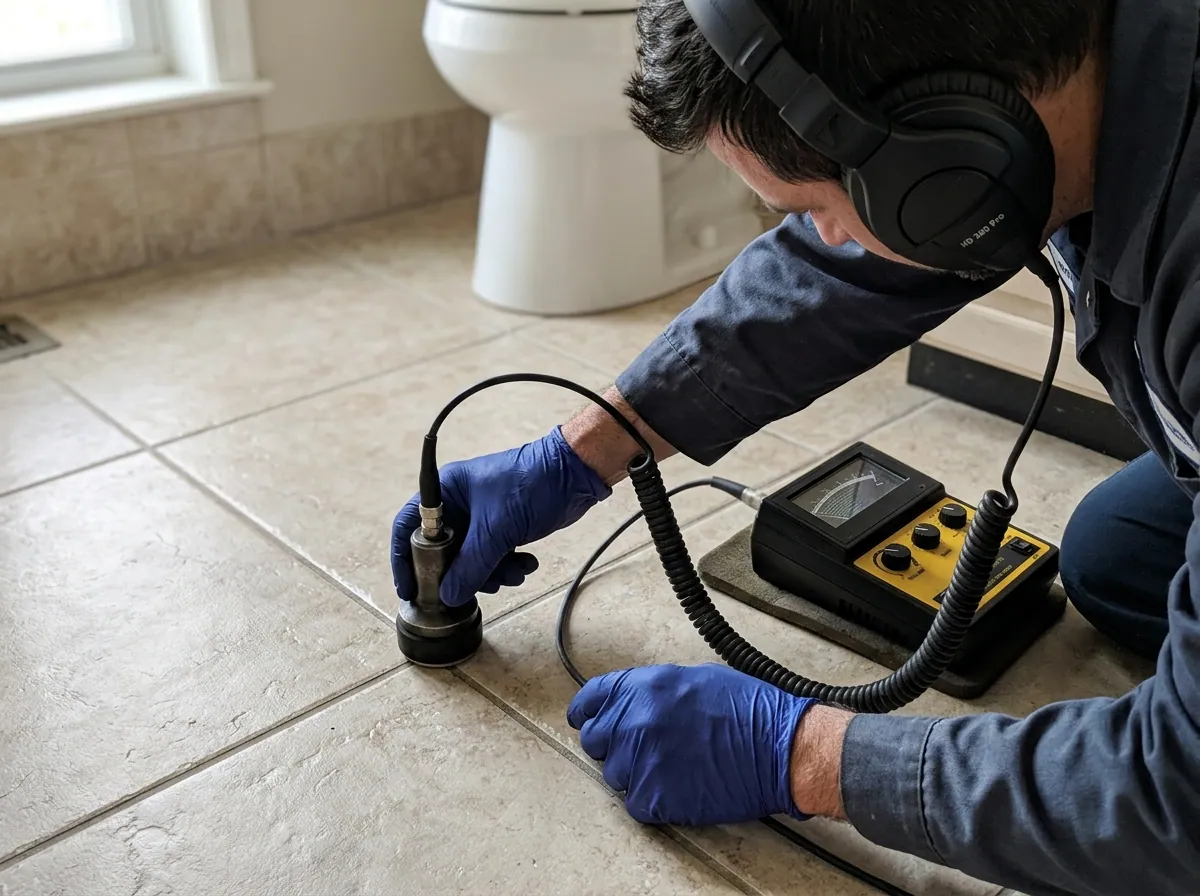
We follow a structured process on every visit instead of jumping straight to opening your floor. Here is what our detection process looks like and what you can expect at each step.
1. Review the symptoms
We note pool and irrigation schedules, water-heater operation, room locations, and whether symptoms occur in the original house, an addition, or an attached garage.
2. Check visible sources
Pool autofill, irrigation valves, evaporative-cooler feeds, toilets, appliance lines, and the exterior service route are checked before interior pressure testing.
3. Confirm water loss
We check your water meter and perform pressure testing to determine whether a pressurized plumbing section is losing water.
4. Isolate the affected system
We isolate hot and cold systems around the actual valve arrangement, including garage manifolds or remodeled branches, and record whether the loss is repeatable.
5. Locate the suspected route
The suspected route is traced across tile, carpet, garage slabs, or additions, with acoustic, electronic, and moisture tools used where conditions support them.
6. Compare repair options
We compare floor access with routes through garages, exterior walls, ceilings, or attics and state which pool, irrigation, and finish work falls outside the plumbing scope.
Direct Pipe Repair, Rerouting, and Selected Repiping
Once we identify the affected line, we explain exactly why we recommend a specific repair method for your property. The lowest-disruption option is not always the cheapest, and we make sure you understand the trade-offs before any work begins.
Planning the work: Technicians may need access to side-yard meters, garages, water heaters, and rooms on opposite sides of the home. If the affected line serves several fixtures, a direct spot repair may not be the only option. Rerouting or partial branch replacement can be compared when the pipe route or condition justifies it.
Spot Repair
When it fits: Testing supports a single failure and direct access offers a sensible route to sound pipe on both sides.
Limitations: The repair requires a controlled floor and concrete opening; tile matching and finish restoration should be clarified beforehand.
Water-Line Rerouting
When it fits: We recommend this when the under-slab pipe is hard to reach, your flooring is expensive to replace, or bypassing the old line is more practical than digging through concrete.
Limitations: This avoids breaking through your slab but may require openings in walls, ceilings, or attic space.
Partial Repiping
When it fits: Multiple failures affect one branch or a prior repair history suggests another isolated opening would be temporary.
Limitations: Reconnecting fixtures may require work through garages, exterior walls, ceilings, or hot attic space with proper pipe protection.
Slab Leak Services Offered Across East Tucson
Slab Leak Detection
Confirm water leak detection 85710 and narrow the affected hot or cold line.
Slab Leak Repair
Contact a slab leak plumber 85748 to bypass or repair a confirmed pipe failure beneath the slab.
Pressure Testing
Hot- and cold-line pressure tests help separate interior plumbing loss from pool, irrigation, and exterior water use.
Water-Line Rerouting
Route a replacement branch through a garage, wall, ceiling, or insulated attic instead of reopening an East Tucson slab.
Slab Leak Questions from East Tucson Property Owners
Frequently Asked Questions
Related Areas: Central Tucson | Catalina Foothills & Northeast Tucson
Request Slab Leak Service in East Tucson
Provide the property address or ZIP code, the symptoms you have noticed, and whether water is actively spreading. Coverage, service availability, response time, and the appropriate next step will be confirmed before work is scheduled.
Check Eastside Availability Now
Check Service Availability
Select the property ZIP and main symptom to see the appropriate next step.