Tools Used to Narrow a Hidden Leak
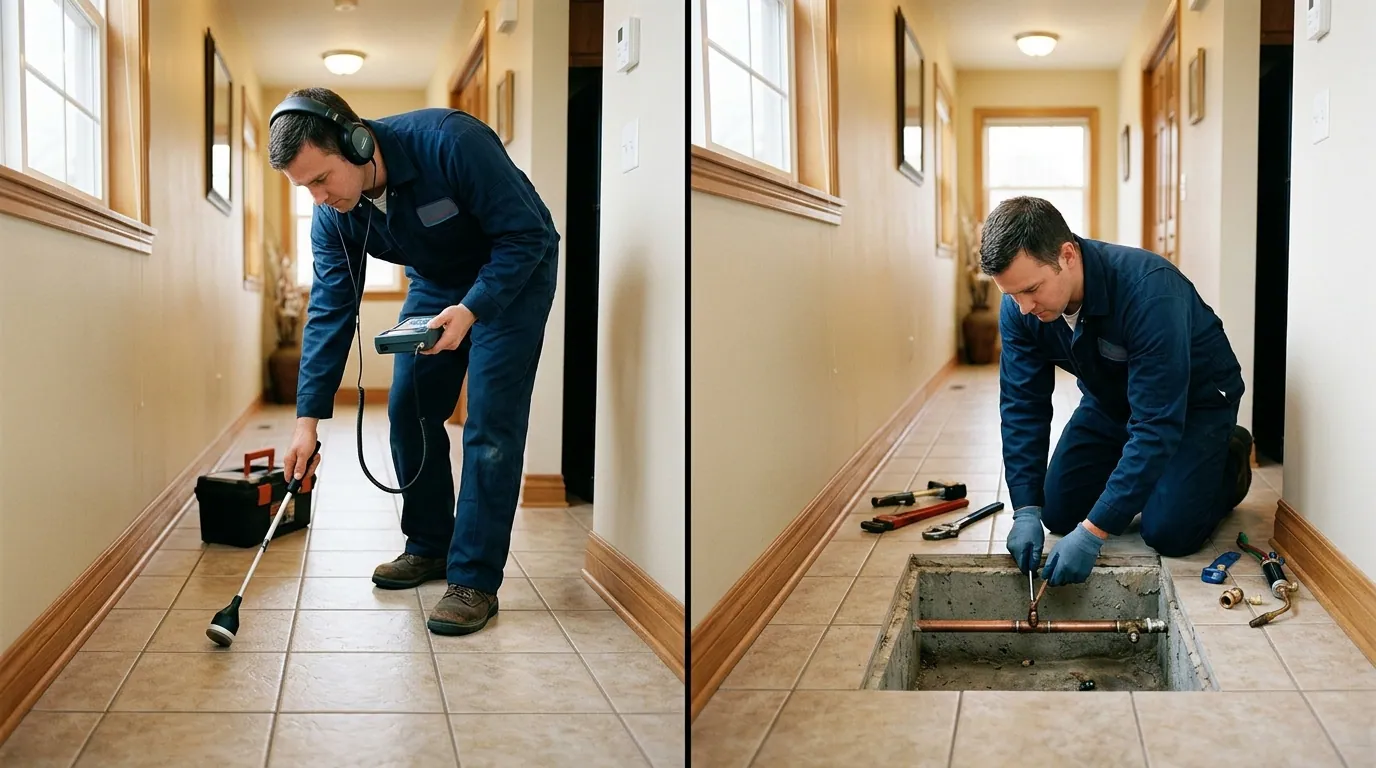
Acoustic Listening Device
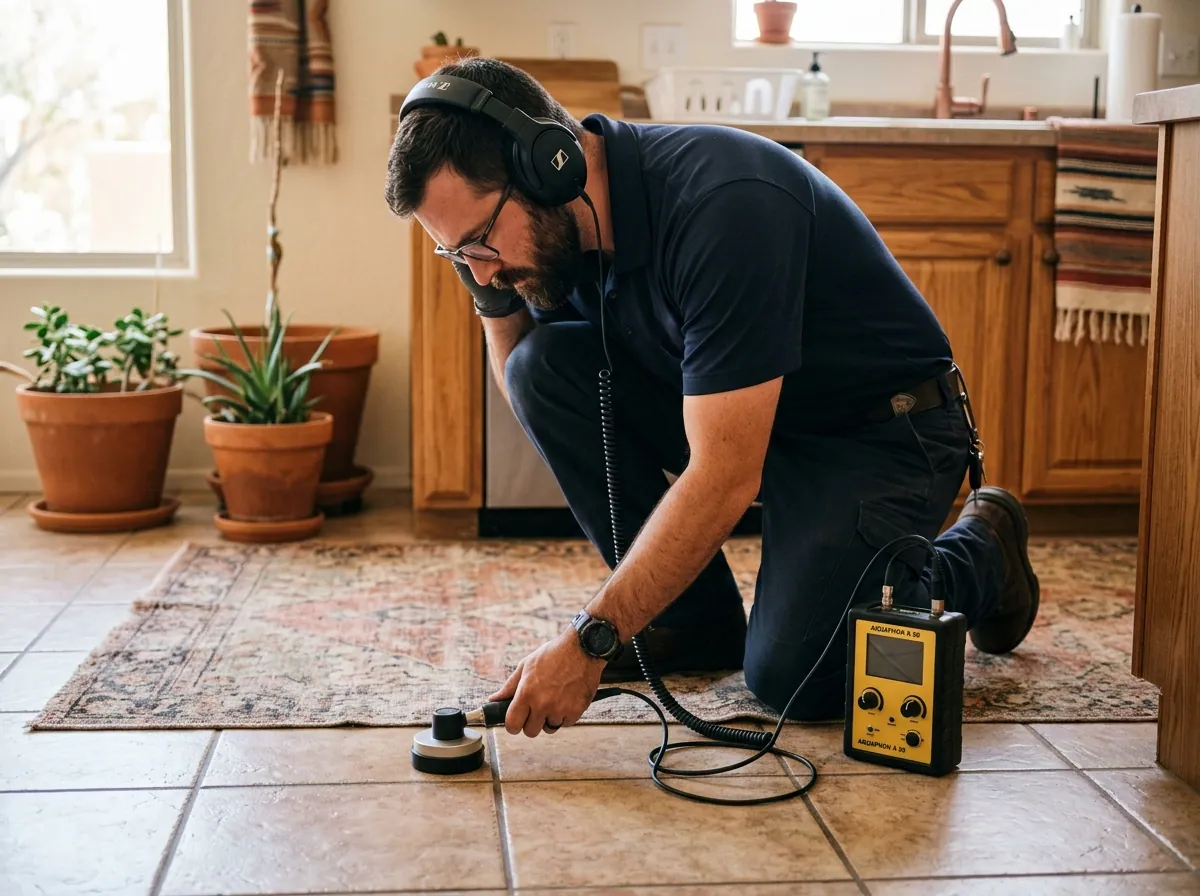
A ground microphone can amplify vibration created by water escaping a pressurized pipe. Pipe material, flow, depth, soil, flooring, and mechanical noise affect what the operator can hear.
Line Tracing
A compatible signal transmitter and receiver may help trace conductive piping. The method does not work the same way on every material, and the marked route should be treated as an estimate.
Thermal & Moisture Testing
A thermal camera records surface temperatures, while a moisture meter checks material conditions. Either can support the search, but heat and moisture may spread away from the pipe failure.
Confirm the Affected System Before Listening
Acoustic listening is more useful when basic checks first show that a pressurized supply line is a likely source. Fixtures, irrigation, appliances, drains, and the utility side should not be confused with an under-slab leak.
Depending on the plumbing layout, a provider may isolate hot and cold sections, observe the meter, or run a water-line pressure test. The provider should explain what each test rules in or out before interpreting the acoustic signal.
Acoustic Detection for Hidden Pipe Leaks
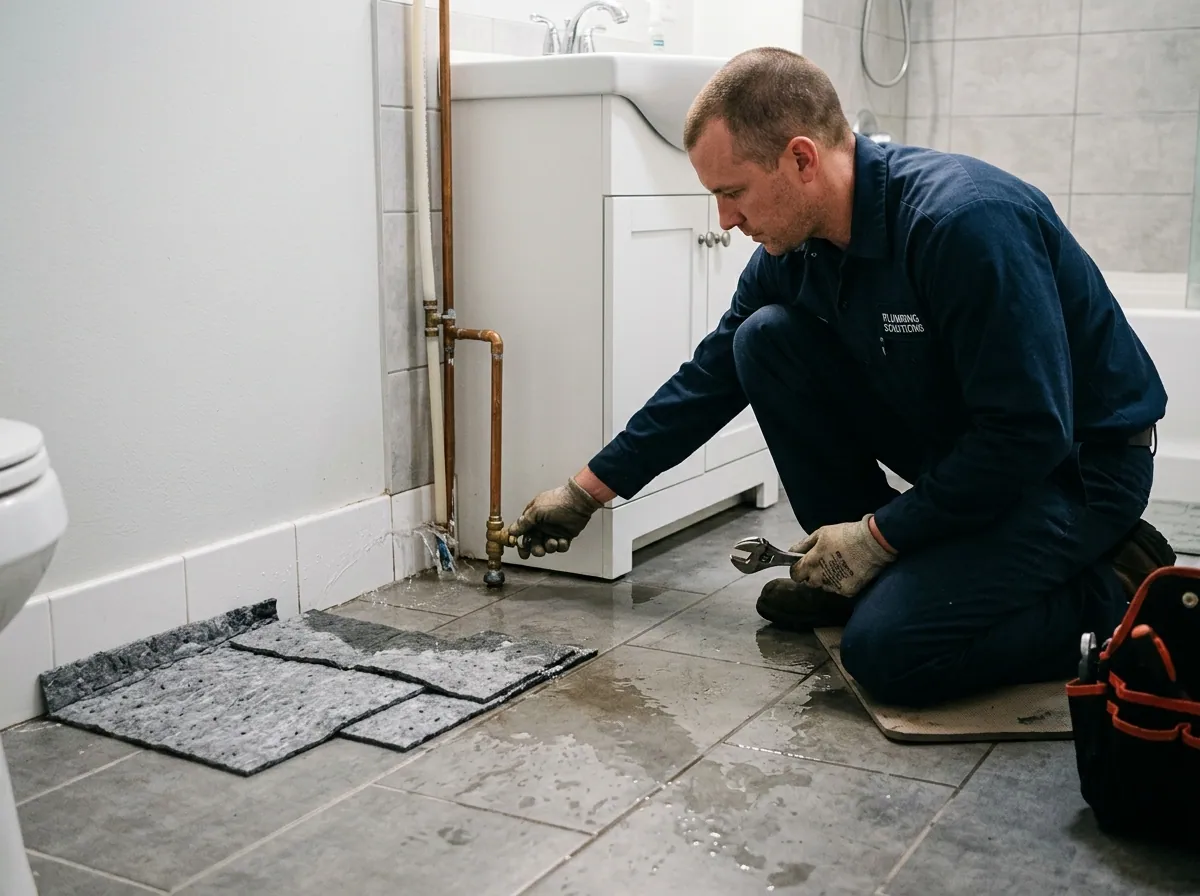
A hidden supply leak may first appear as meter movement, a warm or damp area, changing pressure, or unexplained water use. These signs justify diagnosis, but they do not identify the exact source on their own.
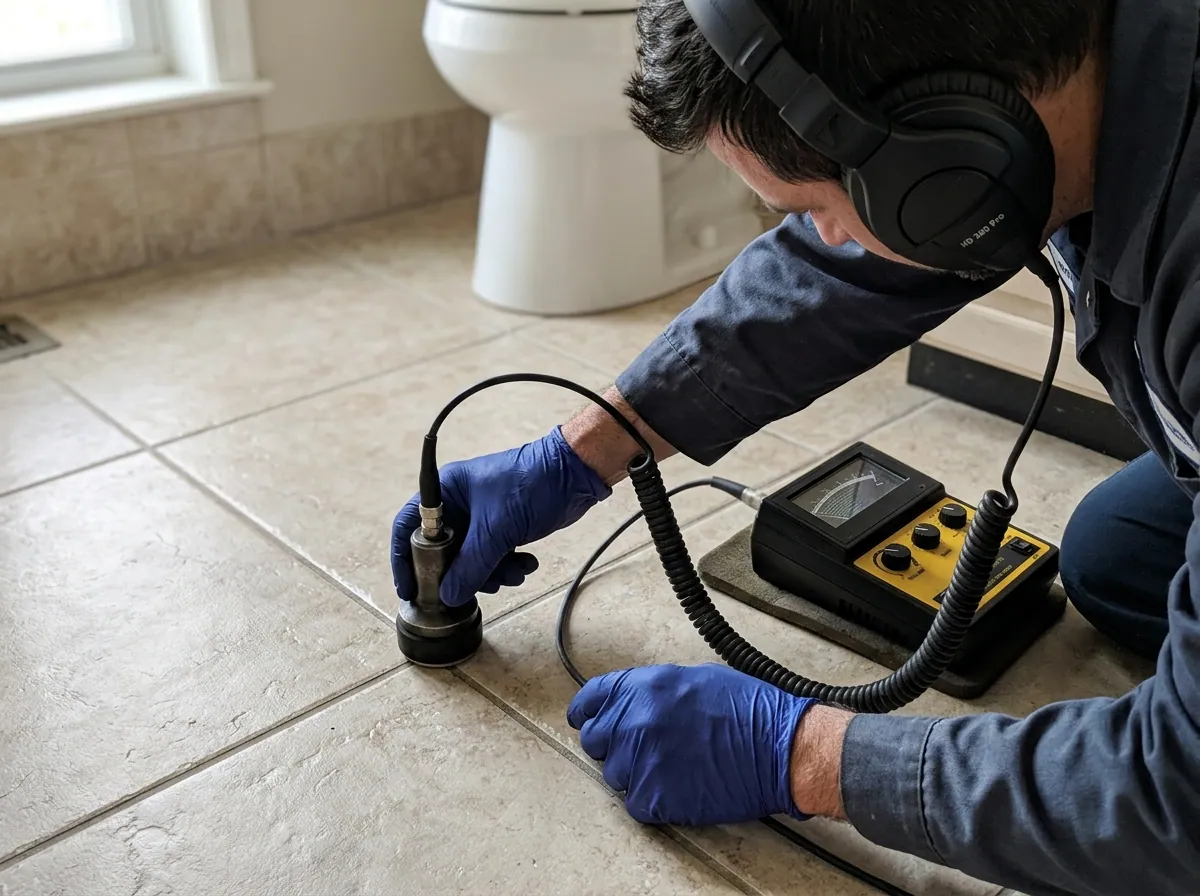
Acoustic leak detection compares sound at multiple points along a suspected route. Pipe material, leak flow, depth, soil, slab, flooring, distance, and background noise all affect the signal. Sound alone generally cannot prove whether the failure is a pinhole, joint, or another defect.
The scan itself usually leaves flooring intact. Its purpose is to reduce the access area and improve the repair plan. If findings conflict or remain weak, further testing is more responsible than promising an exact location.
Electromagnetic Pipe Tracing
Listening points are more useful when the likely pipe route is known. Plans, visible supply points, manifolds, construction clues, and compatible electronic tracing can help estimate that route.
A transmitter and receiver can follow a signal on some conductive lines, but plastic pipe, electrical interference, depth, and nearby metal can limit results. Surface markings are diagnostic estimates rather than a survey-grade map. They should be compared with the other slab leak detection findings.
Thermal Imaging Supplements
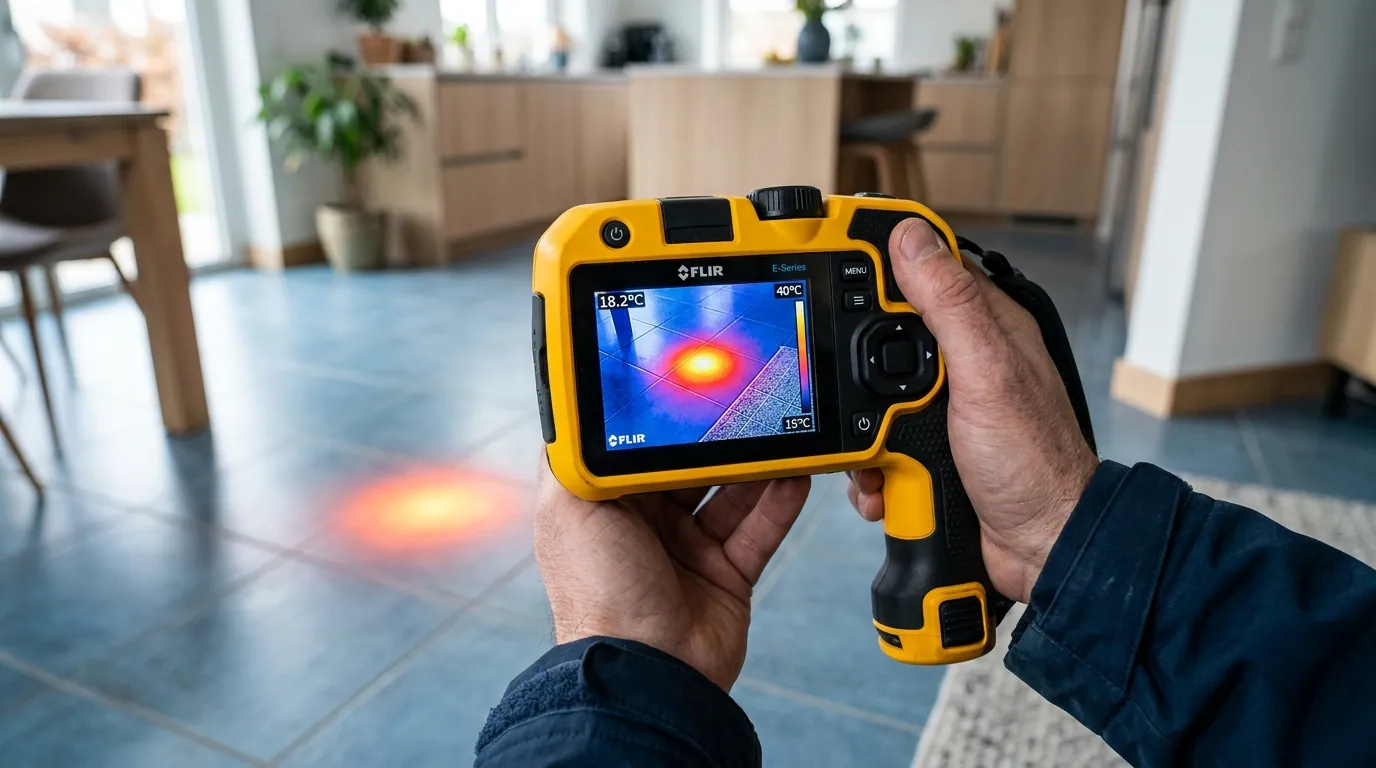
For a suspected hot-water slab leak, a thermal camera may show an unusual surface-temperature pattern. It measures infrared energy at the surface; it does not look through concrete or display the pipe.
Heat can travel through concrete, flooring, air leaks, sunlight, ducts, and appliances. Escaping water can also move through soil before the pattern reaches the floor. For that reason, thermal imaging should guide further checks rather than define a fixed repair radius.
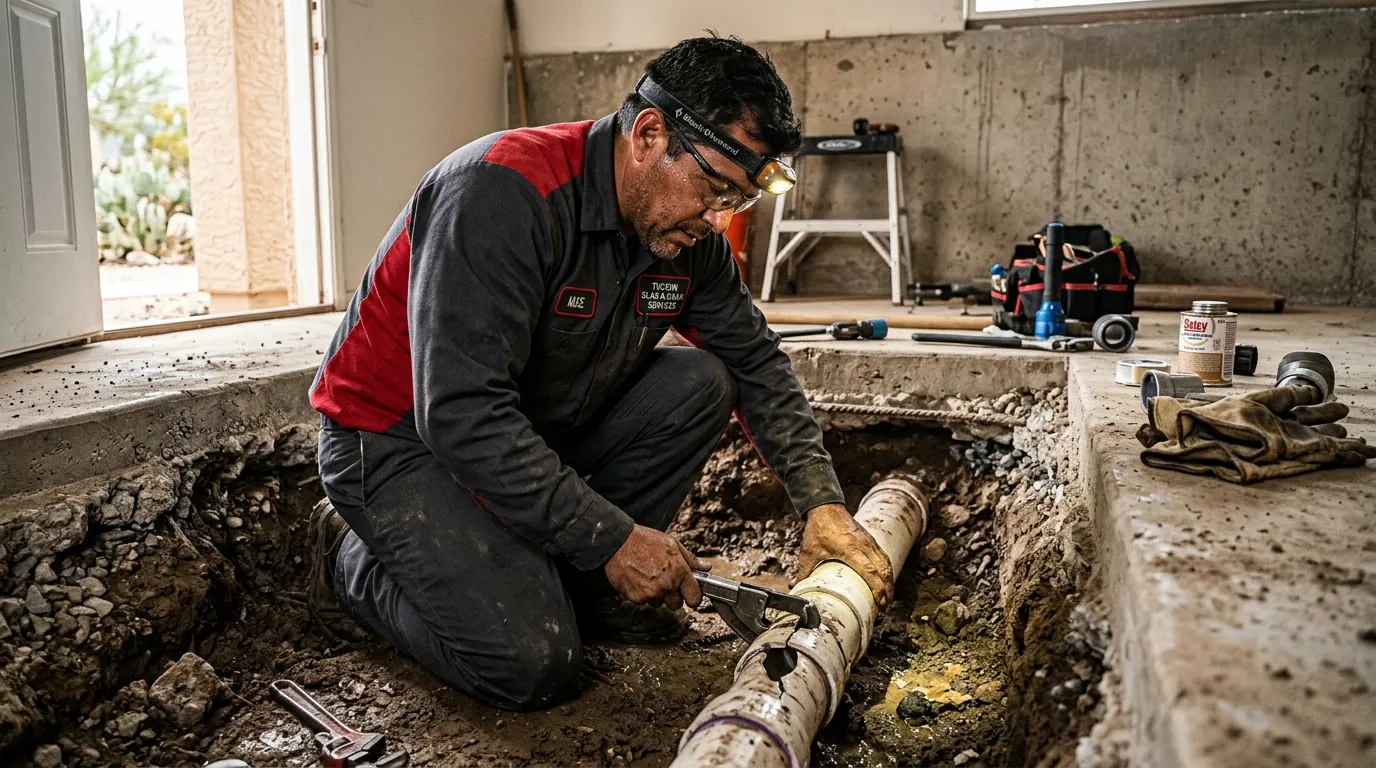
Turning Findings Into a Repair Plan
The useful outcome is a written explanation of the suspected line, marked search area, tests performed, limits of the findings, and recommended next step. Ask the provider to distinguish confirmed observations from assumptions.
If the area is below cabinetry, stone, or difficult flooring, compare direct access with rerouting the affected pipe. A reroute avoids the marked floor area but creates access elsewhere. Detection results, pipe history, route feasibility, restoration cost, and warranty terms should all inform the decision.