Direct Access to a Confirmed Pipe Failure
Opening a slab should be a planned repair step, not a search method. Detection should first narrow the source and affected line. The provider should explain the evidence used to select the access point before concrete is cut.
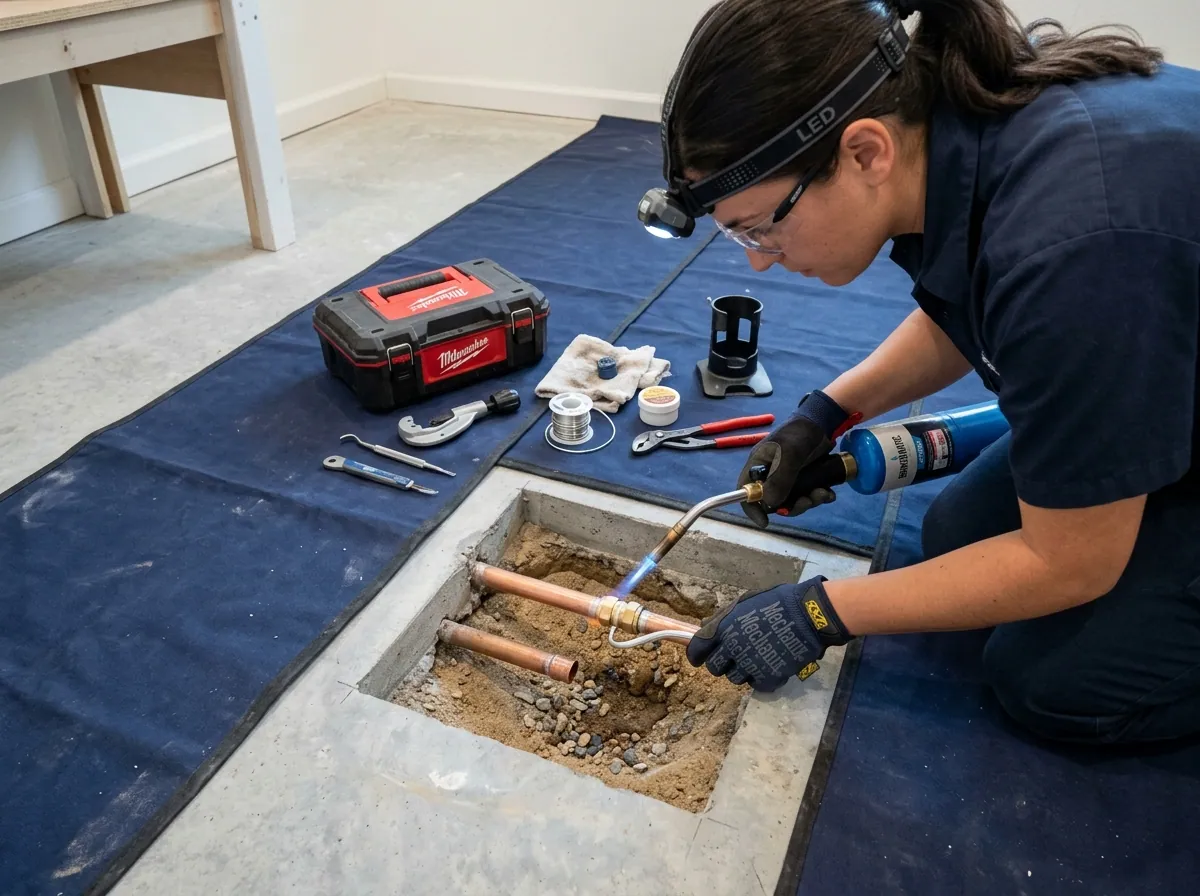
The work area is protected before a limited floor opening is created. Concrete depth, reinforcement, flooring, nearby utilities, and safe working space determine its size. Once exposed, the failed pipe section and surrounding condition can be assessed.
The written scope should identify the pipe material, joining method, test procedure, backfill, concrete patch, and whether finish flooring restoration is included or handled separately.
When is Direct Under-Slab Repair Best?
- • The failure appears isolated to one spot (replace damaged pipe section under slab).
- • Pipe repair below tile flooring Tucson where you have extra replacement tiles on hand.
- • Multiple detection findings support a limited access area over the affected line.
- • The expected opening is acceptable compared with routing lines through walls or ceilings (under-slab repair or water-line rerouting decision).
What the Repair Work May Involve
Flooring is removed first, followed by a controlled concrete opening. The access plan should account for nearby pipes, reinforcement, utilities, dust control, and the working room needed for a reliable connection.
After the pipe section is replaced using an appropriate material and joining method, the provider tests the repair under documented conditions. Backfill and a concrete patch follow only after the joint and affected line have been checked.
Planning Concrete Access and Dust Controls
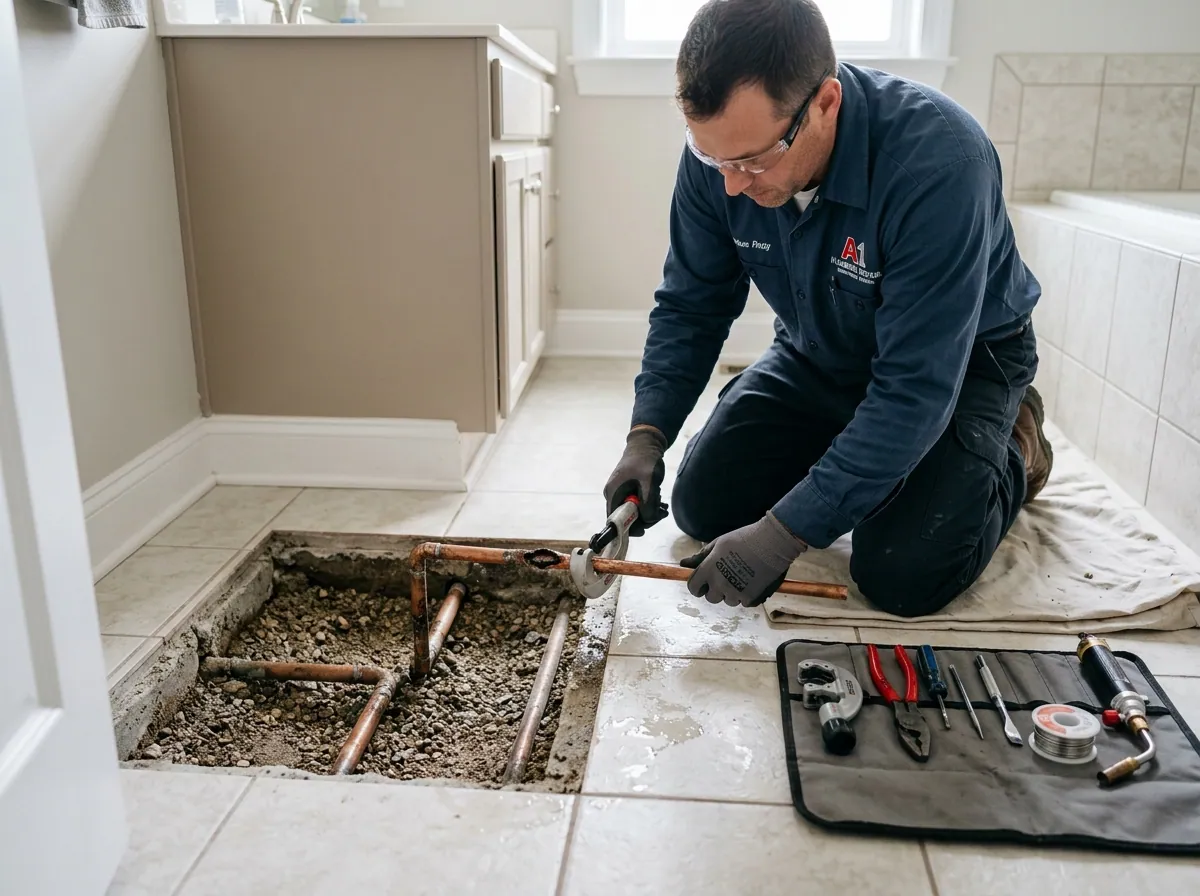
The most visible part of an under-slab pipe repair is the concrete opening. Its size cannot be promised before exposure because slab depth, reinforcement, pipe depth, flooring, and working clearance all matter.
Where practical, the access plan may follow grout lines or another repairable finish boundary. The provider should mark the proposed area, explain how nearby utilities were considered, and state whether exploratory findings could change the opening.
Cutting or breaking concrete can create respirable silica dust. Ask about wet cutting or vacuum controls, containment, ventilation, personal protective equipment, and protection of the occupied area. Containment reduces migration but does not justify a dust-free guarantee.
Assessing and Replacing the Failed Section
After the pipe is exposed, the provider can inspect the failure and nearby pipe. The repair scope may change if the opening reveals a damaged fitting, abrasion, poor support, or deterioration beyond the originally marked point.
The replacement material and joining method must suit the existing system, burial conditions, local requirements, and product instructions. Ask the estimate to name the pipe and fittings, describe corrosion or abrasion protection, and distinguish a temporary isolation measure from the completed slab leak repair.
Testing Before the Repair Is Covered
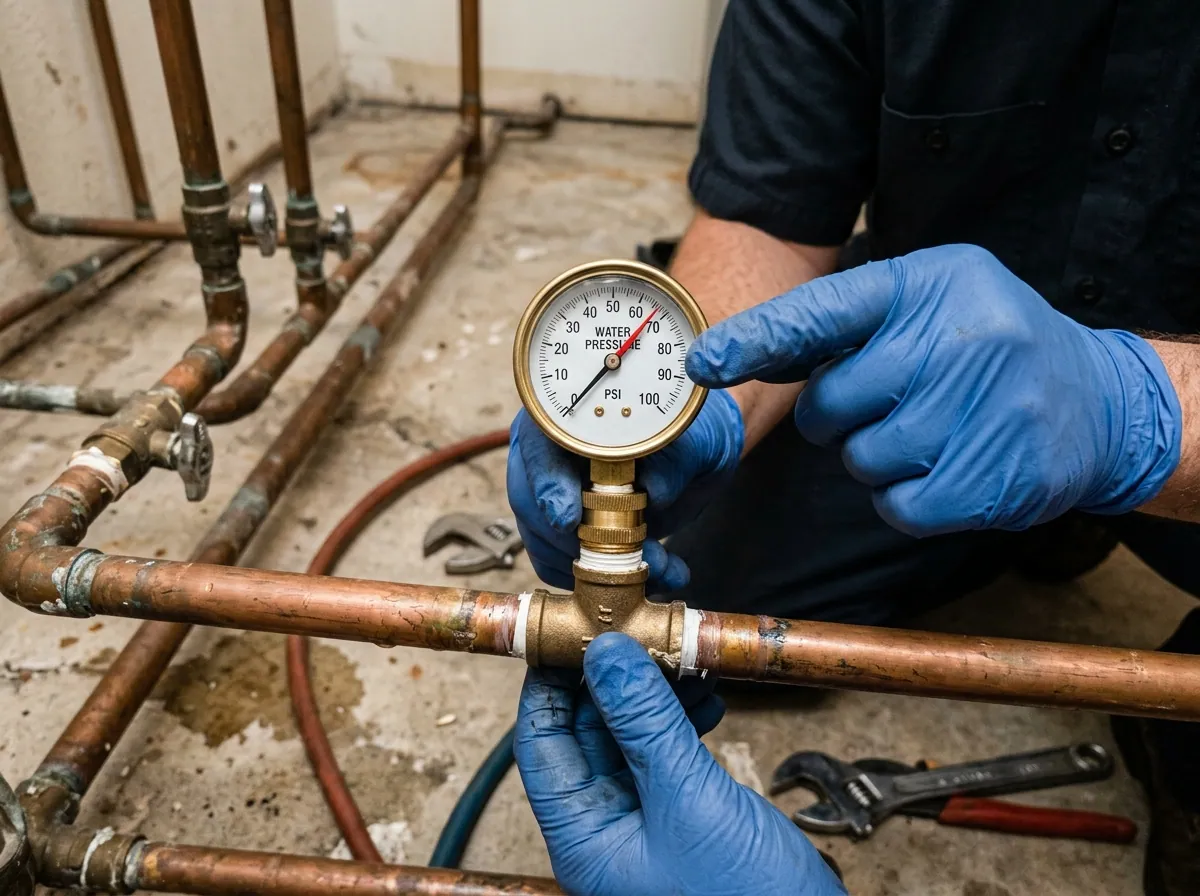
The exposed connection should be inspected and tested before it is buried. The appropriate method, pressure, duration, and isolation steps depend on the system, repair material, local requirements, and provider procedure.
A pressure test must be interpreted in context. Temperature change, trapped air, valves, fixtures, and gauge resolution can affect readings. Request the start and finish readings, test duration, isolated section, visual inspection result, and explanation of any change before approving backfill.
Backfill, Concrete Patch, and Finish Work
Backfill should support and protect the repaired pipe without placing damaging debris against it. The method and material depend on the pipe system, excavation, and project requirements. Documentation should note any sleeve, wrapping, bedding, or support used.
The concrete patch should restore the opening according to the approved scope, but finish flooring is a separate trade on many projects. Confirm who handles tile matching, wood or carpet replacement, baseboards, curing time, furniture movement, and cleanup before work starts.
Under-Slab Repair FAQ
Discuss Under-Slab Pipe Repair in Tucson
Provide the ZIP code, leak-location findings and the flooring type above the suspected pipe.
Request a written explanation of access, pipe repair, pressure testing and surface restoration before work starts.
Check Service Availability
Select the property ZIP and main symptom to see the appropriate next step.