Key Takeaways
- Coverage depends on the policy, cause, timing, and claim decision.
- Pipe repair, access, resulting damage, and mold can be treated differently.
- Gradual deterioration and maintenance are commonly important exclusions.
- Document damage and speak with the insurer before assuming coverage.
Separate the Parts of the Loss
A slab-leak event can involve the failed pipe, access through concrete or finishes, resulting water damage, drying, personal property, temporary living costs, mold, and code-related work. A policy may treat each category differently.
Do not assume that coverage for damaged flooring means the plumbing repair itself is covered, or that access is automatically included.
| Loss component | Question |
|---|---|
| Failed pipe | Is repair or replacement covered? |
| Access | Is tear-out and replacement covered? |
| Resulting damage | Which floors, cabinets or walls qualify? |
| Mold and drying | What limits and procedures apply? |
| Matching | How are continuous finishes evaluated? |
Document Before Evidence Changes
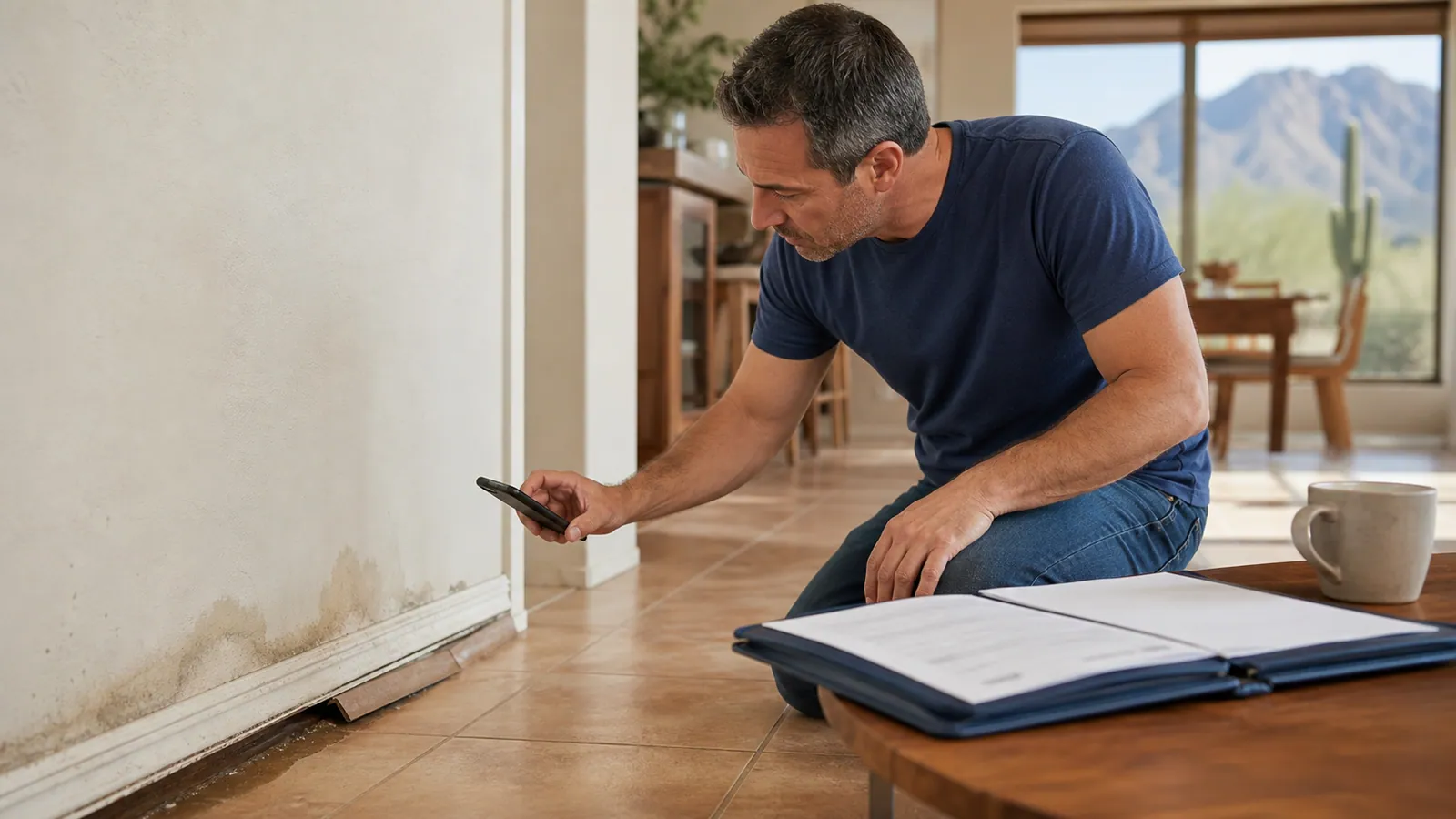
Photograph moisture and damaged finishes, save bills and alerts, record meter and pressure findings, keep the diagnostic report, and preserve estimates and invoices.
Control active water safely and take reasonable steps to limit additional damage. Ask the insurer whether an inspection is required before demolition.
Avoid Coverage Promises
A plumber can document the plumbing condition but does not decide coverage. An agent, adjuster, or policy professional interprets the contract for the claim.
Arizona’s insurance regulator advises consumers to review their policies and consult their insurer about water damage. Treat general articles as questions to ask, not as a promise of payment.
Document the Water-Loss Event Without Speculating
Record when the condition was discovered, what was visible, meter behavior, actions taken to stop water, and which areas were affected. Photograph wide room views and close details before moving or discarding material when safety allows. Save water bills, plumber findings, detection reports, moisture readings, drying records, invoices, and communications. Describe facts such as “hot system lost pressure” instead of guessing about cause or coverage.
Take reasonable steps to prevent additional damage, but ask the insurer what documentation or inspection it requires before nonemergency demolition. Active water near electrical equipment, rapidly spreading moisture, or unsafe materials may require immediate professional response. Keep removed parts or photographs when practical. The policy, endorsements, loss facts, and claim investigation—not a contractor’s general statement—determine whether a particular expense is covered.
Ask Insurance Questions by Cost Category
Separate the failed pipe, access or tear-out, resulting water damage, drying, mold, personal property, temporary living expenses, code upgrades, and finish matching. Ask whether each category is covered, limited, excluded, or subject to a separate deductible or endorsement. Coverage for damaged flooring does not necessarily include replacing the failed water line, and coverage for access should not be assumed without reviewing the actual policy.
Request claim instructions and decisions in writing, note deadlines, and keep a communication log. Obtain detailed estimates that separate plumbing from restoration so the adjuster can see what each amount represents. If a coverage decision is unclear or disputed, consider advice from a qualified Arizona insurance professional or attorney who can review the policy and claim facts. This article provides organizational guidance, not a prediction of coverage.
- Photograph conditions and mitigation steps with dates.
- Keep plumbing, drying, and finish estimates separated.
- Ask about pipe, access, resulting damage, mold, and matching individually.
- Rely on the policy and written claim decision for coverage.
Related Reading and Services
Use these supporting resources to move from the current question to the next useful diagnostic or repair decision.
- Create a useful plumbing evidence recordDocument systems tested, readings, marked areas, photographs, limitations, and next steps.
- Separate repair and restoration costsUse a complete estimate to show access, plumbing, testing, finishes, permits, and exclusions.
- Coordinate damage restoration after repairUnderstand the separate roles of plumbers, drying providers, concrete trades, flooring installers, and finish contractors.
- Tucson slab leak repair optionsReview plumbing repair methods while keeping policy interpretation with the insurer or qualified adviser.
Frequently Asked Questions
Is gradual leakage covered?
Policies often distinguish sudden accidental events from long-term deterioration or maintenance. Read the specific contract and claim decision.
Will insurance pay to reroute the line?
That depends on policy coverage, cause, repair proposal, and insurer approval. Obtain written guidance.
Should I call before repair?
When safe and practical, ask about documentation and inspection requirements. Do not delay emergency steps needed to stop active damage.
Does this article provide coverage advice?
No. It identifies questions for your insurer. Only the policy and authorized claim process determine coverage.