Key Takeaways
- Plumbing repair and finish restoration are often separate scopes.
- Concrete closure does not necessarily include tile or paint.
- Drying and remediation may need specialized providers.
- Every responsibility should be listed before work begins.
Different Work May Require Different Trades
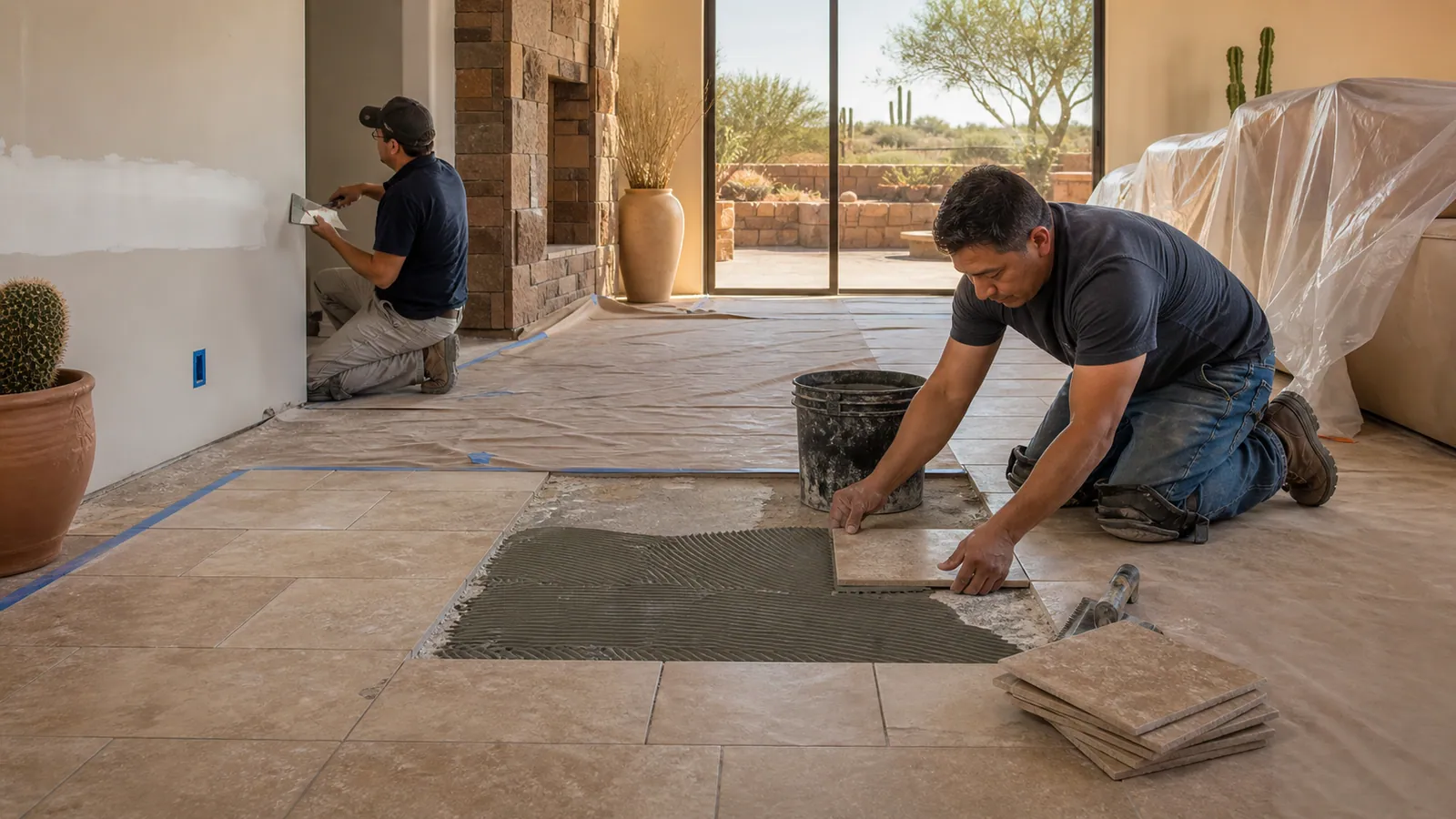
The plumber diagnoses and repairs or reroutes the water line. Concrete cutting and closure may be included by the plumbing contractor or subcontracted. Flooring installers, drywall professionals, painters, cabinet workers, and restoration companies may handle the remaining finishes.
Water extraction and drying are different from pipe repair. Suspected contamination or mold requires appropriate assessment and procedures.
| Work | Possible provider | Confirm in writing |
|---|---|---|
| Pipe repair | Licensed plumbing contractor | Material, joints and testing |
| Concrete closure | Plumber or concrete trade | Backfill and finish level |
| Tile or flooring | Flooring specialist | Removal, matching and installation |
| Drywall and paint | Finish contractor | Texture and color matching |
| Drying or remediation | Restoration provider | Monitoring and clearance scope |
Plan Restoration Before Access
Photograph finishes, identify spare tile or product information, protect adjoining rooms, and decide who moves furniture and appliances. Ask whether the proposed opening affects cabinets, baseboards, transitions, or continuous flooring.
If insurance may be involved, ask what evidence and estimates are required before demolition.
Closeout Records
Keep photographs of exposed pipe, new materials, pressure-test results, concrete work, finish repairs, invoices, permits, and warranties.
A complete record helps with future maintenance, property sale questions, and any later issue near the same area.
Sequence Drying, Plumbing, Inspection, and Finish Work
Stop and verify the pipe loss before rebuilding finishes. Wet materials may need extraction, removal, drying, and monitoring based on the source, duration, material, and affected area. Plumbing repair or rerouting is pressure-tested, and any required inspection occurs before the pipe is concealed. Direct-access work then moves through appropriate backfill, compaction, vapor or moisture details, and concrete closure.
Flooring, drywall, texture, paint, cabinets, and trim follow only when the substrate and moisture conditions are suitable for their products. Concrete and patching materials may require curing time. Closing a damp cavity or installing flooring too early can create adhesion, odor, or material problems. Ask each trade what condition must be met before the next one begins and who documents that handoff.
Plan for normal use while several trades are involved. Ask which rooms, bathrooms, appliances, and walkways will be unavailable; where dust barriers and equipment will remain; and whether furniture requires temporary storage. A realistic sequence avoids reinstalling baseboards before paint, flooring before concrete is ready, or cabinets before wall and floor conditions have been verified.
Use one written schedule and responsibility list for all trades. Record who confirms drying, releases the area for rebuilding, approves finish samples, and performs the final walkthrough. This prevents gaps between the plumbing invoice and the completed room.
Set Realistic Expectations for Matching and Closeout
Tile dye lots, grout color, paint age, texture technique, wood variation, and sunlight make exact matching difficult. Locate spare tile and product records early, and decide whether a localized patch, room transition, broader replacement, or deliberate contrast is acceptable. Photograph adjoining finishes in consistent light and identify who approves samples before installation.
At closeout, retain photographs of the exposed failure, new pipe, pressure test, route, supports, insulation, concrete work, moisture records, and finished surfaces. Keep permits, inspection approval, invoices, material details, warranties, and care instructions together. A complete record helps future maintenance and prevents a later contractor from mistaking a documented reroute, concrete patch, or abandoned line for an unknown defect.
- Verify the plumbing repair before closing access.
- Meet drying and product conditions before installing finishes.
- Approve realistic matching expectations in advance.
- Keep a complete photographic and written closeout file.
Related Reading and Services
Use these supporting resources to move from the current question to the next useful diagnostic or repair decision.
- Plan floor removal before direct accessReview opening size, finish types, spare materials, matching risk, and restoration responsibility.
- Assign every restoration scope itemClarify concrete, tile, drywall, paint, drying, permits, cleanup, warranty, and change orders.
- Organize records for an Arizona insurance claimSeparate pipe, access, resulting damage, drying, finishes, and written coverage decisions.
- Tucson slab leak repairReview plumbing repair options before coordinating concrete and finish restoration.
Frequently Asked Questions
Does concrete patching include tile?
Not necessarily. Concrete closure and finished flooring should be listed as separate scope items.
Who matches discontinued tile?
The estimate should assign sourcing and matching responsibility. Exact matching may not be possible.
Can drywall be closed immediately after rerouting?
The new plumbing should be tested and any required inspection completed before concealed finishes are closed.
Who handles water-damaged cabinets?
Cabinet repair or replacement is often outside plumbing scope and may involve restoration, cabinetry, and insurance coordination.