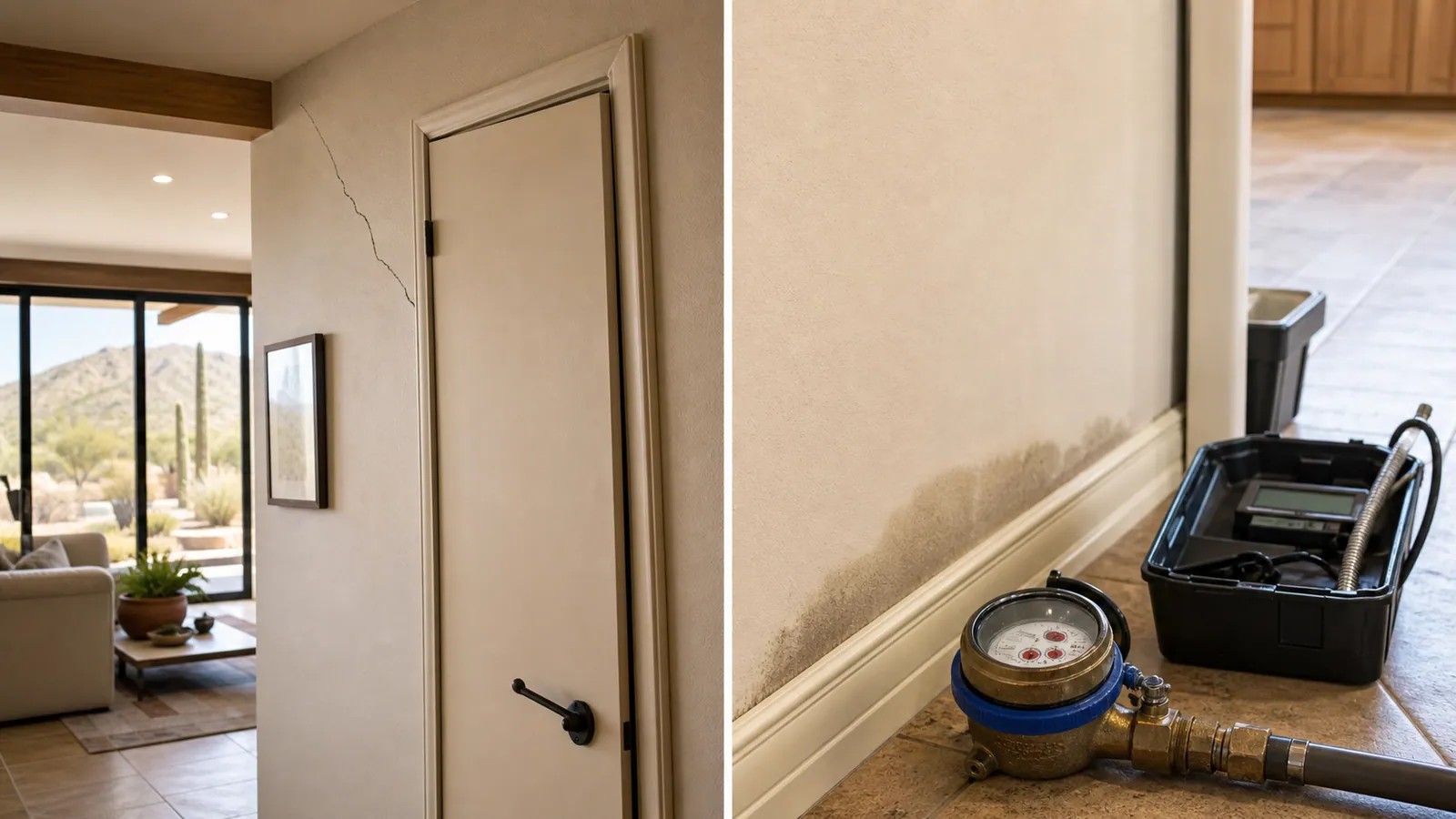
Key Takeaways
- Plumbing problems produce evidence of water use or pressure loss.
- Structural problems produce movement patterns that may exist without water loss.
- Cracks alone do not identify the cause.
- Both assessments may be appropriate when symptoms overlap.
Evidence That Points Toward Plumbing
A moving meter with controlled use, repeatable pressure loss, heater cycling, a warm floor, damp finishes, or supply-water sound supports a plumbing investigation.
Water can contribute to soil movement, but the plumber’s role is to identify and correct the pipe failure—not certify the foundation.
Evidence That Points Toward Structure
Progressive wall, ceiling, door, window, and floor movement without evidence of water loss calls for structural assessment. Crack width, pattern, displacement, and change over time matter more than one photograph.
Settlement, expansive soil, drainage, construction, and other factors require qualified evaluation. A plumbing test cannot rule on structural safety.
| Observation | First assessment | Possible second assessment |
|---|---|---|
| Meter moves; warm or damp floor | Plumber or leak-detection provider | Structural professional if movement exists |
| Cracks and sticking doors; no water loss | Structural professional | Plumber if water evidence appears |
| Both water loss and movement | Control active water, then coordinate | Both disciplines |
| Outside groundwater after rain | Drainage or structural review | Plumber if meter also moves |
Avoid Confusing Repair Terms
Slab-leak repair usually means work on a water pipe below or within concrete. Foundation or slab repair usually means structural work on the building system.
Ask each provider to state exactly what is being diagnosed, what evidence supports it, and which work is outside their scope.
Document Plumbing and Structural Changes Separately
Create two records instead of combining every symptom into one theory. For plumbing, save meter readings, pressure-test results, water bills, moisture locations, heater activity, and repair history. For structure, photograph cracks with a scale, note sticking doors or windows, record floor elevation concerns, and track whether the condition changes over weeks or seasons. This separation makes it easier for each professional to evaluate evidence within the correct discipline.
A plumbing leak can wet soil and may contribute to movement, but that relationship is site-specific. Likewise, a foundation crack does not prove that a water line failed. Surface cracks, drywall movement, tile separation, and damp finishes can overlap while having different causes. Avoid a contractor who uses one photograph, thermal image, or meter observation to make both a plumbing diagnosis and a structural conclusion without appropriate testing and qualifications.
When Plumbing and Structural Professionals Should Coordinate
Control active water first when it threatens finishes, electrical systems, or continued soil saturation. A licensed plumber or leak-detection provider can isolate supply systems and document whether a pressurized line is losing water. If cracks, displacement, doors, windows, or floor levels indicate continuing movement, a qualified structural professional can evaluate the building independently after immediate water risk is addressed.
Share reports rather than relying on verbal summaries. The plumbing record should identify systems tested, conditions, readings, equipment, and repair scope. Structural documentation should describe observed movement, measurements, limitations, and recommendations. When drainage, grading, irrigation, or roof runoff is involved, those systems may require separate assessment. Coordinated evidence prevents a pipe repair from being presented as a complete foundation solution—or structural work from proceeding while active water loss remains.
- Stop active water damage before long-term evaluation.
- Track cracks and moisture as separate evidence sets.
- Use qualified professionals for their respective disciplines.
- Keep written reports available to every provider involved.
Related Reading and Services
Use these supporting resources to move from the current question to the next useful diagnostic or repair decision.
- Compare plumbing warning signsReview meter, pressure, heat, sound, moisture, and water-heater evidence that supports leak testing.
- Use the slab-leak detection report checklistRequire recorded tests, limitations, marked evidence, and a clear next step before repair.
- Plan finishes after a confirmed pipe repairSeparate plumbing, drying, concrete, flooring, drywall, and paint responsibilities.
- Slab leak versus foundation problem guideReview the service page for deciding which type of assessment should come first.
Frequently Asked Questions
Can a slab leak crack a foundation?
Water loss can affect soil and finishes, but a crack’s cause requires structural evaluation. Do not assume direct causation from timing alone.
Can foundation movement break a pipe?
Movement can stress rigid piping or penetrations, but corrosion, pressure, abrasion, installation, and age may also contribute.
Who repairs the water damage?
Plumbing repair, drying, flooring, drywall, mold remediation, and structural work may involve different scopes and contractors.
Should water loss be controlled first?
Active water should be stopped safely to limit damage, while structural hazards should also be respected and assessed promptly.