Key Takeaways
- Attic temperatures can heat standing cold water.
- Pipe materials and connections must be rated for the conditions.
- Insulation, spacing, support, and protection are part of the design.
- A serviceable route is better than the shortest route.
What Desert Attic Heat Changes
Water sitting in a cold-water line can warm between uses, producing an initial burst of hot or lukewarm water. Heat also affects expansion, insulation performance, supports, nearby materials, and safe working conditions.
The design should follow product temperature limits and keep pipe away from surfaces or equipment that can damage it.
Installation Details That Matter
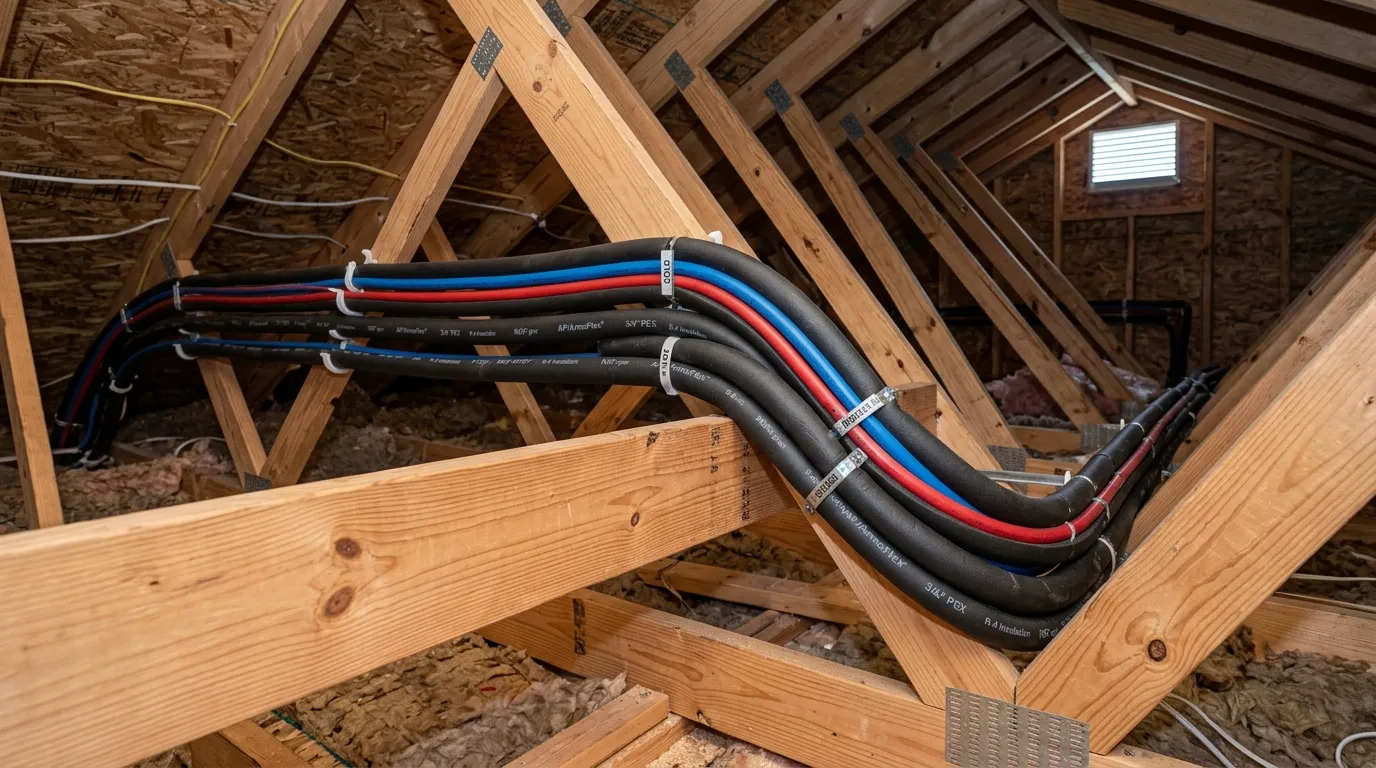
The route should use approved pipe, fittings, supports, sleeves, nail protection, insulation, fire stopping, and access practices. Long unsupported runs and tight bends can create avoidable stress.
Hot and cold lines should be identified, protected at penetrations, and planned around future maintenance.
| Detail | Why it matters |
|---|---|
| Material rating | Suitability for temperature and potable water |
| Insulation | Limits heat gain or loss |
| Support | Prevents sagging and movement |
| Protection | Reduces nail, abrasion and UV damage |
| Access | Allows inspection and future repair |
Compare Attic With Other Routes
A garage, interior wall, dropped soffit, exterior chase, or ceiling route may be more suitable for part of the run. Each choice changes finish work and exposure.
Ask to see the proposed path and understand how the installer will protect pipe in every unconditioned section.
Choose the Coolest Practical Attic Route
An Arizona attic can reach temperatures far above the occupied rooms. Route new water lines away from roof decking, flues, recessed equipment, and other concentrated heat sources while maintaining required clearances. Whenever practical, keep piping low and near the insulated ceiling plane or within a protected chase. The exact design depends on attic construction, access, insulation, HVAC equipment, and approved material limits.
Compare the attic with garage, interior wall, soffit, ceiling, or exterior-chase options. A shorter attic path may reduce openings but increase temperature exposure or service difficulty. A longer conditioned-space route may improve water temperature and access while requiring more finish work. Ask the installer to show the path in advance and explain how every unconditioned segment will be supported, insulated, protected, and reached later.
Control Heat Gain, Expansion, Sagging, and Damage
Insulation limits heat transfer into cold water and out of hot water, but insulation type, thickness, seams, and continuity matter. Pipe also expands and contracts as temperature changes. Approved supports, spacing, bend radius, sleeves, and allowance for movement keep the line from sagging, rubbing against framing, or stressing fittings. Nail plates and protective routing reduce damage from future work.
After the reroute, flush and pressure-test the line, then check every fixture for acceptable flow and temperature. Homeowners may notice warmer water from a cold tap after the line sits in a hot attic; the effect depends on route length, insulation, use frequency, and conditions. Document the completed path before insulation and finishes conceal it, and include attic inspection in future home-maintenance routines.
A simple annual visual check can identify displaced insulation, loose supports, abrasion, pest damage, stored items pressing on pipe, or later electrical and HVAC work that changed the route area. Inspect only from safe accessible platforms; attics present fall, heat, and electrical hazards. When access is limited, ask a qualified provider to review the rerouted lines during related service work.
- Keep pipe away from roof decking and concentrated heat.
- Use continuous insulation and approved supports.
- Protect penetrations and likely future fastener locations.
- Test fixture performance after the full route is installed.
Related Reading and Services
Use these supporting resources to move from the current question to the next useful diagnostic or repair decision.
- Review PEX material and connection requirementsUnderstand how system selection, transitions, sizing, UV exposure, and installation affect reliability.
- Map a single-line rerouteIdentify endpoints, fixtures, routing alternatives, abandoned pipe, and final documentation.
- Account for attic-access cost factorsCompare pipe work with access equipment, insulation, drywall, permits, testing, and restoration.
- Tucson water-line reroutingReview rerouting options for moving a failed water branch to an accessible protected path.
Frequently Asked Questions
Will cold water always be hot at first?
Attic routing can warm standing water, but pipe location, insulation, use frequency, and attic conditions determine the effect.
Can water lines touch ductwork?
The route should avoid damaging heat sources and follow required clearances and protection practices.
Does insulation prevent all heat gain?
No. It slows heat transfer but does not make an unconditioned attic behave like conditioned space.
Should attic work be inspected?
Applicable permit and inspection requirements depend on jurisdiction and scope. The contractor should identify them.