Key Takeaways
- PEX can reduce fittings on flexible routes.
- Material choice does not replace good design and workmanship.
- Attic heat, support, protection, and insulation matter in Tucson.
- Approved transitions are needed when connecting to existing plumbing.
Why PEX Is Considered
PEX is flexible, corrosion-resistant as a plastic material, and can reduce the number of concealed directional fittings. It can be routed through walls and attics with less cutting than rigid pipe in some layouts.
Product type, sizing, connection system, support spacing, bend limits, and compatibility must follow code and manufacturer requirements.
PEX, Copper and CPVC
Copper is rigid, familiar, and durable when conditions and installation suit it, but it requires more fittings around complex routes and can be affected by corrosion mechanisms. CPVC is rigid plastic with its own temperature, support, joining, and handling requirements.
The best material depends on existing plumbing, route, local requirements, exposure, installer competence, and long-term serviceability.
| Material | Potential advantage | Planning concern |
|---|---|---|
| PEX | Flexible route, fewer fittings | Heat, UV, support and connection system |
| Copper | Rigid and widely understood | Joints, corrosion conditions and routing labor |
| CPVC | Rigid nonmetallic option | Handling, support and approved joining |
| Mixed system | Targeted replacement | Approved transitions and compatibility |
Tucson Attic and Exterior Conditions
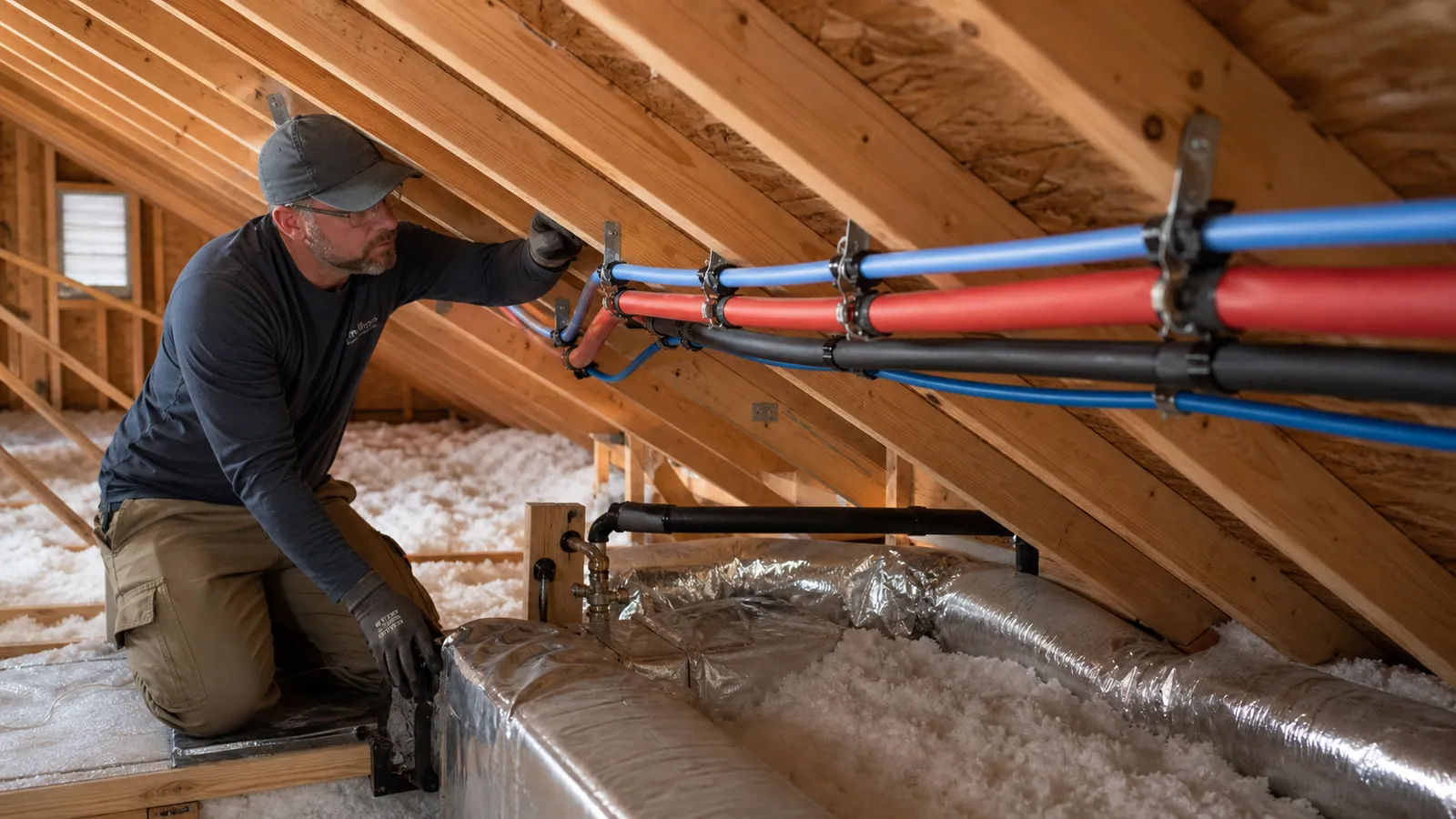
Unconditioned attics reach high temperatures. Keep pipe away from damaging surfaces, support it properly, protect penetrations, insulate where required, and follow temperature ratings.
PEX must also be protected from prolonged ultraviolet exposure and physical damage. Exterior routing should not be treated as a shortcut without an approved protection plan.
Select PEX as a Complete System, Not Only a Pipe Type
PEX products use specific tubing, fittings, joining tools, connection methods, pressure and temperature ratings, and installation instructions. The contractor should identify the listed potable-water system being proposed and use compatible components. Mixing methods without approved transitions can create avoidable weaknesses. Pipe sizing must account for fixture demand, route length, elevation, pressure, and the effect of fittings or manifolds.
Existing copper, CPVC, or other approved material can often connect to PEX through listed transition fittings. Those transitions should remain accessible when required and be protected from stress, corrosion conditions, and incompatible materials. Ask where joints will be placed, whether the route uses home-run or trunk-and-branch design, and how future isolation will work. Flexible tubing reduces some fittings, but good design still matters.
Protect PEX From Heat, Sunlight, Abrasion, and Fasteners
Tucson reroutes may pass through hot attics, garages, framed walls, exterior chases, or mechanical spaces. Pipe placement, insulation, support spacing, bend radius, sleeves, nail plates, and separation from heat-producing equipment must follow product and code requirements. PEX should not be left exposed to sunlight beyond its rated limits, and it needs protection where it passes through framing or can contact sharp edges.
Attic routing can warm standing cold water and increase heat loss from hot lines. Insulation and route location reduce those effects but do not eliminate them. Before approving PEX water-line rerouting, review the complete path, temperature exposure, access points, fire stopping, fixture delivery, pressure test, permit, inspection, and warranty terms. Material choice cannot compensate for an unsafe route or careless connections.
After installation, flush the new line according to product and plumbing requirements and check for debris at fixture aerators. Record the manufacturer, tubing designation, fitting system, installer, test result, and route photographs. These details help with warranty questions and ensure that future repairs use compatible tools and components instead of guessing which PEX system is concealed.
- Identify the listed tubing and connection system.
- Size the line for the complete route and fixture demand.
- Protect tubing at framing, heat, and sunlight exposures.
- Photograph supports, insulation, and concealed joints before closure.
Related Reading and Services
Use these supporting resources to move from the current question to the next useful diagnostic or repair decision.
- Plan PEX routing for Tucson attic heatReview route placement, insulation, support, access, and warm standing-water concerns.
- Design a complete single-line rerouteMap endpoints, fixtures, old-line disconnection, new routing, and final testing.
- Decide whether one branch or several need replacementUse failure history and shared access to define the right project boundary.
- PEX water-line rerouting in TucsonReview service options for moving a verified failed line out of the slab.
Frequently Asked Questions
Does PEX eliminate slab leaks?
A reroute removes the selected run from the slab, but any material can fail from poor design, damage, defective connections, or unsuitable conditions.
Does PEX make water taste different?
Products approved for potable water must meet applicable standards. Temporary installation-related taste or odor questions should be discussed with the installer and manufacturer guidance.
Can PEX connect to existing copper?
Yes, using approved transition fittings and methods suitable for the specific systems.
Should attic PEX be insulated?
Insulation and placement should follow code, manufacturer instructions, energy and temperature considerations, and the project design.