Key Takeaways
- A warm floor is a clue, not a diagnosis.
- A hot-water leak often creates repeatable warmth and heater activity.
- Sunlight, ducts, appliances, and recirculation can mimic the pattern.
- Thermal imaging must be combined with system testing.
Why a Floor Can Feel Warm
Leaking hot water can transfer heat through soil, concrete, mortar, and tile. The warm area may follow the pipe route or spread beyond it, and visible moisture may never reach the surface.
Non-leak sources include direct sun, warm air ducts, refrigerators, dishwashers, radiant systems, and hot-water recirculation. Compare timing and shape instead of relying on touch alone.
| Pattern | Possible source | Check |
|---|---|---|
| Warm when sun reaches floor | Solar gain | Compare shaded times |
| Warm near appliance | Normal equipment heat | Observe operating cycle |
| Warm with heater cycling | Possible hot-line loss | Isolate hot system |
| Long narrow path | Pipe or duct route | Compare plan and test results |
Tests That Add Evidence
Close the hot-water supply only when the valve is known to be safe and observe whether meter flow or warmth changes. A plumber can isolate and pressure-test the system without relying on temperature alone.
Thermal imaging shows surface temperature differences, not the pipe break itself. Acoustic and line-tracing information can refine the suspected route after loss is confirmed.
What to Do Next
Document the boundaries and timing of the warm area. Note whether the water heater runs unexpectedly, whether the meter moves, and whether pressure or hot-water delivery has changed.
If water begins spreading or finishes are deteriorating, shut off the supply safely and request urgent help. Otherwise, schedule testing before anyone removes tile.
Map the Warm-Floor Pattern Instead of Guessing
Mark the edges of the warm area with removable tape and compare the pattern at different times of day. A sunlit rectangle that cools after shade, a warm patch beside a refrigerator, or a broad area over an air duct behaves differently from a narrow path that strengthens while the water heater repeatedly cycles. Record room temperature and recent hot-water use because surface temperature alone has little meaning without context.
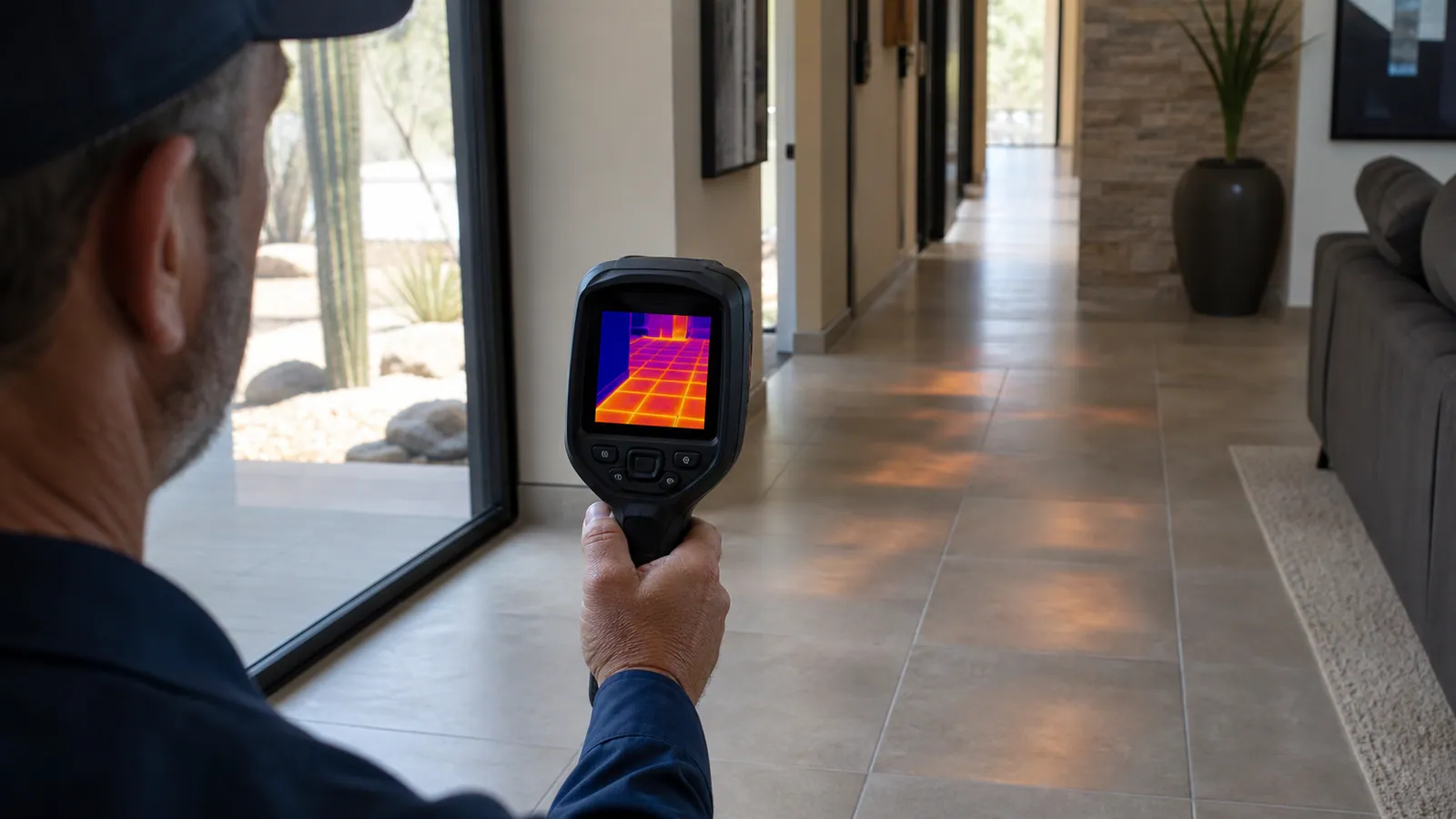
Tile transfers heat quickly, while carpet, wood, underlayment, cabinets, and thick stone can spread or conceal the surface pattern. Water may also travel along a trench and warm concrete away from the pipe failure. A thermal camera can document relative temperature, but it cannot see a pipe break through the slab or establish the cause of heat without isolation and pressure-test evidence.
Confirm Whether the Hot-Water System Is Losing Water
Check whether the water heater fires or reheats when no hot water has been used. Compare the water meter during a controlled no-use period, then have the hot system isolated and tested if the evidence remains consistent. A repeatable pressure drop on the hot side gives the thermal pattern diagnostic value; stable hot pressure points the investigation toward sunlight, ductwork, appliances, recirculation, or another source.
Do not shut down, drain, or relight unfamiliar water-heating equipment without following its instructions or using a qualified professional. If the floor becomes very hot, water surfaces, pressure falls sharply, or nearby finishes begin changing, treat the condition as active damage. Control the private supply if safe and arrange prompt plumbing assessment rather than waiting for visible flooding.
- Compare the same area under similar room conditions.
- Note water-heater operation when fixtures are idle.
- Use hot-system pressure loss to support thermal evidence.
- Do not authorize floor removal from a thermal image alone.
Related Reading and Services
Use these supporting resources to move from the current question to the next useful diagnostic or repair decision.
- Compare hot- and cold-water slab leaksSee how heater activity, floor temperature, meter flow, and isolation results differ by system.
- Compare thermal and acoustic detectionUnderstand what each locating method measures and why neither should be interpreted by itself.
- Check the full set of slab-leak warning signsCombine temperature with water-use, pressure, sound, and moisture evidence.
- Hot-water slab leak serviceReview Tucson-specific testing and repair considerations when the isolated hot system shows repeatable loss.
Frequently Asked Questions
Can a cold-water leak create a warm spot?
It normally does not add heat. Ambient conditions can still make the area feel warm, so other evidence is needed.
Will a thermal camera locate the exact break?
No. It maps surface temperature patterns. Pipe depth, flooring, cabinets, airflow, and recent water use affect the image.
Should I turn off the water heater?
If its supply is shut off or it is running continuously, follow the manufacturer’s safe shutdown instructions. Avoid gas or electrical work when uncertain.
Can the floor stay warm after the line is shut off?
Yes. Concrete and tile retain heat, so the pattern can fade gradually.