Key Takeaways
- Warmth and heater cycling point toward the hot system but are not proof.
- Cold-line failures can remain hidden longer because they add no heat.
- Separate isolation and pressure tests provide stronger evidence.
- Repair choice depends more on route and pipe condition than water temperature.
How the Symptoms Differ
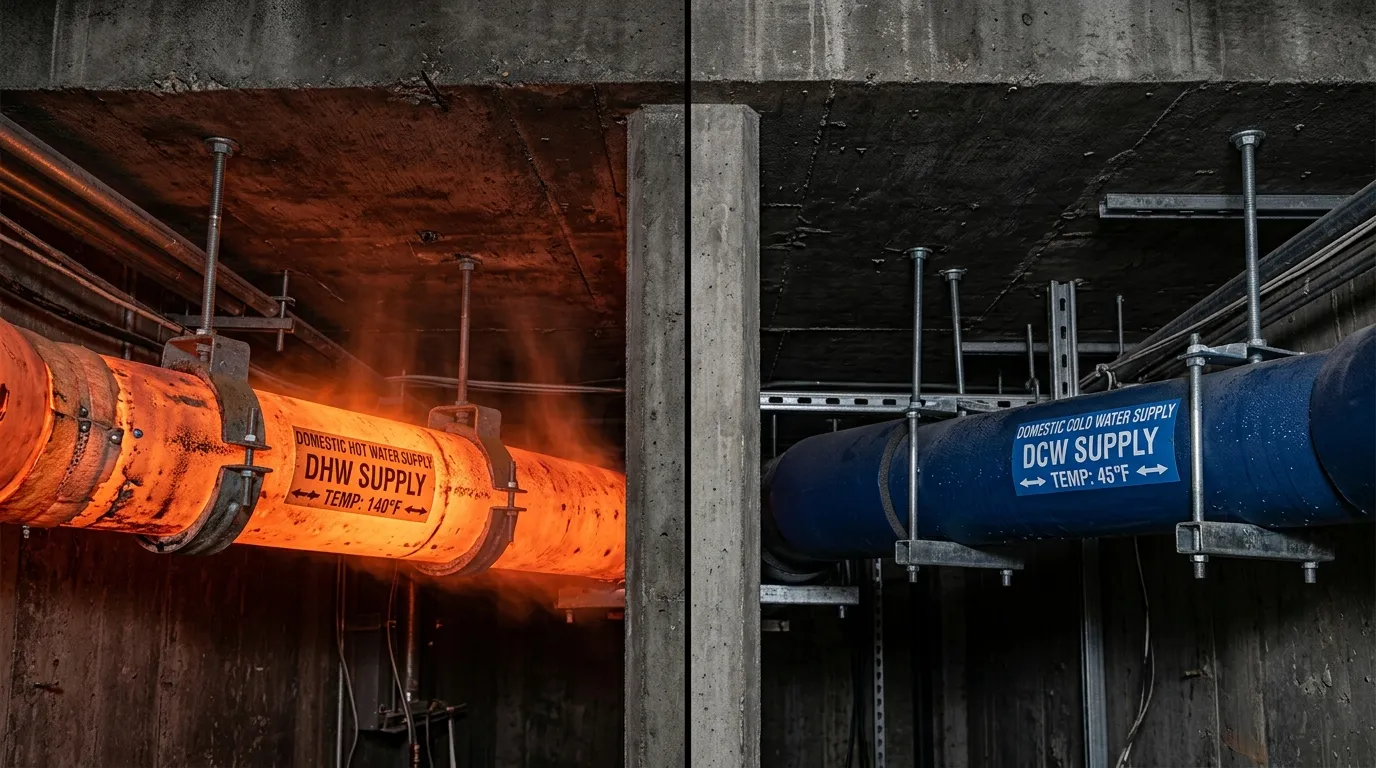
A hot-water leak may create a warm floor, increase heater operation, reduce available hot water, or produce a narrow thermal path. A cold-water failure may show only as meter movement, damp finishes, pressure loss, or sound.
Both can raise water use and move moisture away from the failed point. Temperature is therefore one clue among several.
| Clue | Hot-water line | Cold-water line |
|---|---|---|
| Floor temperature | May feel warm | Usually unchanged |
| Water heater | May cycle more | Usually unaffected |
| Meter | May show continuous flow | May show continuous flow |
| Useful isolation | Close heater supply safely | Test cold branches or main system |
How the Systems Are Tested
The technician first rules out fixtures and automatic water use. The hot system can often be separated at the water heater, while cold plumbing may require branch valves or staged testing.
Repeatable pressure loss identifies which system needs locating. Thermal information is more useful on hot lines, while acoustic and line-tracing methods can support either system.
Does the Repair Method Change?
Direct repair, rerouting, and partial repiping can apply to either system. Hot routes must account for heat loss and recirculation; cold routes through hot attics need insulation and placement planning.
The written scope should identify pipe material, route, joints, fixture reconnections, post-repair testing, and finish restoration.
Separate Hot- and Cold-Line Evidence Step by Step
Begin with the water meter under controlled no-use conditions. If unexplained flow is repeatable, note water-heater operation, available hot-water volume, floor temperature, and pressure at fixtures. Closing the heater supply in accordance with safe equipment procedures may help determine whether the flow is connected to the hot distribution system. A change supports hot-side investigation but does not locate the failed section.
Cold-water losses require more attention to branch isolation because they usually produce no thermal clue. Toilets, irrigation, pool autofill, refrigerator lines, softeners, hose bibbs, and the meter-to-house service line can all imitate a concealed cold branch. A plumber may test hot, cold, service, and accessible branches separately. The system that repeatedly loses pressure becomes the target for route tracing and acoustic or moisture comparison.
How the Affected System Changes the Repair Plan
A failed hot branch may run from the water heater to one fixture group or through a recirculation loop. Rerouting can change pipe length and the time required for hot water to arrive, so sizing, insulation, and recirculation design matter. Direct access may be reasonable when the failure is isolated and the floor can be restored without disproportionate disruption.
A cold branch may feed several fixtures, exterior connections, or the heater itself. The contractor must identify every downstream connection before abandoning or bypassing the old run. Whether the failed pipe is hot or cold, the proposal should show endpoints, material, route, isolation valves, finish openings, pressure testing, and responsibility for restoration. Temperature clues influence diagnosis, but verified layout and access determine the practical repair.
- Test systems independently rather than assuming from temperature.
- Map every fixture served by the affected branch.
- Account for hot-water delivery time after rerouting.
- Verify the completed route before walls or floors are closed.
Related Reading and Services
Use these supporting resources to move from the current question to the next useful diagnostic or repair decision.
- Evaluate a warm floor without visible waterUse timing, heater activity, isolation, and thermal patterns to assess a possible hot-line loss.
- Investigate a cold-water leak with no warm floorWork through meter, service-line, outdoor-system, and cold-branch checks.
- Compare repair and rerouting optionsSee how pipe history, finish access, route length, and future serviceability affect the choice.
- Tucson water-line pressure testingConfirm whether the hot or cold plumbing system loses pressure before targeted locating begins.
Frequently Asked Questions
Do hot-water lines fail more often?
Heat and expansion can add stress, but failure frequency depends on material, installation, pressure, abrasion, water chemistry, and property history.
Can shutting off the heater stop a hot-line leak?
Closing the heater’s water supply may isolate the hot system when the valve and layout allow. Turning off heat alone does not stop pressurized water.
Can both systems leak at once?
It is possible, especially in older or altered plumbing. Each isolated test should be interpreted independently.
Is cold-line detection harder?
It can be less obvious because there is no thermal clue. Meter, pressure, acoustic, moisture, and route evidence become more important.