Key Takeaways
- Repeated failures on one branch are different from one isolated defect.
- A partial repipe replaces a defined section, not the whole house.
- Mixed materials and inaccessible routes affect the decision.
- The estimate should map every fixture and endpoint.
Signals That Broader Replacement May Help
Several repairs on the same run, visible pitting or deterioration at exposed sections, mixed questionable joints, or an inaccessible slab route can make another isolated opening unattractive.
One leak does not prove the entire system is failing. The recommendation should be limited to the evidence and the branch being considered.
- More than one failure on the same run
- Poor condition observed at accessible sections
- Practical replacement route
- Several fixtures served by the affected branch
Define the Partial-Repipe Scope
The plan should mark where new pipe starts and ends, which fixtures are reconnected, which old sections are abandoned, and where walls or ceilings are opened.
Material, sizing, support, insulation, penetrations, permits, pressure testing, finish repairs, and warranty terms belong in writing.
| Factor | Spot repair | Partial repipe |
|---|---|---|
| Failure history | One isolated event | Repeated branch events |
| Access | Localized floor opening | Route through building |
| Pipe addressed | One section | Defined branch |
| Disruption | Floor and concrete | Multiple route openings |
Avoid Unnecessary Whole-House Claims
A partial repipe is not proof that every pipe must be replaced. Ask the provider to separate confirmed defects from risk observations and future options.
When different proposals recommend very different scopes, compare the documented evidence and consider an independent evaluation.
Recognize When the Problem Is a Branch Pattern, Not One Defect
One isolated pipe failure does not automatically justify replacing a broad section of plumbing. Partial repiping becomes more relevant when the same branch has failed more than once, several nearby runs share the same vulnerable route or material, previous spot repairs create a chain of connections, or the flooring makes repeated slab access unusually disruptive. Written repair history is more reliable than memory alone.
Ask the contractor to mark each known failure, the pipe material, the fixtures served, and the proposed boundary of new work. A partial repipe should solve a defined risk area rather than become an undefined middle option between one repair and a whole-house repipe. If failures occur across unrelated hot and cold branches, a broader plumbing assessment may be warranted before choosing the scope.
Compare Lifecycle Disruption and Total Project Cost
Spot repair can have the smallest immediate plumbing scope, but repeated detection, floor opening, concrete work, water shutoff, and restoration can cost more over time. Partial repiping requires a larger planned project now, often with several wall or ceiling openings, yet it can move a complete vulnerable branch to an accessible route and reduce repeated work in the same area.
Compare current price, restoration, permit, schedule, fixture downtime, warranty, future access, and the condition of pipe left in service. The estimate should show exactly where new material begins and ends, how transitions are made, which old lines are abandoned, and who closes finishes. A partial repipe is valuable when evidence supports its boundary; it is not automatically better simply because it replaces more pipe.
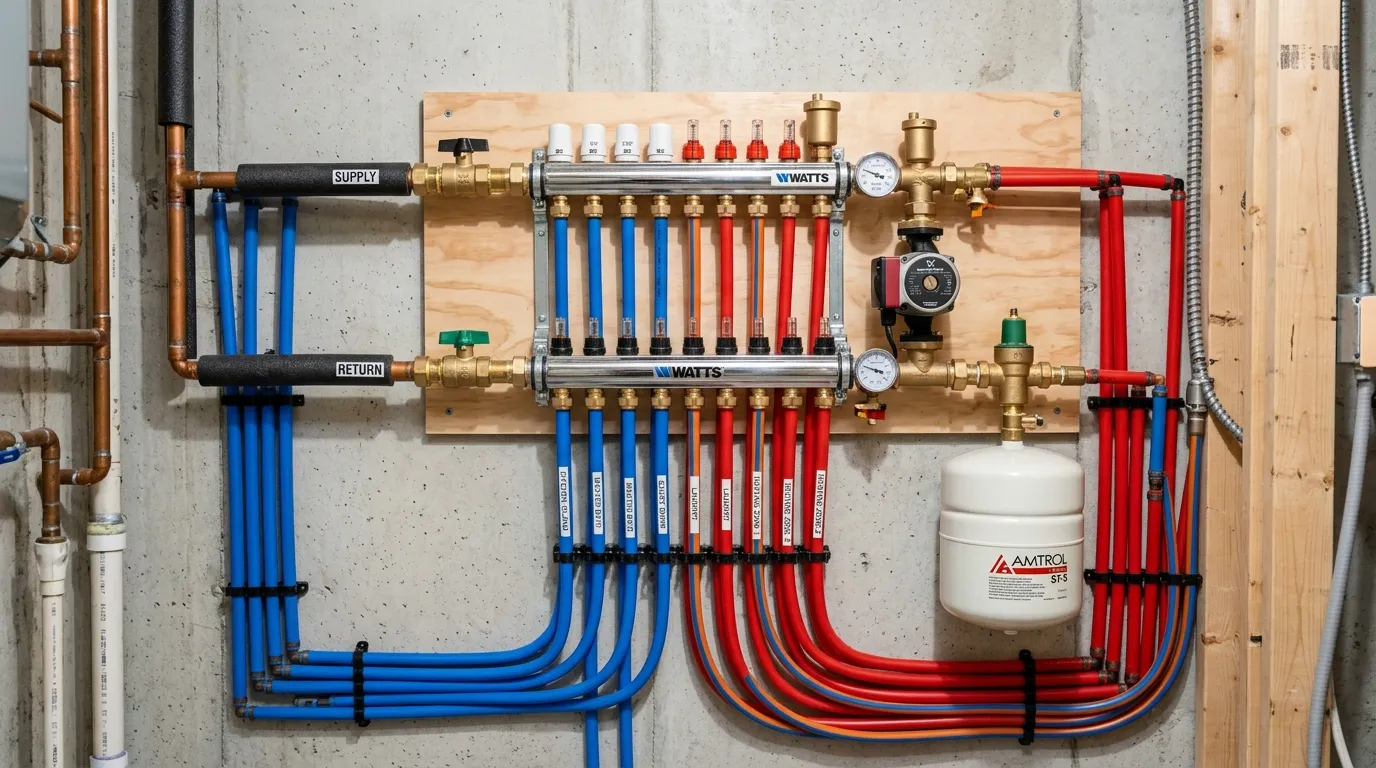
The completed system must still deliver acceptable flow and temperature to every affected fixture. Longer routes, smaller pipe, added fittings, or poorly planned manifolds can change performance. Require sizing review, flushing, pressure testing, fixture operation, and identification of new isolation valves before finishes close.
- Map every known failure and repair on the branch.
- Define the exact start and end of replacement work.
- Compare repeated restoration with one planned project.
- Evaluate the pipe that remains, not only the pipe being replaced.
Related Reading and Services
Use these supporting resources to move from the current question to the next useful diagnostic or repair decision.
- Start with spot repair versus reroutingCompare access, finishes, pipe history, route conditions, and the complete installed cost.
- See when one branch reroute is enoughMap endpoints and fixtures before expanding the work into a larger repipe.
- Use the repair estimate checklistRequire defined access, materials, route, testing, restoration, permit, warranty, and exclusions.
- Partial repiping in TucsonReview service considerations for replacing a defined group of unreliable concealed lines.
Frequently Asked Questions
Is partial repiping the same as whole-house repiping?
No. It replaces a defined branch or group of related lines while other plumbing remains in service.
Can different pipe materials be connected?
Approved transitions can connect compatible systems when selected and installed correctly.
Will the old branch be removed?
Concealed under-slab pipe is often disconnected and abandoned rather than excavated along its full length.
How is the new branch tested?
Connections and the completed section should be pressure-tested and fixtures checked before walls or ceilings are closed.