Key Takeaways
- Cold-water leaks usually do not warm the floor.
- A moving meter and repeatable cold-system pressure loss are stronger clues.
- Irrigation, pools, toilets, and service lines must be excluded.
- Moisture can appear far from the pipe failure.
Cold-Line Warning Signs
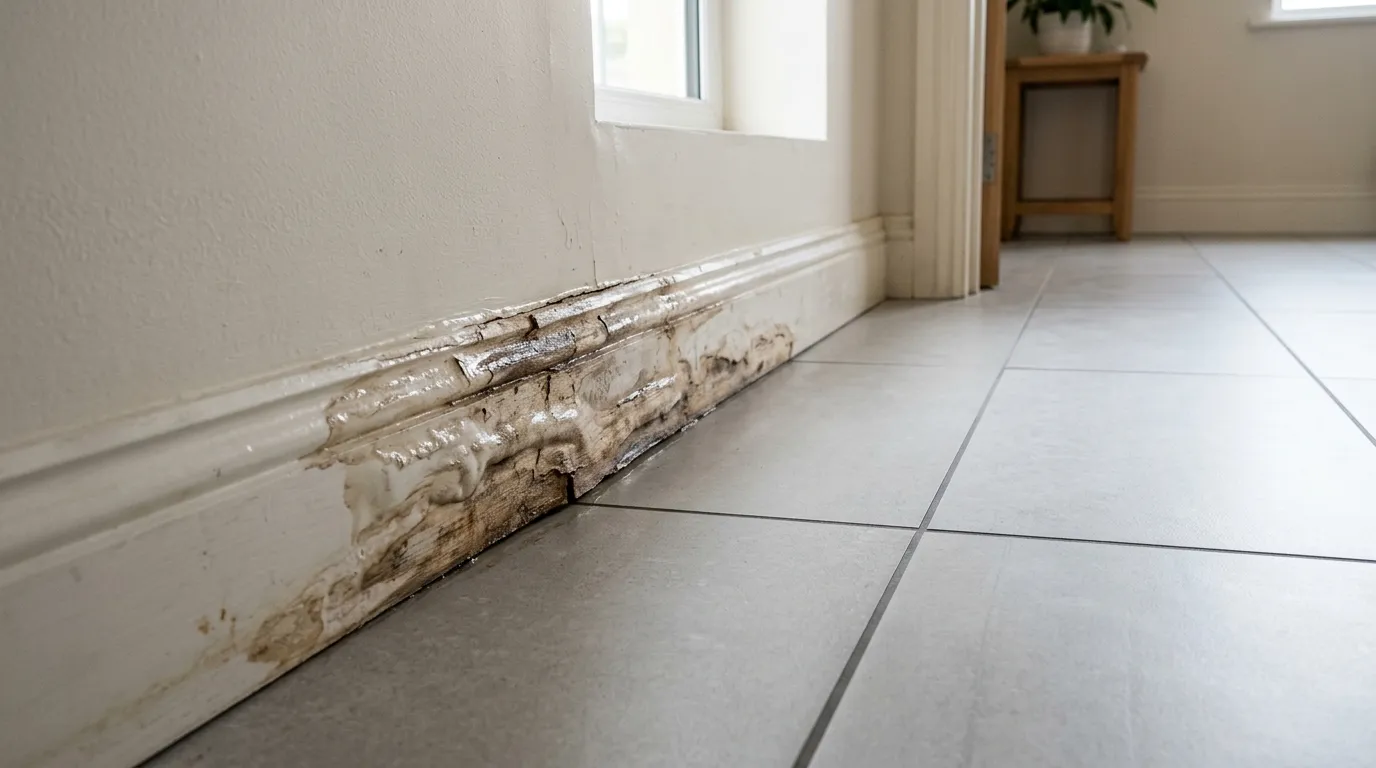
Look for unexplained meter movement, lower pressure, damp flooring, swollen baseboards, sounds of flow, or wet soil near the foundation. A higher bill may support the pattern but cannot locate it.
Because cold water adds no heat, the problem can remain hidden until moisture or consumption becomes noticeable.
- Meter changes with all known uses off
- Cold system loses pressure
- Dampness has no visible fixture source
- Water sound follows a cold branch route
Rule Out Other Cold-Water Sources
Toilets, irrigation, pool autofill, refrigerator lines, washing machines, softeners, hose bibbs, and the meter-to-house service line can all create similar symptoms.
Isolate these sources where safe and repeat the meter observation. An exterior loss needs a different locating and repair plan from an interior under-slab branch.
| Source | Typical clue | Check |
|---|---|---|
| Toilet | Intermittent refill | Dye and isolation |
| Irrigation | Use tied to schedule | Disable controller and valves |
| Service line | Flow continues with house shutoff closed | Test meter-to-house route |
| Slab branch | Interior system loses pressure | Isolate and locate branch |
How a Cold Line Is Narrowed
Pressure testing confirms whether the isolated cold system holds. Branch isolation, pipe tracing, acoustic listening, and moisture mapping can then reduce the search area.
The result should be expressed as evidence and confidence, not a guarantee that every cold-water failure can be pinpointed without access.
Evidence That Supports a Hidden Cold-Water Leak
Because cold water does not create a warm-floor path, the strongest early evidence is usually repeatable flow or pressure loss. Perform a controlled meter observation after disabling fixtures and automatic systems. Note any unexplained drop in fixture pressure, damp flooring or baseboards, musty odor, cool moisture pattern, running-water sound, or change in soil near the slab edge. Each clue needs comparison with other possible sources.
Water can follow pipe trenches, cracks, vapor barriers, and finish layers before it becomes visible. The dampest surface may therefore be away from the failed pipe. Moisture meters help map affected material, but roof, wall, drain, condensate, groundwater, and exterior irrigation sources must remain in the differential. Supply-line isolation and pressure testing distinguish an active plumbing loss from moisture that has another origin or remains from an older event.
Narrow a Cold-Water System Without Unnecessary Demolition
The plumber first separates the private service line from plumbing inside the building. Accessible manifolds, branch valves, fixture stops, and exterior supplies can then divide the cold system into smaller test sections. When a particular branch repeatedly loses pressure, plans, visible pipe entry points, fixture relationships, and electronic tracing help estimate its route beneath or around the slab.
Acoustic comparison is often valuable on an active pressurized cold leak, but background sound, plastic pipe, depth, and soil conditions affect the signal. The locating result should identify an evidence area and confidence level, not promise a pinpoint under every floor. Before approving access, ask how the technician excluded the service line, pool, irrigation, toilets, and other cold-water users and how the proposed repair addresses the complete failed run.
- Do not wait for a warm floor on a cold-line failure.
- Separate the service line from interior branches.
- Map moisture without assuming the wettest point is the break.
- Require repeatable test results before opening finishes.
Related Reading and Services
Use these supporting resources to move from the current question to the next useful diagnostic or repair decision.
- Use the meter to confirm unexplained cold-water flowEstablish whether water is moving before narrowing service and interior branches.
- Exclude pool and irrigation lossesPrevent exterior cold-water systems from being mistaken for an interior under-slab failure.
- Compare hot- and cold-water leak symptomsUnderstand which clues overlap and why temperature is only one part of diagnosis.
- Cold-water slab leak serviceReview Tucson-specific detection and repair considerations for a verified cold-water branch loss.
Frequently Asked Questions
Will a cold leak feel cool?
Not reliably. Floor temperature is influenced by room conditions, soil, HVAC, and water flow.
Can a cold leak lower pressure at every faucet?
A significant loss can affect pressure, but regulators, utility conditions, clogged fixtures, and valve problems can do the same.
Can the meter move very slowly?
Yes. Small continuous losses may produce subtle movement that is easier to see over a longer controlled interval.
Can a cold branch be rerouted?
Often, if a safe code-compliant route can reach the served fixtures. Access and heat exposure must be considered.