Key Takeaways
- Pools and irrigation can create high bills without an interior leak.
- Automatic systems must be controlled during a meter test.
- Wet soil location is not always the source.
- Interior pressure testing should follow outdoor isolation.
Clues From Pools and Irrigation
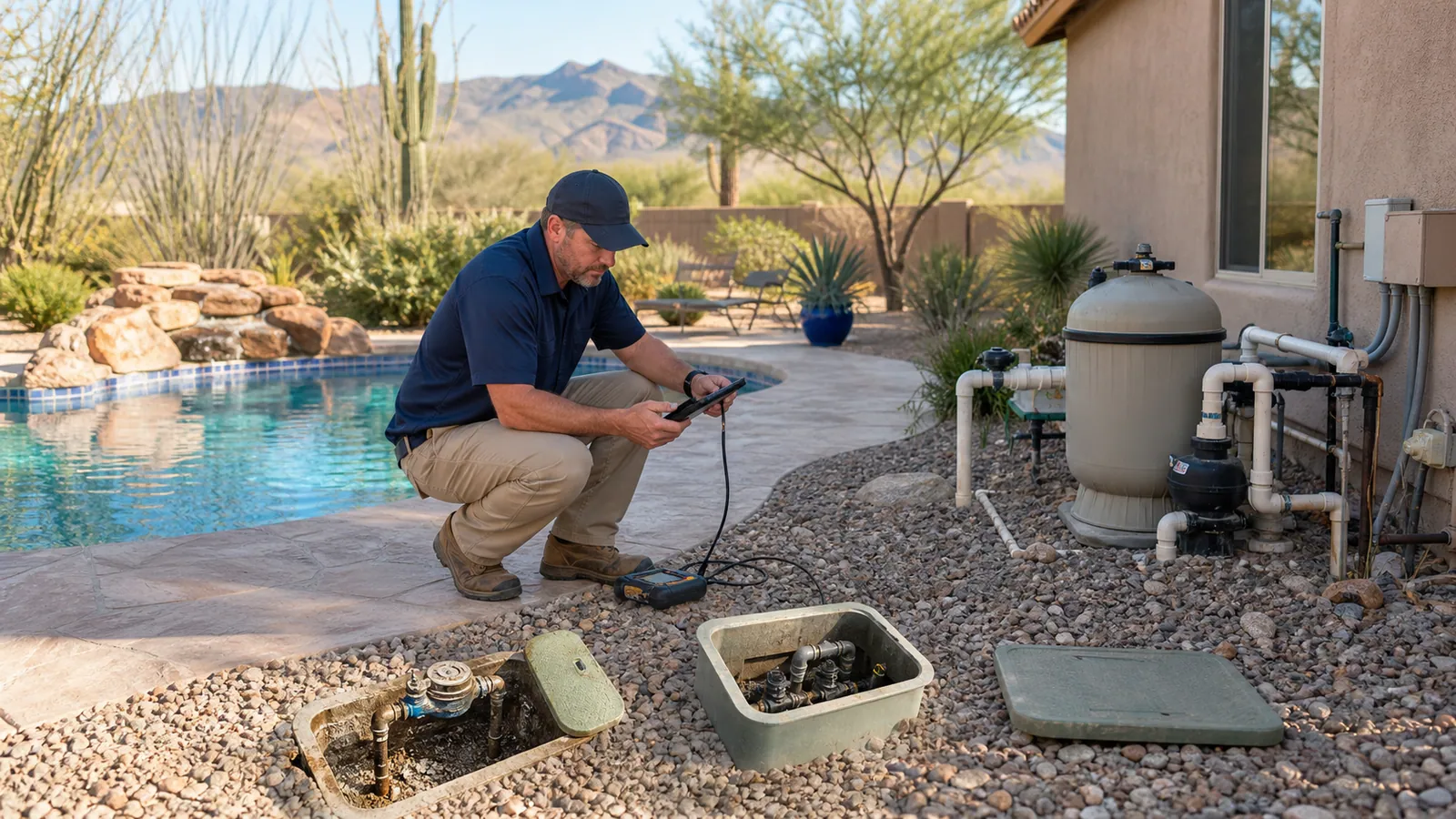
A pool autofill can mask evaporation or pool-shell loss by adding water automatically. Irrigation valves may stick open, emitters can break underground, and schedules may change without being noticed.
Check water level, equipment, valves, wet zones, controller history, and whether the meter changes when each system is disabled safely.
| Source | Common clue | Isolation approach |
|---|---|---|
| Pool | Autofill or level change | Disable fill and perform pool test |
| Irrigation | Wet zone or scheduled use | Shut controller and zone supply |
| Service line | Flow between meter and house | Close house shutoff if safe |
| Interior slab line | Isolated house system loses pressure | Hot/cold branch testing |
Use a Test Sequence
Start with no intentional water use. Observe the meter, then isolate pool and irrigation sources one at a time. Repeat long enough to avoid mistaking delayed valve closure or automatic cycles for a constant loss.
If flow continues with outdoor sources off, evaluate the private service line and interior plumbing separately.
Choose the Right Specialist
Pool specialists evaluate shells, plumbing circuits, equipment, and autofill. Irrigation providers trace landscape valves and zones. Plumbers test pressurized domestic supply piping.
A clear test history reduces duplicated visits and keeps a slab-leak provider focused on the correct system.
Test the Pool and Irrigation Systems Independently
Turn off scheduled irrigation and confirm that valves actually close; disabling a controller does not repair a valve that is stuck open. Inspect emitters, sprinkler heads, valve boxes, backflow assemblies, hose connections, and unusually soft or green areas. Record the meter with the irrigation supply isolated where the plumbing arrangement allows. Repeating the observation across several schedule windows helps identify an intermittent zone problem.
For a pool, disable the autofill so it cannot hide water loss. Mark the water level and compare it under similar weather conditions, accounting for splash, wind, and evaporation. A bucket-style comparison can help distinguish pool loss from normal evaporation, but pool shells, equipment pads, suction lines, return lines, and autofill plumbing require different tests. Keep pool testing separate from household supply-line pressure testing so one system does not confuse the other.
Use the House Shutoff to Separate Exterior and Interior Flow
After visible and automatic uses are controlled, observe the utility meter. If a safe, functional private main shutoff is closed and the meter continues recording flow, the service line or another connection upstream of that shutoff becomes more likely. If the meter stops, the loss is probably downstream, which may include indoor plumbing, pool fill, irrigation branches, or other connections depending on how the property was built.
Older Tucson properties, remodels, guest houses, shared meters, and separately routed outdoor lines can make a simple shutoff test misleading. Trace which systems are actually controlled by each valve before drawing a conclusion. When interior loss remains possible, hot- and cold-line pressure tests provide better direction than digging in a wet yard or opening a warm floor solely because that area is noticeable.
- Disable pool autofill before checking water level.
- Confirm irrigation valves close, not only the controller.
- Map which connections are upstream and downstream of the house shutoff.
- Test the interior system only after outdoor sources are controlled.
Related Reading and Services
Use these supporting resources to move from the current question to the next useful diagnostic or repair decision.
- Investigate unexplained Tucson water useBuild a billing and meter baseline before assigning the increase to any one system.
- Run a controlled water-meter testDocument flow with fixtures, appliances, irrigation, and pool systems placed in known conditions.
- Understand concealed cold-water line evidenceContinue with service-line and branch testing when outdoor sources do not explain the loss.
- Professional water-line pressure testingSeparate hot, cold, service, and accessible branch systems before targeted leak locating.
Frequently Asked Questions
Can pool autofill cause a continuous-use alert?
Yes. Normal filling or a pool-related loss can create continuous metered flow.
Can irrigation water appear near the foundation?
Yes. Soil, grading, broken lines, and emitters can move moisture toward the slab edge.
Does the bucket test find plumbing leaks in the house?
No. It helps assess pool water loss. Domestic plumbing requires separate meter and pressure tests.
Should every system be shut off at once?
Use a controlled sequence and operate only familiar, serviceable valves. A one-at-a-time approach provides more useful evidence.