Key Takeaways
- Stop all intentional and automatic water use first.
- Record the meter rather than relying on memory.
- Movement confirms flow but not the source.
- Do not operate an unfamiliar or damaged valve.
Prepare the Property
Tell everyone not to use faucets, toilets, showers, appliances, or outdoor water during the test. Pause irrigation and pool autofill if it can be done safely, and note whether a softener or other automatic device is scheduled.
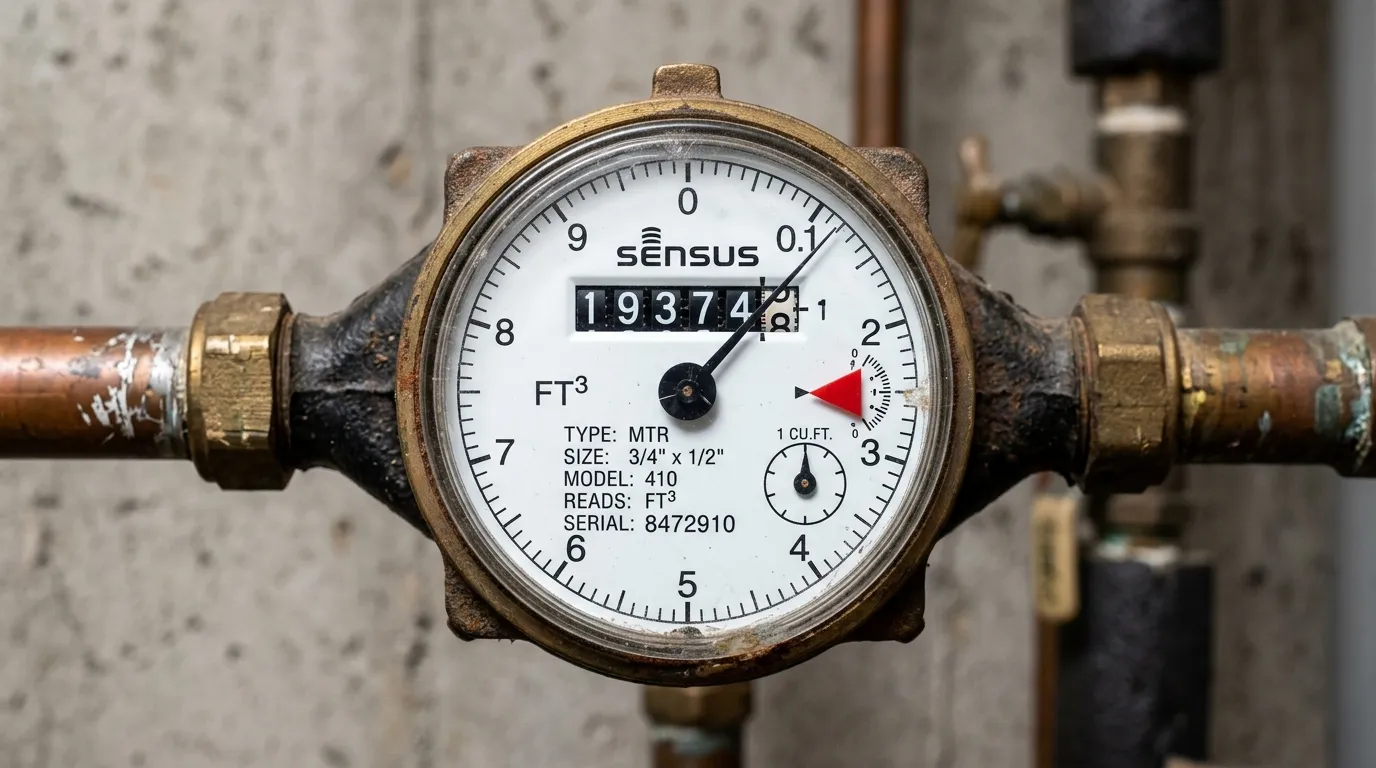
Locate the correct meter and avoid opening utility equipment beyond normal customer access. Meter types differ; some show a plus symbol or flow icon, while others use a low-flow dial.
- Choose a quiet testing period.
- Confirm no appliance is filling or draining.
- Photograph the starting display.
- Wait long enough to observe slow flow.
Interpret the Result Carefully
No movement during a controlled test means there was no continuous metered flow at that time. It does not rule out an intermittent toilet, irrigation valve, appliance, or leak that appears only under certain conditions.
Movement confirms water passed through the meter. Isolate obvious sources one at a time where safe and repeat the observation. Avoid guessing that the problem is beneath the slab.
| Result | Meaning | Next action |
|---|---|---|
| No movement | No continuous flow during test | Check intermittent sources and monitor |
| Slow movement | Small ongoing use or leak | Isolate fixtures and automatic systems |
| Rapid movement | Significant active use or loss | Check for damage and shut off safely if needed |
| Movement stops at main shutoff | Loss is likely on the property side downstream | Arrange plumbing diagnosis |
When to Move Beyond the Meter
If the meter repeatedly moves after visible and automatic uses are excluded, professional line isolation can separate the private service line, hot-water system, cold-water system, and individual branches where valves allow.
Pressure and locating tests should follow the evidence. The meter is a screening tool, not a device that pinpoints a failed pipe.
Make the Hidden-Leak Meter Test Repeatable
Choose a period when no one needs water and photograph the starting display. Confirm that faucets, toilets, dishwasher, washing machine, ice maker, water softener, reverse-osmosis system, irrigation, pool equipment, and evaporative cooler are not drawing water. Some digital meters rotate through screens or show flow in different units, so note the display sequence instead of relying on a single unfamiliar symbol.
Wait long enough to capture small continuous flow, then photograph the ending display and record the elapsed time. Repeat the test at another quiet period if the first result is unclear. A meter that stays still during a ten-minute check can still miss an intermittent toilet or scheduled valve. A repeatable change under controlled conditions is better evidence than watching the display briefly while automatic systems remain active.
Use Isolation Valves to Narrow the Meter Movement
If the meter records flow, isolate obvious sources one at a time. A toilet valve, irrigation supply, pool autofill, water-treatment unit, or water-heater inlet can change the result. Closing the water-heater supply may help determine whether flow is tied to the hot-water system, but follow the equipment manufacturer’s safety guidance and do not operate a heater in an unsafe condition.
A private main shutoff can help separate a service-line leak from plumbing inside the house. If meter movement continues while the house is safely isolated, the line between the meter and shutoff deserves evaluation. If movement stops, the loss is likely downstream, although a leaking shutoff can complicate the conclusion. Document each valve position and result so a plumber can reproduce the test rather than starting over.
- Use photographs and exact start and stop times.
- Repeat uncertain results under the same conditions.
- Never force a corroded or unfamiliar shutoff valve.
- Treat meter movement as proof of flow, not proof of a slab leak.
Related Reading and Services
Use these supporting resources to move from the current question to the next useful diagnostic or repair decision.
- Work through the complete high-water-bill checklistCompare billing changes, outdoor systems, fixtures, appliances, service lines, and concealed plumbing.
- Learn what happens during a pressure testSee how a plumber separates systems after the meter confirms unexplained flow.
- Rule out pool and irrigation water useUse staged isolation to prevent an outdoor loss from being mistaken for an under-slab pipe failure.
- Professional slab leak detectionMove to documented system testing and locating when controlled homeowner checks still show unexplained water flow.
Frequently Asked Questions
How long should I watch the meter?
Long enough to detect slow flow without any intentional or automatic use. The appropriate interval depends on the meter display and suspected rate; repeating the test is often more useful than one brief glance.
Can I close the utility meter valve?
Use only valves you are authorized and competent to operate. Utility rules vary, and old valves can fail. Contact the utility or a plumber when uncertain.
Why did the meter move only once?
A toilet, ice maker, softener, pool, irrigation system, or pressure change may operate intermittently. Review automatic equipment schedules.
Does a digital alert prove a leak?
No. It reports unusual or continuous use. Normal activities such as pool filling or a hose can also trigger an alert.