Key Takeaways
- Electronic detection is a category of tools, not one magic device.
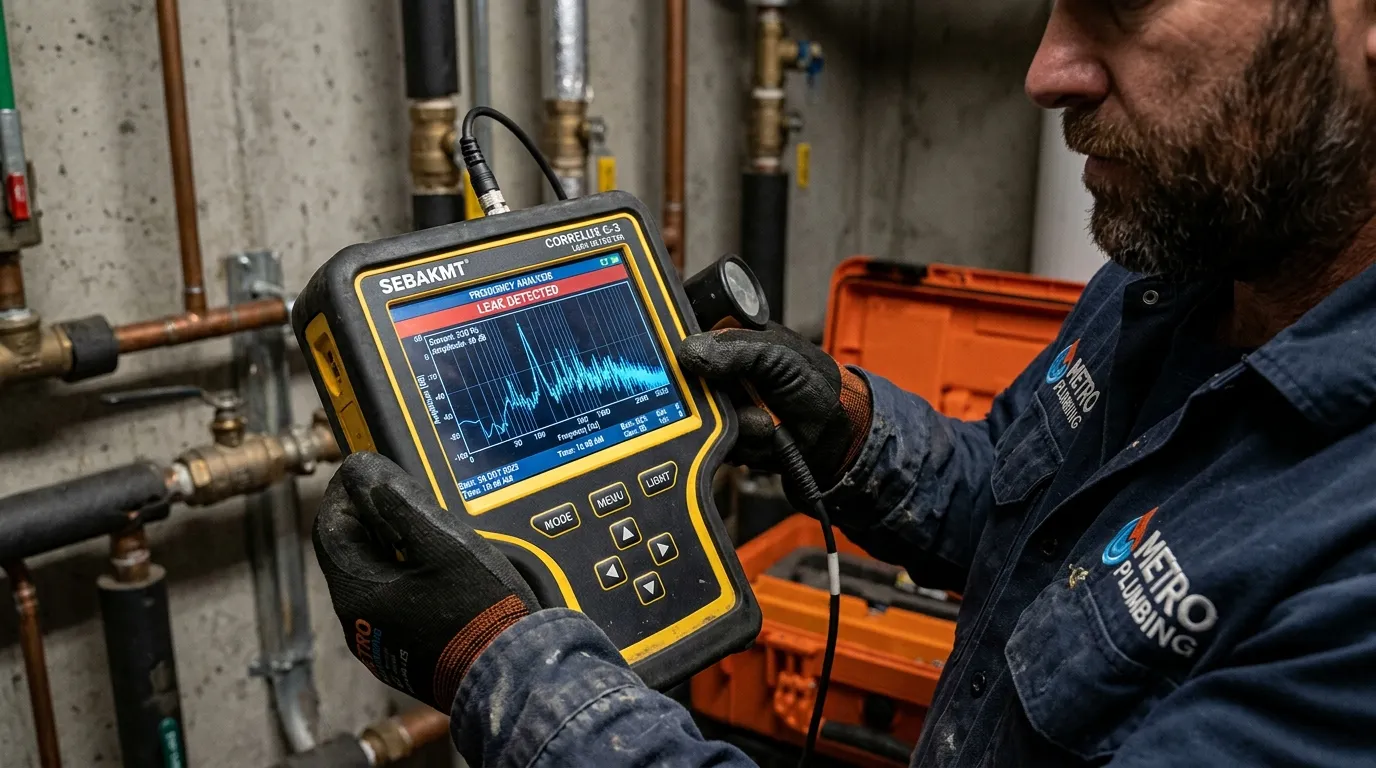
- Acoustic equipment listens for pressure-related sound.
- Tracing estimates the line route rather than proving a break.
- Depth, pressure, soil, coverings, and background noise affect results.
What the Tools Measure
Ground microphones and listening sensors amplify vibration associated with water escaping a pressurized line. Electromagnetic tracing can help establish the route of compatible piping or tracer wires. Moisture meters and thermal cameras measure surface effects.
None of these tools directly sees through concrete. Each contributes a different piece of evidence.
| Tool | Useful for | Does not prove |
|---|---|---|
| Acoustic sensor | Leak-noise pattern | Pipe condition or exact depth |
| Line tracer | Likely route | Active failure point |
| Thermal camera | Surface temperature | Cause of heat |
| Moisture meter | Affected material | Source location |
Why Results Vary
Small losses, low pressure, deep pipes, soft soil, thick stone, cabinets, multiple floor layers, pumps, traffic, HVAC, and neighboring systems can obscure signals.
A strong provider explains these limitations, repeats measurements, and compares them with meter and pressure evidence.
What a Good Result Looks Like
The result should identify the tested system, likely route, strongest evidence area, and remaining uncertainty. A marked floor point without documented isolation or pressure loss is incomplete.
The repair plan should allow for field conditions once access exposes the pipe.
Match Each Electronic Tool to a Specific Question
Electronic leak detection is a group of methods, not one machine. A digital pressure gauge asks whether an isolated line holds. A line tracer estimates the route of compatible pipe or tracer wire. Acoustic equipment compares vibration that may come from pressurized water escaping. A thermal camera measures surface temperature, and a moisture meter compares affected materials. The technician should explain which question each instrument is being used to answer.
Problems arise when a tool is used before the system is confirmed. A thermal image of a warm floor can reflect sunlight or ductwork. A loud acoustic point can be a fitting, pipe contact, pump, traffic, or transmitted building noise. A high moisture reading can come from a drain, wall, roof, exterior source, or old event. Electronic findings gain value when they repeat and align with meter flow, isolation, pressure loss, and a plausible pipe route.
Building Conditions That Reduce Locating Accuracy
Pipe material, pressure, leak size, soil, slab thickness, reinforcement, flooring, cabinets, voids, and depth all affect readings. Plastic pipe often transmits sound differently from metal. Thick stone and underlayment can soften thermal or moisture patterns. Mechanical equipment, street traffic, pumps, shared walls, and flowing drains create competing noise. A very small or intermittent leak may stop producing a useful signal during the appointment.
A responsible technician responds by changing the test—not by overstating certainty. That can mean isolating a smaller branch, adjusting pressure within safe limits, testing at a quieter time, tracing from another access point, comparing multiple floor locations, or recommending limited confirmation access. The report should name these limitations and describe the suspected area as a range when site conditions do not support a precise point.
If limited access is recommended, ask what uncertainty the opening will resolve and whether it is part of detection or repair. The technician should identify the expected area, not use open-ended demolition to search. Results discovered after exposure should be photographed and compared with the original interpretation so the final record explains both the electronic findings and the physical pipe condition.
- Ask what the instrument measures directly.
- Confirm the affected system before interpreting a location signal.
- Expect confidence ranges when construction masks evidence.
- Treat guarantees of zero access or perfect accuracy cautiously.
Related Reading and Services
Use these supporting resources to move from the current question to the next useful diagnostic or repair decision.
- Compare thermal imaging with acoustic detectionReview the strengths and limits of surface-temperature and leak-noise evidence.
- Build a multi-tool evidence sequenceSee how confirmation, isolation, tracing, locating, and documentation fit together.
- Learn when tile can remain in place during detectionUnderstand the difference between noninvasive locating and the access ultimately required for repair.
- Electronic leak detection serviceReview Tucson diagnostic options for a verified but concealed water-line loss.
Frequently Asked Questions
Is electronic detection non-invasive?
Testing usually does not require demolition, but final confirmation or repair may still require limited access.
Can it find plastic pipe?
Acoustic methods can work with pressurized plastic lines, while electromagnetic route tracing may need a tracer or compatible method.
Can it distinguish two nearby pipes?
Sometimes, but close routes, shared vibration, and limited isolation can reduce confidence.
Should equipment replace pressure testing?
No. Equipment is most useful after tests identify the system that is actually losing water or pressure.