Key Takeaways
- Compare gallons or CCF, not only the dollar total.
- Control outdoor and automatic water uses before checking the meter.
- A continuously moving meter confirms flow, not its location.
- Pressure testing becomes useful after visible and exterior sources are excluded.
Confirm That Usage Actually Increased
Rates, billing-cycle length, seasonal irrigation, pool filling, guests, and estimated readings can affect the total. Compare consumption units with the same period last year and recent months.
If usage increased, identify automatic systems that can run unnoticed. Irrigation, pool autofill, softeners, toilets, and evaporative cooling are common places to begin.
| Possible reason | What to review | Next step |
|---|---|---|
| Billing change | Days, rates and actual usage | Contact the utility if figures look wrong |
| Outdoor use | Irrigation and pool schedule | Turn systems off for a controlled test |
| Fixture leak | Toilets and appliances | Isolate or repair the source |
| Hidden line | Meter flow with sources off | Request system testing |
Perform a Controlled Meter Check
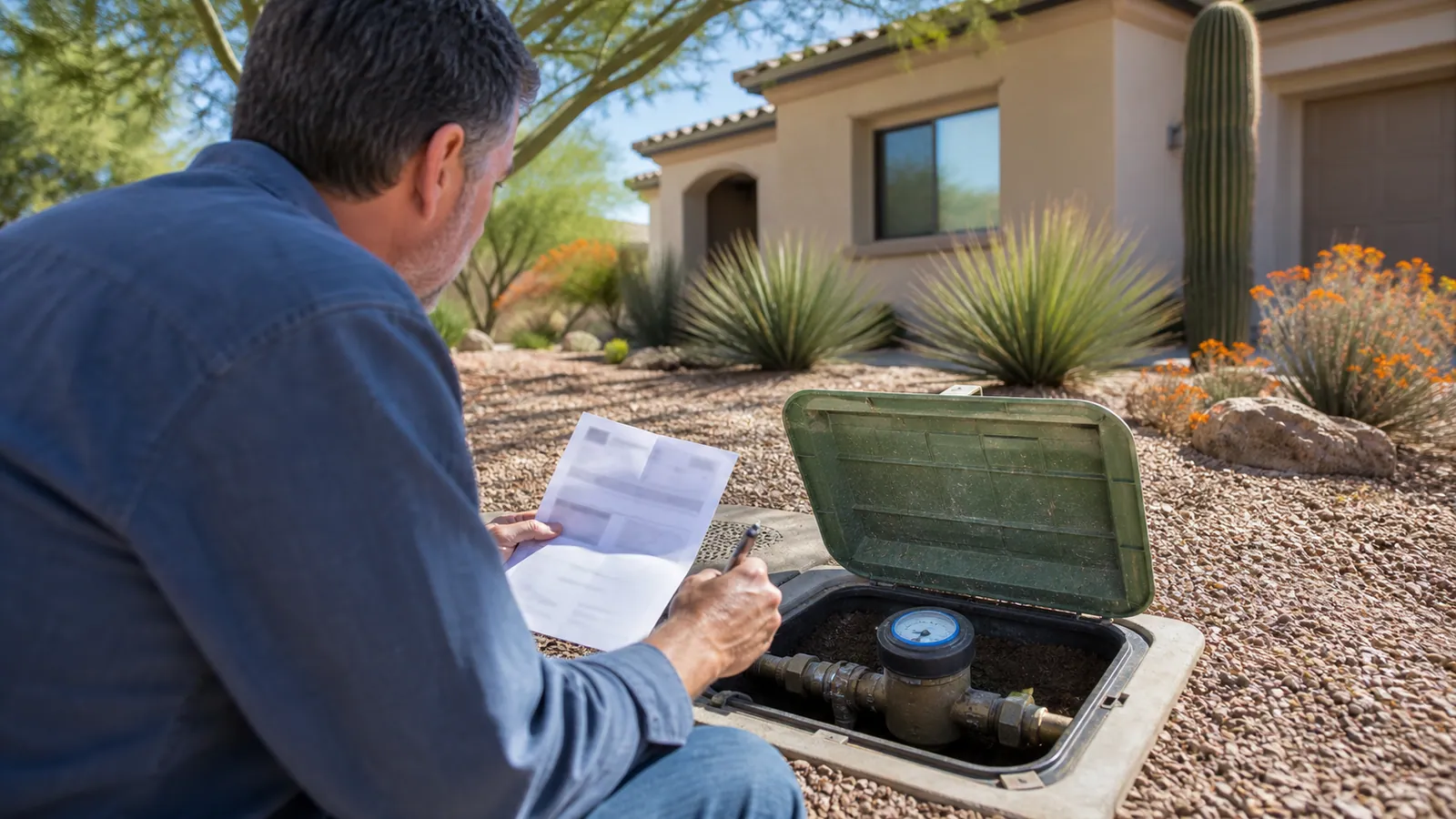
Stop intentional water use and ensure automatic systems will not start. Record the meter, wait without using water, and check it again. Digital indicators and analog dials vary, so use the utility’s instructions for that meter.
Movement means water passed through the meter during the test. It does not by itself distinguish a toilet, irrigation line, exterior service line, wall pipe, or under-slab line.
- Do not turn off equipment unsafely.
- Repeat the test if an automatic system may have operated.
- Record the time and meter reading.
- Use isolation valves only when their purpose and condition are known.
When Plumbing Pressure Testing Helps
If visible fixtures and outdoor systems are excluded, a plumber can test interior hot and cold plumbing separately. A stable test makes an active pressurized leak less likely in that isolated system; repeatable pressure loss supports further locating.
The meter-to-house line may need its own evaluation. Utility responsibility varies, so confirm which side of the meter is involved before authorizing private repair.
Build a Reliable Water-Use Baseline Before Blaming a Leak
Start with consumption, not the invoice total. Compare gallons or billing units, the number of days in the billing cycle, and the same season last year. Tucson households can see legitimate changes after irrigation adjustments, pool filling, guests, new appliances, landscaping work, or hotter weather. A rate change can raise the amount due even when the volume is stable, while an estimated meter reading can shift usage between billing periods.
Next, create a short daily baseline. Read the meter at the same time for several days and note irrigation, pool autofill, laundry, showers, and unusual activity. A consistent unexplained overnight increase is more useful than one large monthly total. If usage is intermittent, review controller schedules, toilet refill cycles, softener regeneration, reverse-osmosis discharge, evaporative cooling, and refrigerator supply lines before moving to concealed plumbing tests.
Separate Outdoor, Service-Line, and Interior Water Loss
A property-wide meter check confirms flow but does not identify where it goes. Disable irrigation and pool autofill, confirm that appliances and fixtures are idle, and observe the meter. If flow continues, a safe house shutoff test can help distinguish the meter-to-house service line from plumbing downstream of the shutoff. Valve condition and property layout matter, so do not force an old or damaged valve.
When the unexplained flow appears to be inside, the hot and cold systems may need separate pressure tests. A hot-water loss can increase both water and energy use because the heater repeatedly replaces heated water. A cold-line leak may have no temperature clue at all. Repeatable isolation results should guide acoustic, thermal, tracing, or moisture work; the bill alone cannot justify opening concrete.
- Compare actual consumption rather than invoice dollars.
- Record automatic outdoor and appliance schedules.
- Use the house shutoff only when it operates safely.
- Test hot, cold, and service lines as separate systems when needed.
Related Reading and Services
Use these supporting resources to move from the current question to the next useful diagnostic or repair decision.
- Check the water meter for hidden flowUse a repeatable meter test and learn what slow, fast, or intermittent movement actually means.
- Separate a pool, irrigation, or slab leakCompare common outdoor water losses with evidence from an isolated interior plumbing system.
- Recognize a cold-water slab leakUnderstand why a concealed cold-line failure can raise consumption without creating a warm floor.
- Water-line pressure testing in TucsonReview professional testing when visible fixtures and automatic systems do not explain the meter activity.
Frequently Asked Questions
Can a toilet cause a large bill without being heard?
Yes. Intermittent flapper or fill-valve problems can pass water quietly and may not run during a brief inspection.
Does a moving meter mean the leak is under the slab?
No. It only confirms flow through the meter while the test conditions were in place.
Should I ask for a bill adjustment?
Ask your utility about its current policy and required repair documentation. Eligibility and procedures vary.
What information helps the plumber?
Bring usage history, alert dates, meter-test results, irrigation and pool schedules, and any locations with sound, warmth, or moisture.