Key Takeaways
- The system must be isolated from normal use.
- Hot, cold, service, and branch lines may need separate tests.
- Repeatable pressure loss supports an active problem.
- Temperature, valves, equipment, and test setup affect readings.
How the Test Is Set Up
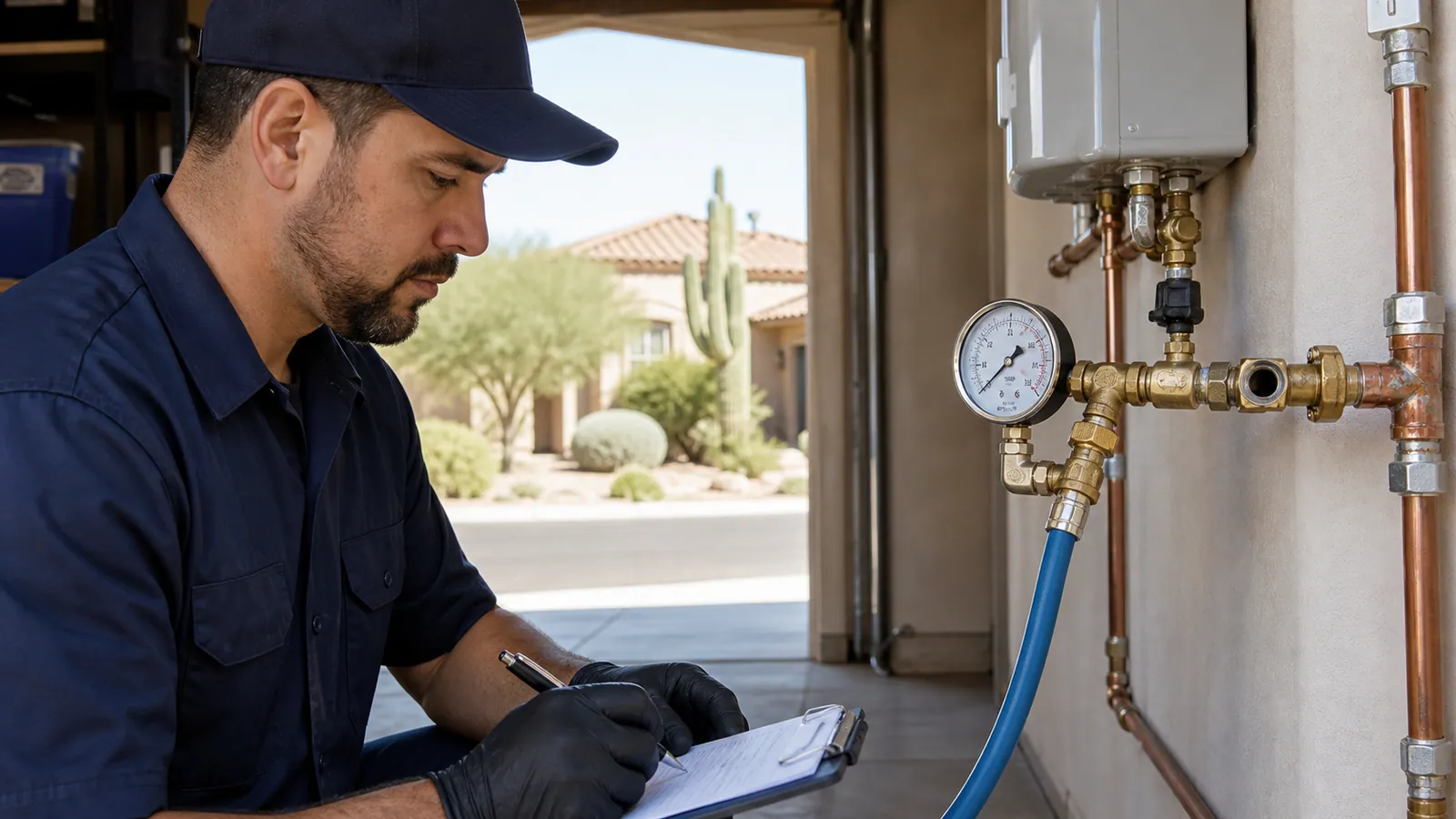
The provider reviews the plumbing layout and chooses safe connection and isolation points. Fixtures, heaters, regulators, softeners, irrigation, and other equipment may need to be separated from the test section.
A calibrated gauge records starting pressure and changes over a defined interval. The method and pressure must suit the piping and applicable procedures.
What the Result Means
A repeatable drop can support active loss in the isolated section. Stable pressure suggests that section held under the test conditions, but it does not guarantee every component is trouble-free or rule out intermittent problems.
Temperature change, trapped air, leaking isolation valves, gauge connections, and equipment can affect results. Unexpected readings should be verified.
| Outcome | Possible meaning | Next step |
|---|---|---|
| Stable | Section held during test | Evaluate other sources or monitor |
| Repeatable drop | Loss in isolated section | Trace and locate that section |
| Irregular movement | Temperature, valve or setup effect | Check setup and repeat |
| Cannot isolate | Layout or valves limit test | Use staged approach or repair access |
Testing After Repair
The repaired or rerouted line should be tested before access is closed. Connections, fixture operation, pressure, and visible work are checked according to the scope.
Post-repair testing verifies current work under test conditions; it does not certify every concealed pipe in the building.
Preparation and Stabilization During a Pressure Test
The technician identifies the test boundaries before connecting a gauge. Fixtures, appliances, irrigation, pool systems, water-treatment equipment, and the water heater may need to be isolated so normal use does not appear as pressure loss. Existing pressure, regulator behavior, valve condition, pipe material, and equipment ratings affect the safe setup. The system is filled carefully and air is managed because trapped air can make a reading unstable.
Temperature also matters. Water warming or cooling in an isolated line can change pressure even when the pipe is sound. After the gauge is connected, the technician allows the system to stabilize, records the starting condition and time, and watches for a pattern. One small movement immediately after setup is less persuasive than a repeatable decline under the same conditions with connections and valves checked for leakage.
How Pressure-Test Results Are Interpreted and Repeated
A stable reading means the isolated section held during that test window; it does not guarantee that every fitting is perfect or exclude an intermittent event. A repeatable pressure drop supports loss within the tested boundary, but the technician should first inspect gauge connections, temporary caps, isolation valves, temperature effects, and connected equipment. If the result changes from one test to the next, the setup or operating condition needs review.
Once a broad system fails, smaller branches may be isolated to narrow the investigation. Hot distribution, cold distribution, meter-to-house service, exterior branches, and fixture groups can require separate configurations. Pressure testing confirms which section deserves locating; it does not identify the break by itself. The report should record pressure, duration, boundaries, repeated results, and anything that prevented complete isolation.
- Define exactly which pipe section is under test.
- Allow pressure and temperature to stabilize.
- Check the test setup before blaming concealed pipe.
- Repeat abnormal results before moving to locating or demolition.
Related Reading and Services
Use these supporting resources to move from the current question to the next useful diagnostic or repair decision.
- Place pressure testing in the full detection processSee what should happen before and after a system shows repeatable pressure loss.
- Compare hot- and cold-system isolationUnderstand how the affected side changes test setup, symptoms, and the later repair plan.
- Document pressure-test evidence correctlyUse a checklist for boundaries, readings, duration, limitations, photographs, and recommendations.
- Water-line pressure testing serviceReview professional Tucson testing for hidden hot, cold, branch, or service-line loss.
Frequently Asked Questions
Does pressure testing damage pipes?
A competent provider selects an appropriate method and pressure for the system. Existing fragile plumbing and unsafe conditions should be discussed first.
How long is the test?
It depends on the section, suspected loss rate, temperature, system volume, and applicable procedure. The provider should document the interval.
Can air or gas be used?
Specialized testing may use approved methods, but compressed gas introduces hazards and should only be handled by qualified professionals following code and safety requirements.
Does a pressure drop show the location?
No. It identifies a system or section that is not holding; locating requires additional route and field evidence.