Key Takeaways
- Plumbing and non-plumbing systems can sound alike.
- Confirm whether the meter shows flow during the sound.
- Automatic appliances and irrigation must be excluded.
- Acoustic locating works best after the affected system is isolated.
Common Sources of Water Sounds
Toilet refill, water-heater recovery, softener regeneration, refrigerator ice makers, pool equipment, irrigation valves, drains, HVAC condensate, and neighboring plumbing can all be heard when faucets are closed.
Record when the sound starts, whether it is constant, and where it is strongest. A sound that follows water-heater cycles suggests a different investigation from one near an exterior wall after irrigation.
| Sound or timing | Possible source | Check |
|---|---|---|
| Short refill | Toilet or appliance | Observe fixture cycle |
| Only overnight | Softener or irrigation | Review schedules |
| Continuous with meter flow | Supply-side water use or loss | Isolate systems |
| Gurgling after drainage | Drain or vent | Plumbing drain assessment |
Use Meter and Isolation Evidence
During the sound, stop intentional use and observe the meter. If it does not register flow, the noise may not come from metered supply water. If it moves, turn off known automatic sources and repeat.
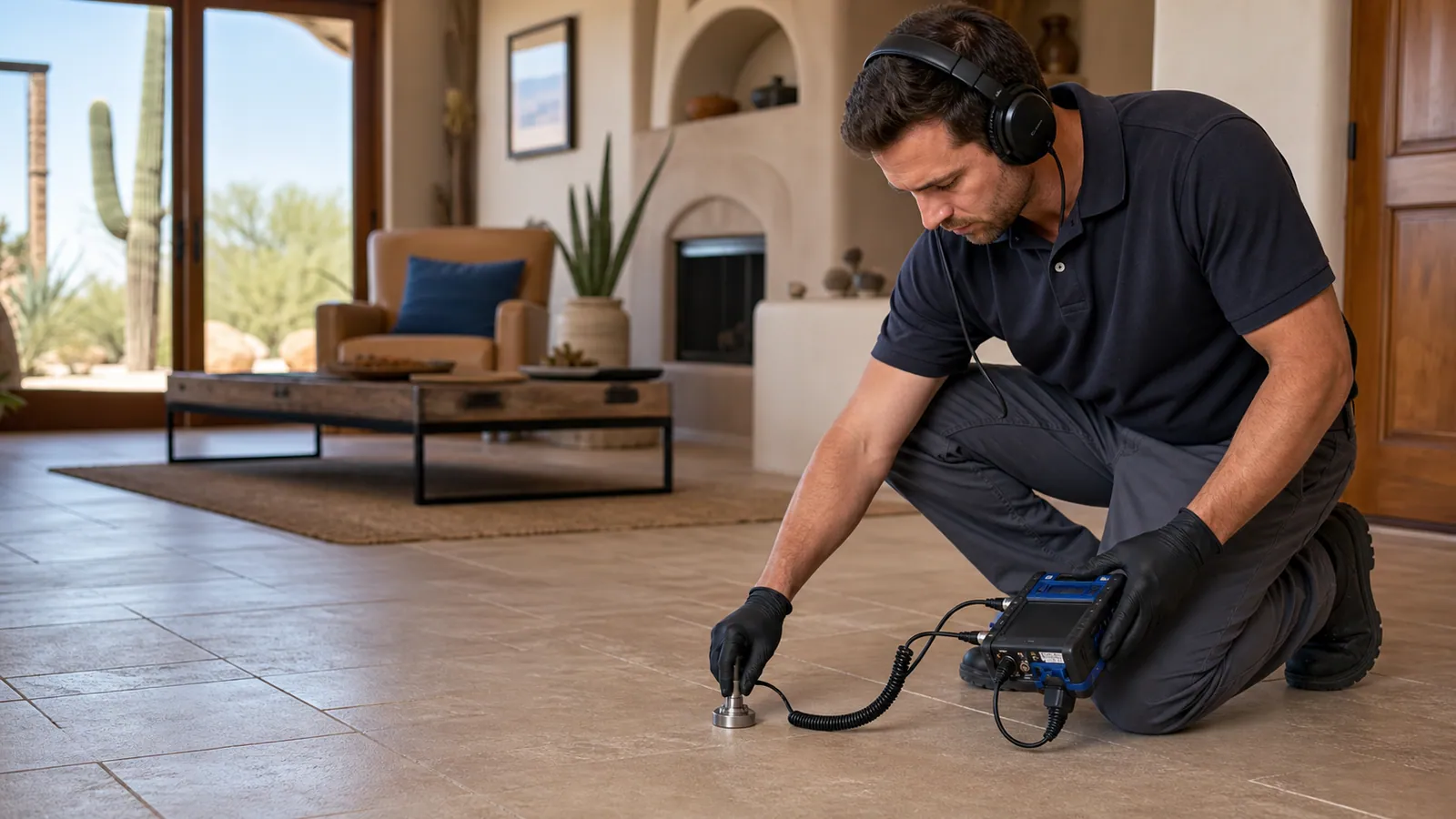
A plumber can isolate hot and cold systems or branches. Acoustic equipment is then used along the likely route; listening to the entire floor without isolation creates false leads.
When Sound Signals Urgency
A sudden loud rush accompanied by pressure loss, spreading water, or rapid meter flow can indicate an active failure. Shut off water safely and protect occupants and electrical areas.
A faint, intermittent sound without flow can be monitored and investigated systematically. Do not approve demolition based on sound alone.
Identify the Sound Before Treating It as a Leak
Describe the sound in practical terms: steady hiss, brief refill, pulsing vibration, drain gurgle, or rushing near an exterior wall. Walk the property while fixtures are off and note where it is loudest, when it starts, and what equipment operated beforehand. Sound can travel through copper, framing, concrete, ducts, and shared walls, so the loudest room is not automatically the location of the source.
Repeat the observation with irrigation, pool equipment, softener cycles, ice makers, HVAC condensate, and water-heater recovery accounted for. A toilet may refill for only a few seconds, while irrigation can create sustained pipe noise with no visible indoor use. Drain and vent sounds generally follow recent drainage and do not create meter flow. A supply-side loss is more likely when a continuous sound and controlled meter movement occur together.
Use Safe Isolation to Separate Plumbing Noise
Start with accessible fixture and appliance valves, changing one condition at a time and recording whether the sound or meter changes. If closing the water-heater supply affects the noise, the hot-water distribution or recirculation system deserves testing. If the sound continues outside while the house is safely isolated, the service line, irrigation, pool plumbing, neighboring property, or utility infrastructure may need attention.
Professional acoustic leak detection begins after the affected pressurized system is established. The technician compares repeatable sound along a traced route while managing background noise. Low pressure, plastic pipe, deep burial, soft soil, pumps, traffic, and HVAC equipment can weaken or distort the signal. Acoustic equipment narrows evidence; it does not convert every unexplained household sound into an exact under-slab leak location.
- Record timing, duration, pitch, and strongest area.
- Compare the sound with the water meter.
- Change only one valve or system at a time.
- Confirm pressure loss before relying on acoustic locating.
Related Reading and Services
Use these supporting resources to move from the current question to the next useful diagnostic or repair decision.
- Pair the sound check with a water-meter testDetermine whether the noise occurs with actual metered water flow.
- Understand electronic leak-detection limitsLearn how acoustic sensors, tracing, thermal imaging, and moisture tools contribute different evidence.
- See why one diagnostic tool is not enoughFollow a layered method that confirms the system before trying to locate the strongest signal.
- Electronic leak detection in TucsonReview the service approach for testing and locating a suspected concealed water-line loss.
Frequently Asked Questions
Can water be heard through concrete?
Sometimes. Pressure, pipe depth, floor materials, background noise, and soil conditions affect whether leak noise reaches the surface.
Why is the sound louder at night?
The house is quieter and system pressure or automatic schedules may differ. A louder perception does not necessarily mean the leak worsened.
Can drains sound like supply leaks?
Yes. Drain flow, venting, condensate, and neighboring units can produce similar sounds without meter movement.
Does acoustic detection work on every leak?
No. Low pressure, deep pipes, soft soil, multiple coverings, and very small losses can reduce usable noise.