Key Takeaways
- The affected line and area should be supported by testing.
- The opening must provide safe working space, not chase an arbitrary size promise.
- Pipe condition on both sides matters.
- Restoration responsibilities must be written.
Characteristics of a Good Candidate
Direct access is most defensible when one failure is well supported, the surrounding run appears serviceable, and the floor location can be opened without disproportionate damage.
It may suit a short exposed repair when rerouting would require an unusually long path, extensive cabinetry, or difficult fixture reconnections.
- Repeatable loss in the identified system
- Consistent route and locating evidence
- Reasonable floor and concrete access
- No strong pattern of repeated branch failures
What the Work May Include
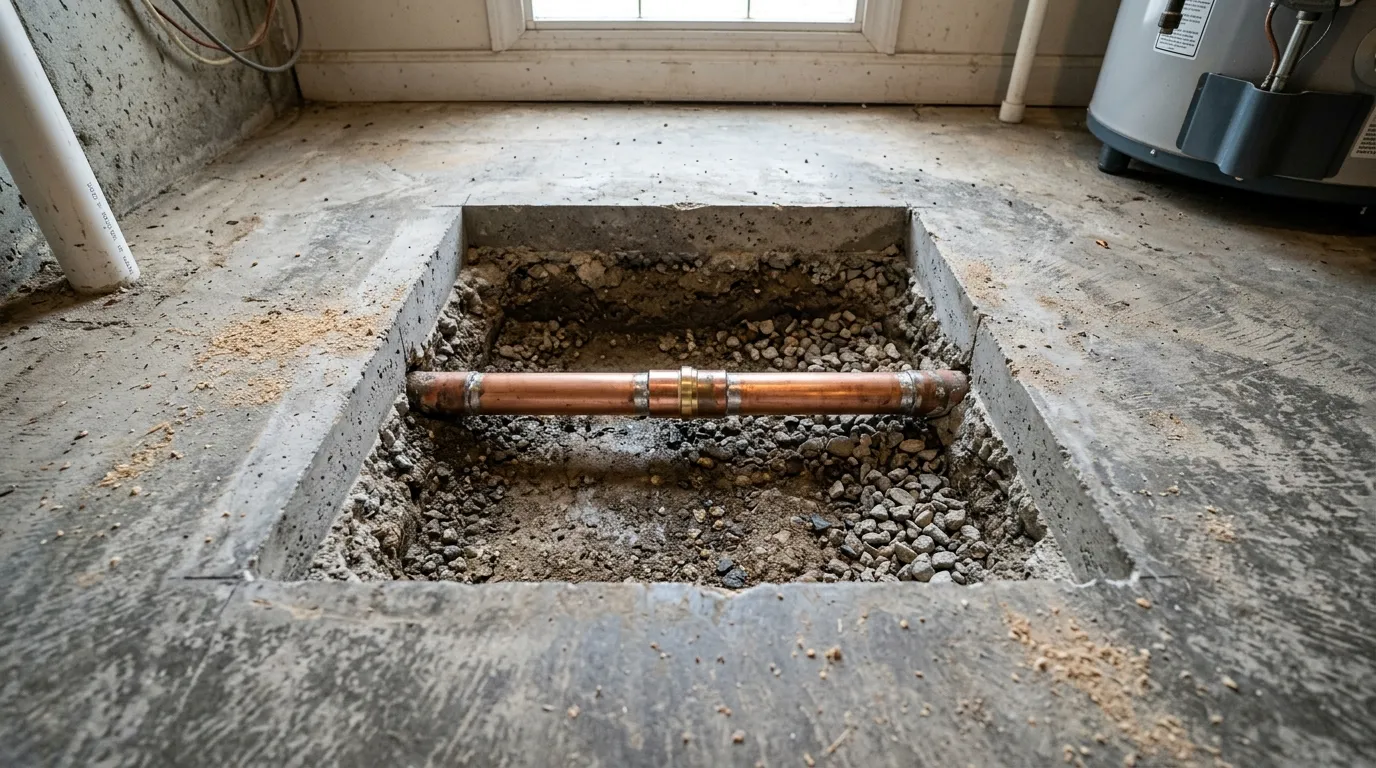
The contractor protects the area, removes finish material and concrete, excavates safely around the pipe, replaces the failed section with compatible approved materials, and tests before backfill.
The scope should define compaction, concrete closure, flooring, dust control, debris removal, permits, and the boundary between plumbing and finish trades.
| Item | Question |
|---|---|
| Access | Expected location and how it may change |
| Pipe | Material and connection method |
| Testing | How repair is verified before closure |
| Restoration | Concrete, tile, flooring and paint included? |
When to Compare Another Method
Repeated failures, widespread deterioration, inaccessible finishes, an uncertain location, or a practical alternate route can make another spot repair poor value.
A provider should explain why direct access is preferred and what evidence supports the decision.
Verify That the Failure Is a Good Direct-Repair Candidate
Direct access is strongest when the affected system repeatedly loses pressure, the concealed route is reasonably established, several locating methods overlap, and the expected opening is practical. The pipe history should suggest an isolated failure rather than a branch with recurring leaks. Flooring, reinforcement, cabinets, post-tension components, utilities, and working clearance must be considered before concrete is cut.
Ask the contractor how the access area was selected and what might cause it to expand. Water, sound, and heat can move away from the break, and the pipe may not follow the assumed route. Scanning, plans, construction knowledge, and safe cutting procedures matter. If the evidence remains broad or the floor finish is unusually difficult to restore, compare a reroute before authorizing direct excavation.
Repair, Test, and Close the Opening in the Right Order
After controlled access, the plumber exposes enough pipe to evaluate the failure and create sound connections. The replacement material and transition method must be approved for the existing system and site conditions. Nearby pipe should be protected from concrete contact, sharp edges, movement, and incompatible materials. Photograph the exposed failure and completed connection before it is concealed.
The repaired system is pressure-tested and fixtures are checked before backfill or concrete closure. The scope should define bedding or backfill, compaction, vapor or moisture details, concrete thickness and finish level, curing, tile or flooring replacement, dust control, disposal, permit, inspection, and warranty. Closing the floor before test results and required inspection are complete removes the best opportunity to correct a problem without reopening the slab.
If exposure reveals widespread deterioration, an unexpected fitting, or a route different from the report, pause before extending the opening. Photograph the condition and compare a revised direct repair with rerouting the branch. Concealed findings can change the responsible solution, but they should trigger a documented decision and approved change order rather than uncontrolled demolition.
- Confirm the system and access area with overlapping evidence.
- Protect structural and concealed components during cutting.
- Photograph pipe condition and completed connections.
- Test and inspect before backfill and concrete closure.
Related Reading and Services
Use these supporting resources to move from the current question to the next useful diagnostic or repair decision.
- Understand locating before floor accessSee how noninvasive testing narrows the area and why confirmation access may still be required.
- Plan the flooring openingCompare finish types, matching risks, working clearance, and restoration responsibility.
- Compare direct repair with reroutingUse pipe history, route access, finishes, cost, and future serviceability to evaluate both options.
- Under-slab pipe repair in TucsonReview the direct-access service process after the failed system and location are documented.
Frequently Asked Questions
How large is the opening?
It depends on location confidence, pipe depth, working clearance, reinforcement, flooring, and field conditions. Exact dimensions should not be guaranteed before exposure.
Can the same concrete be replaced?
Removed concrete is normally replaced with new material according to the repair scope; finish matching is a separate question.
Will the repair stop future leaks?
It should correct the exposed failure when completed properly. It cannot guarantee every concealed section of the system.
Should the line be tested before backfill?
Yes. The completed connections and relevant system should be verified before the access is concealed.